Introducing Naturopathic Medicine at QSY


We have been offering Registered Massage Therapy and Registered Acupuncture for several years at QSY in our wellness space. This June we are excited to welcome Laura, a Naturopathic Doctor, to our wellness practitioner team! Here’s a post where Laura introduces herself and her approach.

lauraHello! My name is Laura Tummon Simmons, and I’m a licensed naturopathic doctor (ND) in Ontario. I’m very blessed to say I’m starting my private practice at Queen Street Yoga (QSY) in Kitchener in June of 2016. I grew up in the Waterloo Region and attended Cameron Heights, just down the street, before completing my degrees in Toronto. Currently, I’m transitioning back to the region, while completing an additional clinical residency program at the Canadian College of Naturopathic Medicine. I became an ND because I believe in the importance of the doctor-patient relationship, and I wanted to establish long-term care with my patients.

People often don’t know about naturopathic medicine apart from what they may read in the public sphere, so for my first blog entry here with QSY I thought it might be a good place to start explaining a little bit about naturopathic medicine in general, and what you can expect if you or someone you know chooses to see me.

First of all, what is naturopathic medicine? Naturopathic medicine or naturopathy is a field of health care which involves the treatment of individuals with natural therapies and behavioural changes. These therapies aim to support each patient’s condition uniquely. Depending on your case some of these various treatments may include: acupuncture, botanical medicine, nutrition/dietary changes, supplementation, lifestyle changes, hydrotherapy, and counselling. Ultimately, the goals of treatment are to help identify causes of disease in a whole-person model, provide you with sustainable changes and education to help manage symptoms, and potentially prevent future harm. Naturopathic doctors are a self-regulated profession under the College of Naturopaths of Ontario.Continue reading “Introducing Naturopathic Medicine at QSY”
Yoga and Race: Why Representation Matters

Queen Street Yoga teacher and creative director Emma Dines shares an important personal experience about race and representation as it relates to yoga teaching and representation in the yoga studio community.

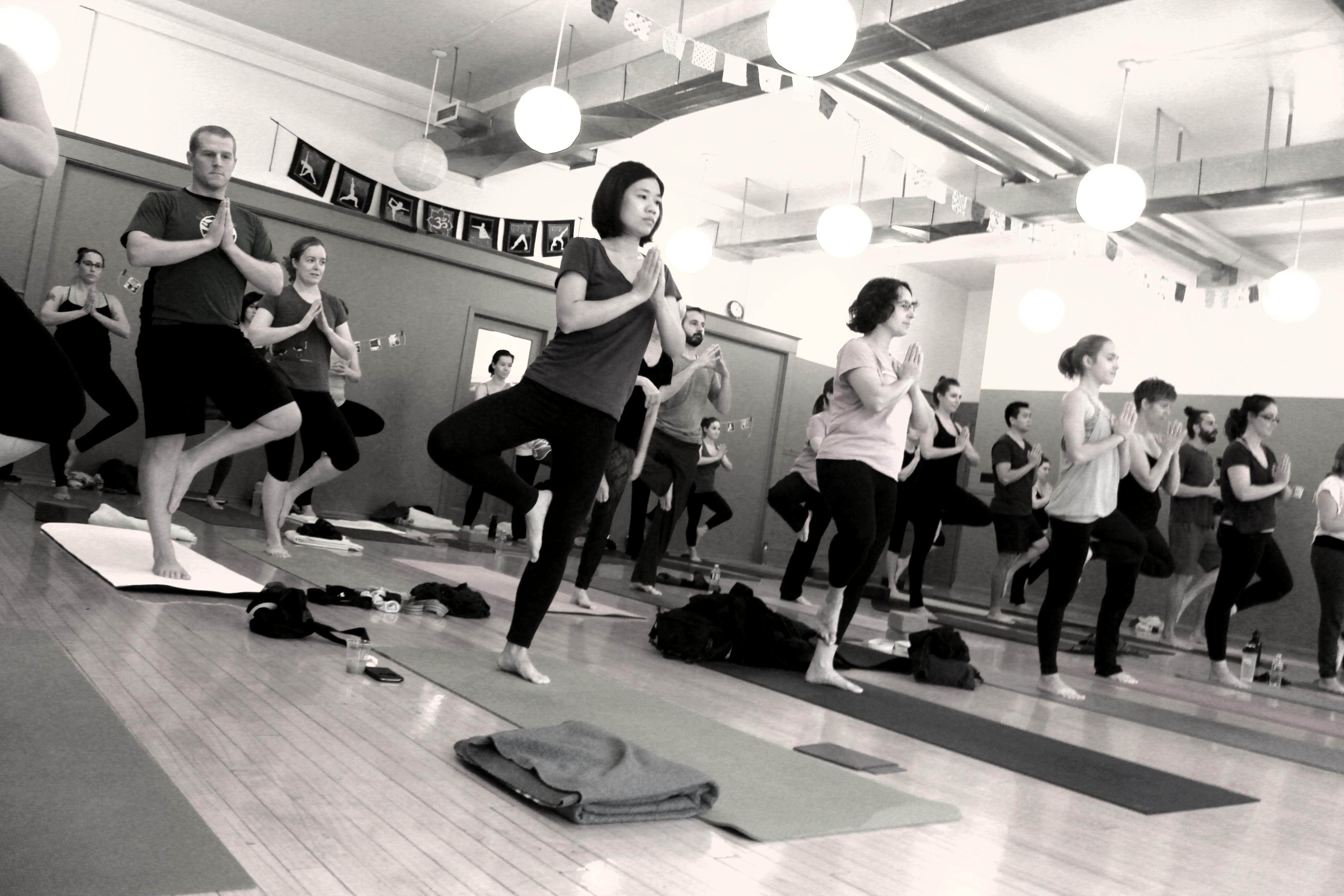
B&W yoga photo

During our March Yoga Teacher Training weekend, QSY hosted two presenters from Toronto who shared their experiences and best practices of merging anti-oppression work with the teaching of yoga/hosting of yoga studio communities. Jamilah Malika and Christi-an Slomka led the group in considering the experiences of those who are underrepresented in yoga studios and yoga media/imagery, and understanding how and why yoga studios remain mostly white and mostly cis-gendered spaces, and how and why we might work to shift this.

During our closing circle, where we shared our insights, reflections and challenges with one another, I shared the following personal story, which touches on themes of race and representation. It was a story that I had forgotten about, but it bubbled up to the surface during the circle.

A bit of background before the story. I grew up in Toronto in a mostly white neighbourhood, going to a mostly white school. I am mixed race – my mom is third-generation Japanese Canadian, and my dad is second-generation Scottish Canadian. I remember being pretty aware of my race as a child – I was one of two or three Asian or half-Asian kids in my class. When I blew the candles out on the cake at my eighth birthday, my wish was to wake up the next day with white skin and blond hair. My mother experienced what I now understand to be micro-aggressions from many of the other parents in the area. The racism that my mother, my siblings and I experienced was subtle, sometimes internalized, but definitely present.Continue reading “Yoga and Race: Why Representation Matters”

Re-Post: Teaching as Learning [A Forever Process]


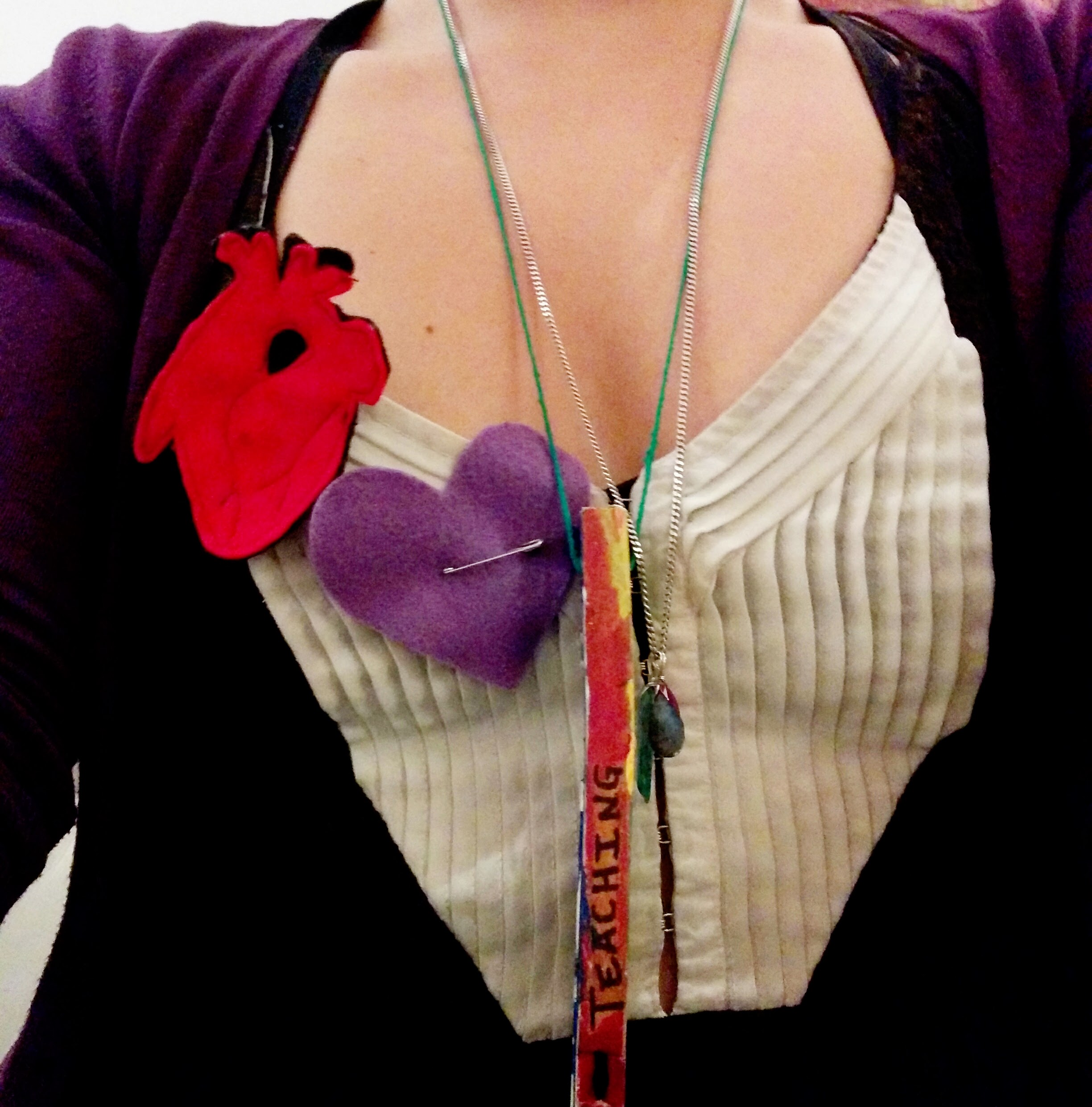
This is a re-post of a piece that Emma originally wrote for her own blog, thinkerpoet.com. We hope you enjoy reading some of her reflections on the process of teaching and learning.IMG_20160101_151838

This past New Year’s I was given an opportunity to choose the “key” to my coming year. Two dear friends (artists and community convenors) had salvaged wooden piano keys from a scrap yard, and painted and anointed each one with different colours, designs and words. They were jumbled together in a cloth bag, and throughout the night they brought out the bag and invited friends to reach into the bag and pull a key. “Make sure you get the right one.” they teased as we reached, eyes closed, into the bag. As our fingers sifted through the jumble of keys, feeling raised black keys and narrower white keys, they invited us to let our intuition guide our choice. “You’ll know your key when you feel it.” they said. “It will be clear.”

Keys bearing the words “Equanimity”, “Wisdom” and “Contentment” emerged in different peoples’ hands. “Acceptance”, “Integrity”, and “Simplicity” followed. I watched my friends interact with their keys, unwrap their strings and hang them around their necks, bulky but meaningful necklaces. Continue reading “Re-Post: Teaching as Learning [A Forever Process]”

Singing Mantra – Continuing the Inquiry into Cultural Appropriation and Yoga by Emma Dines

Last December I recorded five songs that I sing for students at the end of my classes, while they rest in savasana, a final resting pose. We have been releasing the songs periodically throughout the last year on our blog. You can listen to and download all of them on Soundcloud. This last song is actually a mantra, called the Gayatri Mantra. It is one of the oldest Vedic chants, and this version that I sing is a shortened version of the original.

It is interesting and a bit uncomfortable that I am releasing this song now, after posting a reflection about cultural appropriation and yoga in December. In that post, I wrote, When I first began teaching yoga six years ago, I was excited about the philosophical content I was learning and eagerly shared my interpretations/understanding of Tantra with my yoga students. I taught my students to sing mantras, and told them stories of Hindu deities. Now, looking back on that, I feel embarrassed. I would describe my early teaching as uninformed cultural misappropriation. Whatever cultural aspects of yoga I was sharing, they had been taught to me by white teachers, some of whom were scholars, but nevertheless, I was taking aspects of Hindu religious culture and teaching them as if they were mine.” Continue reading “Singing Mantra – Continuing the Inquiry into Cultural Appropriation and Yoga by Emma Dines”

Cultural Appropriation & Yoga

Queen Street Yoga was approached by local newspaper The Community Edition to write something about cultural appropriation and yoga, after this Ottawa Sun news article went viral. There is a lot more to the Ottawa Sun story than was originally reported, and we highly recommend reading our colleague Matthew Remski’s take on it, in which he details how the story was mis-reported, and the way in which popular media mostly shut down and derided the idea of cultural appropriation in yoga. At Queen Street Yoga we think awareness of cultural appropriation in yoga is very important, and in the following piece that Emma wrote for The Community Edition, she shares some thoughts and reflections on how her teaching has changed in the last few years, as she has learned more about the reality of cultural appropriation. Emma wants to acknowledge SAAPYA (South-Asian American Perspectives on Yoga in America) and other colleagues in the yoga community for helping her better understand the issues and impacts of cultural appropriation and yoga.

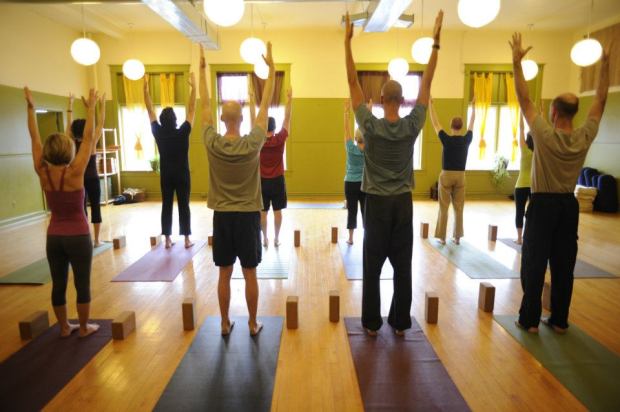
reaching up yoga class imageIn the last several years, Queen Street Yoga has been looking more deeply into questions of privilege, oppression and cultural (mis)appropriation, and how they show up in the teaching of yoga, and in the experience of yoga studios. We have been examining how yoga was taught to us by mostly white, cis-gendered teachers, and thinking carefully about what it means to be North-American born practitioners of a tradition that has its origins in India. I define cultural (mis)appropriation as instances when members of a dominant culture take elements of a minority culture and use them outside of their original cultural context, often times reducing or commodifying those cultural aspects to “exotic” and meaningless fashion or activities. Cultural appropriation is a complex subject, and people often get defensive when it is mentioned. Recently an article was published in the Ottawa Sun about a yoga class at the University of Ottawa that was purportedly cancelled due to fears that it could be considered cultural appropriation. The Ottawa Sun later printed a retraction and reported that the class was cancelled due to low attendance, but that did not stop the viral media-storm in which many white columnists and writers derided the whole idea that yoga could be considered cultural (mis)appropriation.
Thinking about the issue of cultural appropriation in the last few years has changed the way that I teach yoga and create studio programming, as the Creative Director of the studio, and as the Co-Director of our Teacher Training Program. My teaching has changed a great deal from when I first began. Continue reading “Cultural Appropriation & Yoga”

Re-Post from Emma’s Blog: A Heartfelt Adventure

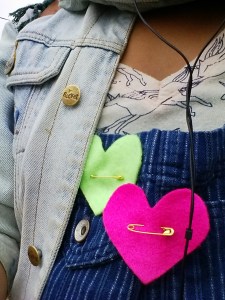
If you’ve been in Emma’s class in the last few months, you might have been gifted a little felt heart. This week’s blog post is a re-post from Emma’s blog thinkerpoet.com, in which Emma explains where the heart idea came from, and how it is evolving.

As a young child, I never liked hearts. Like the colour pink, hearts were on every lunchbox, pony’s butt and t-shirt meant for girls. As soon as I could understand language I was questioning gender roles, and at the age of five, I staunchly decided that hearts were too prescribed. I didn’t want to be told what symbols to like. I resisted wearing hearts and chose zig-zags, triangles and stars whenever I could. Hearts, to my young feminist brain, were a symbol of conformity.

IMG_20150612_135139Fast-forward to the present moment, where colourful felt hearts litter every surface of my home, are pinned to every piece of clothing, and stacks of which are stuffed into every pocket and bag. In the past two months I have become a regular giver of hearts. I pin them on parked bicycles, gift them to cashiers, offer them to children and parents, and drop them on my yoga students’ mats.

Continue reading “Re-Post from Emma’s Blog: A Heartfelt Adventure”

100 Faces- 10 Years of QSY

This post was written by QSY Director, Leena Miller Cressman.

This fall, Queen Street Yoga turns 10! It’s a significant milestone as a small business and as a community. According to this article by Forbes, only about one-third of small business survive 10 or more years. Yippee, beating the odds! In addition to throwing an awesome party to celebrate (more on that later on), I wanted to share some of the story of how Queen Street Yoga came to be what it is today.

DSC_6433Just over ten years ago Meaghan Johnson, a Kitchener native, founded the studio. From the story I remember Meaghan telling me, at the time she wasn’t planning to open a large yoga studio. However, someone tipped her off about this beautiful space with glowing hardwood floors, big windows and high ceilings that used to be a dance studio, but now was sitting vacant. (Before it was a dance studio our space was a club called Pop the Gator- if anyone has photos or stories about that send them our way!) Meaghan arranged to visit the vacant space, and upon walking into the space she exclaimed, “Well shit, now I have to open a yoga studio. This space is too perfect.”

image (5)The studio opened with a staff of several other teachers in addition to Meaghan, and always had an emphasis on mindful, alignment-based yoga, with a grassroots community feel. Meaghan once told me that she opened the studio with about $1,000 and slowly invested and grew the business from there. This gradual model of growth, alongside a lot of community support, thoughtful offerings, and caring, dedicated students, teachers and administrators is why we’re still open and still growing today, ten years later.Continue reading “100 Faces- 10 Years of QSY”

#Selfcare: Community Acupuncture and Restorative Yoga at QSY

We are excited to introduce weekly Community Acupuncture at QSY with Registered Acupuncturist Nir Saar! In this post QSY director, Leena, explains the primary functions of the nervous system, and how exhaustion of the nervous system can lead to a myriad of health problems. Leena is a big proponent of restorative yoga and acupuncture, and she details how restorative and acupuncture can help regulate and heal an exhausted nervous system, and boost your health on many levels. Read towards the end of the post to get a sense of how Community Acupuncture, which is super affordable, will operate at QSY.

stress free zone- thornypupStress is a dirty word in our busy North American, urbanized society, and no doubt many of us experience stress on a regular, if not daily basis. But more technically speaking, at the level of the body and nervous system, stress is actually neutral. It’s how we process stress that makes all the difference.

Stress is what your body/mind does to adapt to change. Our bodies evolved in environments where responding to change usually involves some amount of muscular action, like to run away from a tiger (muscles spring tighter to take action, eyes focus, heart rate increases), and the mode of your nervous system called the sympathetic mode is utilized.Continue reading “#Selfcare: Community Acupuncture and Restorative Yoga at QSY”

Queer Yoga on Pause for the Fall

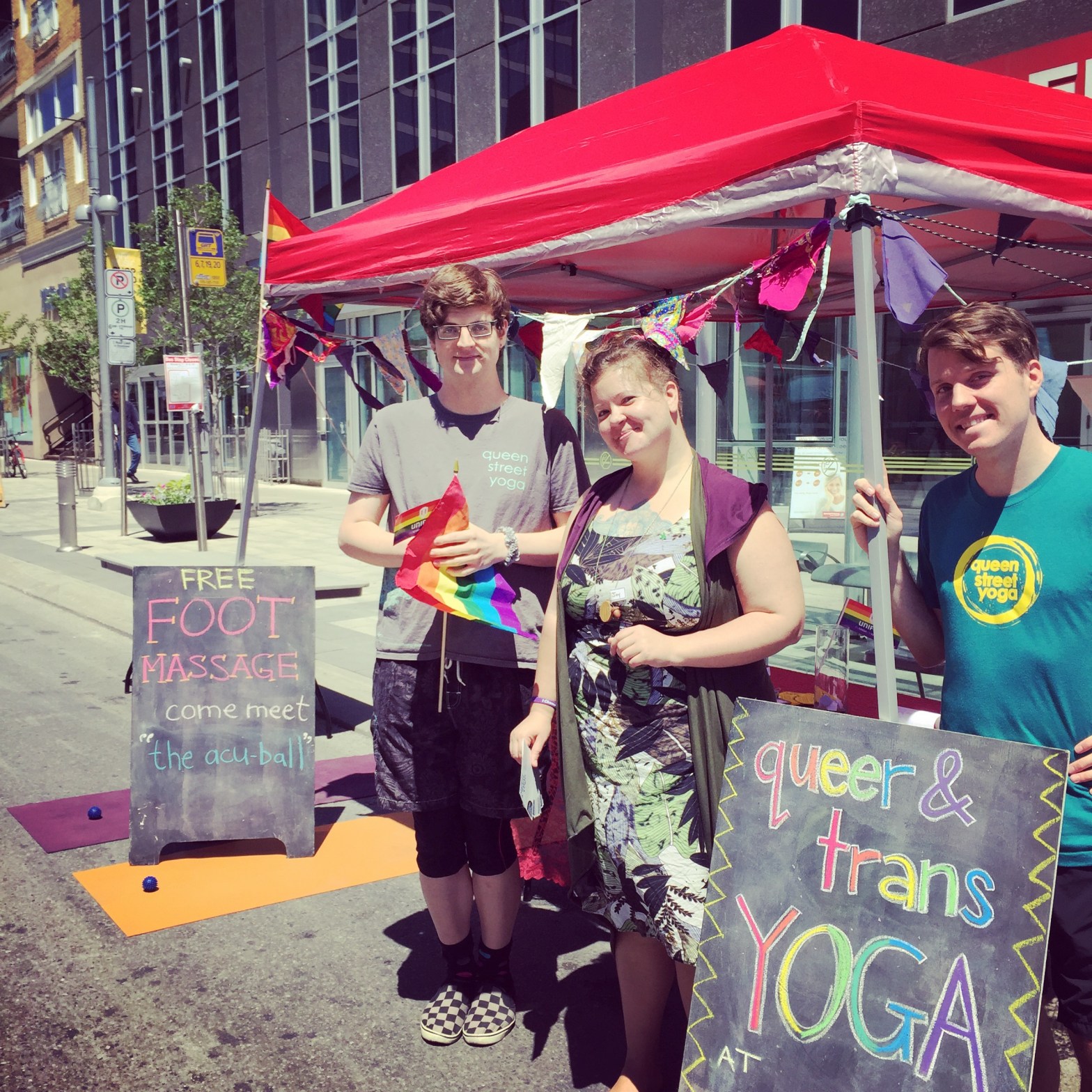
This blog post is to acknowledge and celebrate everyone who has helped make Queer & Trans Yoga a reality at QSY. We so appreciate the committee of community members (of varying genders and identities) who helped us envision and promote the program, to everyone who came through the door to attend the class: THANK YOU.

One of the things that felt important to us about this class was the presence of Shannon, a queer-identified teacher. We felt it was important to have a queer-identified teacher to set the context of this class. We are sad to announce that Shannon has decided to move her life to Toronto this fall, and so won’t be able to continue teaching the Queer & Trans Yoga class. (But we are happy for her to pursue her next adventure in life!) After some conversations with her and a few other co-creators of Queer Yoga, we’ve decided to transition the Queer Yoga class back to a Community Class in September. We considered keeping it as a Queer Yoga class, but since we didn’t have another teacher that was queer-identified, we felt that it didn’t make sense to keep it going without someone from that community to hold the context. Thank you Shannon for spearheading this class and sharing your love for yoga in the Queer & Trans Yoga class! Continue reading “Queer Yoga on Pause for the Fall”

Canada Day: It’s Complicated. Celebrating and Remembering at the Same Time

Leena shares a reflection about Canada Day, complexity and how the practice of yoga can invite us to lean into bigger questions. 

This week, life has been inviting me again and again to embrace complexity and paradox.

If Facebook asked me to set my “relationship status” to my participation in representing yoga in the media, to practicing and sharing yoga, and to being a resident and a citizen of Canada, the status would read “It’s Complicated.”

Monday, the local Grand magIMG_9879azine hit the shelves, with me on the cover. I feel excited and honoured. I appreciate the amazing opportunity to tell my story and to share the story of our Queen Street Yoga community. I also feel conflicted. The title of the article is “Yoga for Everyone” and the story speaks to the diversity and inclusivity that we are trying to nurture at QSY. I’m proud of the ways that we’re already doing that, and there’s more work still to do.

As I see it, one of the barriers to the yoga community being more inclusive to all genders, races and classes in our community is that similar types of bodies are portraying yoga in the media over and over- in yoga books, magazines, advertisements, etc. If you line up every magazine with someone doing a yoga pose on the cover, I would venture that over 90% of the people portrayed are thin, young, able-bodied, cis-gendered, flexible and female. The vast majority of them are white.

Continue reading “Canada Day: It’s Complicated. Celebrating and Remembering at the Same Time”