The Ongoing Art of Imitation

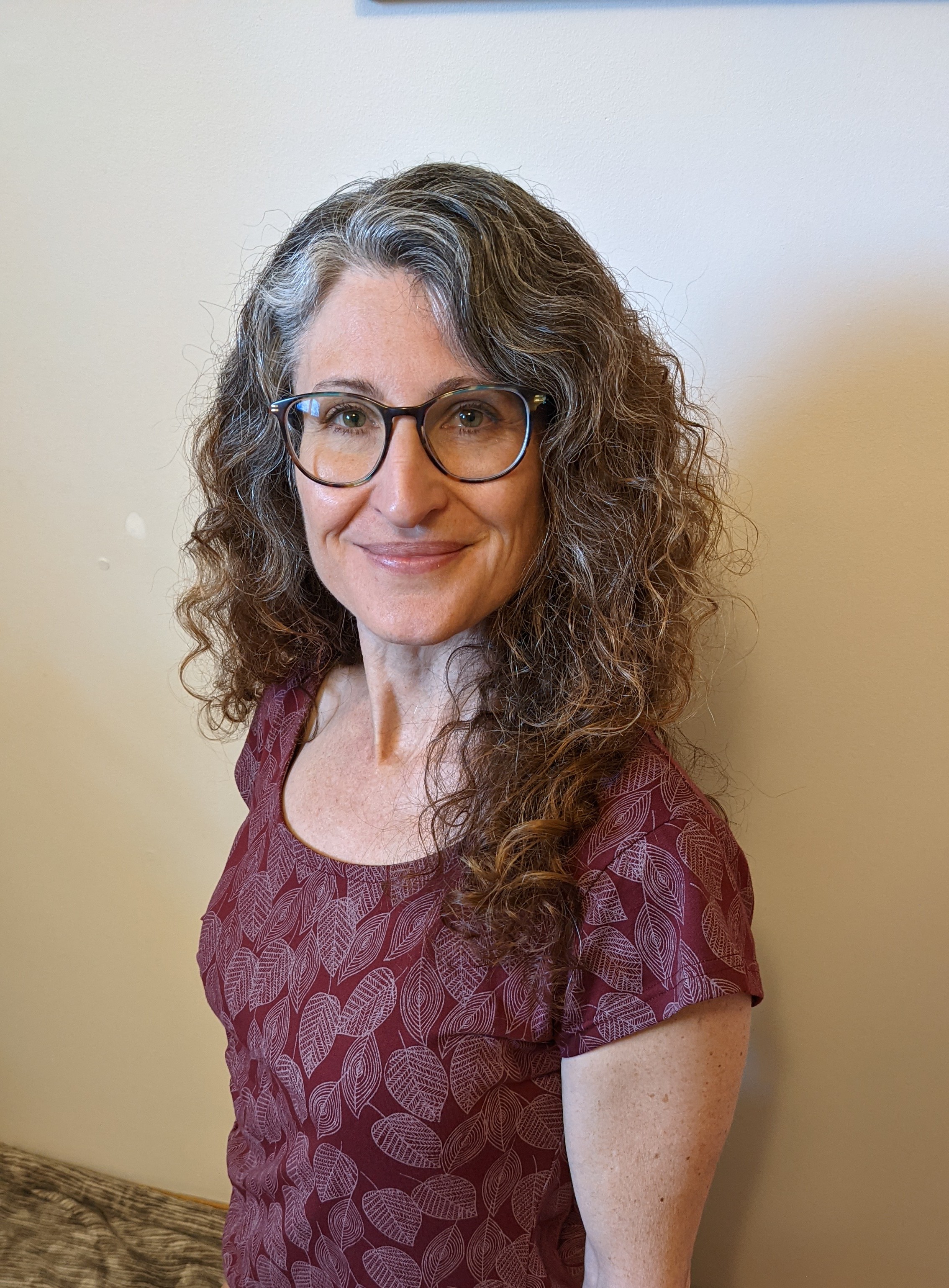
Jen Helmuth (she/her) is a grad of our 2024 250-hour YTT program. She is a psychotherapist and yoga teacher currently teaching a yoga course for teen mental health with The Branches. 

I’m sitting on the couch staring down my most recent piece of art.  I’m not sure how I feel about it.  This piece gradually came together over the course of my recent Yoga Teacher Training.  The “canvas” is an old weathered piece of wood that had been used as a tailgate on a truck.  I found it propped up on the side of the road.  It has a long metal bar across the middle that divides it in half.   I’ve worked in my signature embellishments using cut up beer cans and adding natural objects I find on my walks.

When I saw the tailgate, I loved the character of the wood and the metal bar through the middle.  I knew I wanted to explore the theme of dualism: top and bottom, before and after, organic and inorganic, yin and yang.  I wanted to play with the complementary forces we see and experience in life all around us. This theme shows up in yoga as the play between effort and ease, leading and following, doing and being.  

I also wanted to play with the idea of art imitating nature, like many yoga poses do.  I love how we get into shapes called downward dog, cat and cow, pigeon, fish and eagle, to name a few.  I like to imagine early yoga practitioners mimicking the shapes and movements of what they observed in the world around them. I think about taking on the energy of these creatures as we embody their forms, like the confident roar in lion’s pose, complete with the funny face and forceful breath.

As I started creating my artwork on this tailgate, I followed the elements of the wood: the grain, the knotholes and other characteristics.   Using the metal bar that divides the piece in half horizontally, I made the top half to represent the “source” such as nature, ideals, and teachers – the things that inspire us, the things we want to emulate.  Below the metal bar would be the “imitation” and exploration of approximating what’s on top while still working with the character of the wood.  

And now, as I sit here staring at it from across the room, I think: “It’s still not quite done”.  This is the third time I’ve brought the piece out of my studio and placed it across from my couch so I can study it upright from a distance.  Each time I bring it out of the studio I’m sure it’s done; and each time I look at it from the couch, it doesn’t look finished.  This confounds me.  With most of my art, I know when it’s done.   And now I’m sitting here wanting to fix it again.  I’m focussing my attention on the places where the bottom half is not fully representing the ideal of the top half.  It really needs some more swooshes here, and a few over there – and also more honeycombs.

Do I really need to take it back to the studio again?  I’ve done enough art to know that the process is as much of a teacher as the end result.  As I stare at it, willing the art to reveal it’s message to me, I realize that I’m exclusively focussed on the “imitation” half.  This is what I keep tweaking on every return to the studio.  It’s not up to snuff.  It doesn’t properly reflect the grandiosity of the “original” on top that it’s trying to mirror.  And I’m not satisfied. I want to keep adjusting, improving, approximating.  The imitation can do better. If it doesn’t look close enough to the original, then the theme of “imitation” will be lost.

That’s when it dawns on me, and a few lessons come hurtling at me across the room from this piece of art.  The imitation will never look like the original – and that’s OK, in fact, that’s the point!  You have to work with the character of the wood and the different materials and structure, so of course it won’t look the same.  The point in imitation is the exploration of what it might feel like to embody a different shape, being, or energy for a brief time.  

I also realize another lesson is that it is not helpful to focus on what’s wrong with the imitation.  Where your focus goes your energy flows.  This is a constant theme in my life: wanting to tinker until perfection is achieved. It’s why I’ve taken this piece back to my studio several times for a few more tweaks.  This piece is trying to teach me with it’s refusal to look pleasingly finished to my eye.  Can I let go of the effort of adjusting and find ease in allowing this lesson to seep into my being?

And furthermore, the space on the bottom half that I think is incomplete might actually represent potential.  Opportunity.  It might suggest value in the yearning to keep imitating; to appreciate the sense that something is not yet finished.  Maybe another lesson for me from this piece of art is to find the complementary force of “finished”.   This art is “ongoing”. It leaves room for change, for evolution, for more to come.  And by not feeling “complete” it lights a desire to keep imagining what could be. 

Imitation is about the process of embodying the essence of something – whether it is an animal, an element, an idea or a shape the teacher is demonstrating. The point is not to shed your own self to become something else.  In fact, the point might even be to notice things around you worth imitating  and imagining inhabiting their shape or energy for a breath or two.  The practice of imitating is how we learn to work with the materials we’ve got and to find new ways of expressing our unique qualities in ways we might not have imagined had it not been for watching our dog stretch in the morning.  The imitation will be beautiful when we are respectfully working with the materials we have, rather than trying to hide those characteristics to become something else. 

This is a big shift and learning for me during this yoga teacher training.  The goal is not to practice until you can touch your toes or balance in crow pose or to precisely match the yoga textbook pictures.  The value of practicing yoga is the yearning to feel on the inside what you are trying to approximate on the outside – over and over again.  The gap between the original and the imitation is a space of potential, imagination and learning. And regardless of whether your pose is a perfectly finished imitation on the outside, the process has the opportunity to be rewarding and feel satisfactory on the inside.   Just like this “ongoing” piece of art sitting across from me in my living room.

Krama for Sequencing: Why is it important?

Anne Michelle (she/her) is a grad of our 2024 250-Hour Yoga Teacher Training. And you can find her teaching at TBY on Wednesday evenings!

I tend to be a literal person, and have trouble interpreting instructions in any way that isn’t verbatim. For me, learning to find flexibility and improvisation within a structure involves understanding why that structure was created in the first place. When we learned about Krama, or the order for sequencing in a yoga asana class, I struggled to divert from it at all, even though we were encouraged to be flexible with this structure when it suited our sequence. The only way for me to move away from this rigidity is to learn more. 

Let’s start with the basics. Krama can mean many things! To be more specific, we’re looking at Vinyasa Krama. Vinyasa means “separating (vi) putting down (nyasa)” and Krama means “steps” or “order”, and so all together Vinyasa Krama is a thoughtful sequence of actions; a way to structure a class progressively to allow students to find freedom and joy in their poses. Sounds solid. But how did this order become The Order? Why is there a handstand near the beginning, why abdominals before hip mobilizers? Where did it originate? 

History:

Traditional Vinyasa has been around since ~300BC or earlier. The beginnings of the modern Vinyasa approach is credited to Krishnamacharya (1888-1989) who broadened from traditional asanas (Surya Namaskar), and focused on teaching “what was appropriate for the individual.” There is an emphasis on synchronizing movement with an inhalation or an exhalation, creating a seamless transition between poses, while embodying Parinamavada–the understanding that constant change is an inherent part of life. For this reason, Vinyasa Krama begins with initiation: centring, assessing where we are today, and setting intention. This is followed by sustained effort built from the breath and beginning with gentler poses building to the peak (to be prepared and avoid strain that could create an angry prana). Finally, winding down and ending with integration (savasana), as “it is not enough to climb a tree, you must also be able to get down.” Vinyasa mimics the flow of life, the flow of a day, even the flow of the seasons, as energy starts quiet and builds to a climax and winds down to the inevitable end.

Krishnamacharya’s sequencing was quick in pace and highly demanding. Despite the proclaimed goal of building gradually to a goal, he did not have patience for slowness or challenges, and was brutal in his treatment of students, hitting them with rods when they didn’t perform as he wanted. BKS Iyengar was one of those students, and ran away from his teacher and his abuse to later become a leading guru in the yoga world some time in the 1940s.

Iyengar brought about a less strict interpretation of vinyasa krama. Sequencing in Iyengar yoga is not set in stone, and varies according to many different factors, including: group of postures, aim of sequence, level of experience of the student, and state of mind when approaching a session. He learned from his own ageing, observing students in practice, and his own life experiences, including the injuries and strain from being forced into poses prematurely during his years with Krishnamacharya. This led him to sequence classes slower, with attention to anatomy and alignment, as well as the inclusion of props like blocks and blankets to create a more accessible yoga experience. 

The Components of Krama:

Let’s take that historical context, how it was built over time, and think about what this order provides for the body, how it creates an effective and accessible practice.

The opening (Centring > Warm-ups/preps = activations > Downward Dog > Sun Salutations) is fairly obvious in its intention: connect with yourself and your breath, and provide some warming, well-rounded movement to prepare you for the rest of the practice. The one that threw me off was Handstand/Forearm Balance being next, it seemed surprising! It’s important to understand that this placement is for an experienced yogi with an existing handstand practice, not for learning how to do it. There’s a few reasons for this placement. One is the energizing quality; it sharpens your awareness and wakes you up for the rest of the practice. It also gives you a new perspective, both literally and metaphorically. Finally, you aren’t too exhausted to execute one safely.

Handstands are followed by Standing Poses > Standing Balancing Poses. This feels logical. We are most comfortable on our feet and adding balance is increasing the difficulty, it’s just progressive. But what about hand balancing poses, the next in line? This one I couldn’t find reasoning for, except maybe that it is a further progression of balancing. 

The next part of the sequencing–Core > Hip Mobilizers > Backbends–is interesting, and requires thinking more anatomically. An activated core provides support for both hip mobilizing and backbends. Getting your core online allows you to isolate and support hip movement more effectively (rather than compensating with your spine). This continues along the chain coming to backbends. When doing a backbend, there is one point in your back (T12 vertebra) that wants to do all the back bending work. This can have some pretty negative wear and tear on your T12 and neighbouring vertebrae, as well as missing the full benefits for the rest of your back. The primary goal is to find an even and supported bend through your back, not just fold in half in one spot, and to find extension in the hips. To achieve that, you need an active and supportive core, and you need to access the mobility in your hips. This can take extra work if you have a hyper-mobile low back especially, but will provide better alignment for joint health and spaciousness in the pose.

After the energizing nature of backbends, the sequence begins to wind down. Shoulder Stands or legs up the wall provide some cooling, calming, and quieting of the nervous system, as well as a counter pose to the previous backbend. Forward bend & twists and supine poses continue that quieting momentum, bringing you closer to the ground and folding inward and setting you up for some stillness in restorative poses, meditation & pranayama, and finally savasana. “It is not enough to climb a tree, you must also be able to get down.”

I found it fascinating to learn about all the smaller moving parts hidden inside how the Krama for sequencing is laid out. I don’t know if anyone else needs to know the ‘why’ as much as I do, but I find it freeing so I can understand how to effectively use this tool to suit my own sequence designs, so if I deviate I can do so intelligently.

Your yoga teacher has problems too

Levi Larivee (he/they) is a grad of our 2023-2024 YTT program. Levi is Community Inclusion & Outreach Worker and a yoga teacher currently living in B.C. 

When I first started practicing, I would stare at the person at the front of the room who seemed to be moving so peacefully and seamlessly through poses I couldn’t figure out. I would do them backwards and respond in silly ways to cueing- then look up to the front of the room and be so embarrassed that I wasn’t doing what everyone else was. My face would get red, then I would stumble even more, lose my breathe, and just sit down on my mat because I couldn’t catch up. After class I would joke and make light of how embarrassed and hurt I was so no one could tell how ashamed I was that I couldn’t keep up in a yoga class. Everyone who could move through the poses, keep their breathe, not be sweating incessantly, I felt lesser than. Watching them move so gracefully, I just knew that they had made it to the otherside. The side of life where tough things stop touching you, stop hurting you. The side where no one has unhealthy coping mechanisms and never eats deep-fried food. Everyone loves them, they never have any problems because they’re so “zen” that nothing can penetrate their meditative bubble.

I truly believed that my yoga teachers lived like that. I would have done anything to be on the other side. Well imagine my surprise when I found out that my yoga teachers were human beings, too. They weren’t Gods. They eat “too much” cake sometimes (if that’s even possible), cry when days don’t turn out how they expected, get a little bit too mad some days. They have problems too. Now I am a yoga teacher, and I still eat fast food, get grumpy when I haven’t slept, and have some bad habits that I cant seem to kick. Sometimes I’m even too stressed to meditate, imagine that!

All of this to say, yoga teachers are just people. Yes, it is a really cool job, and probably do our best to be mindful and present in our lives, but its progress not perfection. I am more than happy to still have my fair share of hardships in life, and oh-so-grateful to have a life beyond that that has been cultivated by trying to choose healthier ways of being. I’ve also learned how to show myself love when I don’t do the “healthier” things, or when I lose my temper. There is always tomorrow.

A yoga practice is an additive, it is just one delicious slice of the much bigger pie. I’ll admit, yoga definitely helps me deal more effectively and respond more compassionately, but life didn’t stop “life-ing” just because I seem super zen in my one hour yoga class. My point is, I would have saved myself alot of aching if I hadn’t assumed that my yoga teachers were all-knowing, supreme beings that had mastered how to “do” life. There is no otherside, the grass is greener where you water it. I wish I could go back and tell myself that!

But I can tell you- be gentle with yourself. No one ever stops making mistakes, no one is super calm and flowy and spiritual 100% of the time. It’s okay to not know everything. It is so nice when people are authentically themselves, because it shows people that it is super okay and encouraged for you to be exactly that. Yourself! It’s so much easier to be human when we can tell and show each other just how valued we are, on every step of the road. Lots of love, always, from your friendly neighborhood yoga teacher.

-Levi

Levi is a grad of our 2023-2024 YTT program

Connected to community

Rachel Smiley (they/them) is a grad of our 2024, 250-Hour YTT. They teach at The Move Room in Hamilton Ontario. Rachel organizes Rainbow Moves, the Move Room’s weekly queer community class.

For many queer and trans folks, the body can feel like a mystery, or something we disconnectfrom out of necessity. In a world that still regularly commits violence against queer & trans people, disconnection is an act of self-protection, but when we do this we lose out on experiencing the wholeness of our own beings. 

Our bodies are the only things that stay with us our entire lives; they work for us even when we don’t ask them to; they are the only things over which we have true autonomy. It’s within the context of mindfulness and embodiment practices that I have realized deep truths in my own life. Mindful embodiment practices such as yoga allow me to connect to my body, ask myself what I need, and then give myself exactly that, with compassion.

Communal experiences like moving, laughing, eating together shift us towards a greater sense of ease and connection with those around us. These are all experiences of the body; being disconnected from the body, therefore, prevents us from full participation. This is an oft-touted argument for the benefits of affinity spaces. Affinity spaces allow people to let their guards down, to connect over shared joys & struggles, to swap stories and share knowledge. They exist for all sorts of intersections and groups of people: new parents, religious groups, racialized folks, newcomers to Canada, hobbyists, and, of course, LGBTQ groups. Affinity spaces can take all sorts of different forms, from peer support groups to themed nights at bars to potlucks to yoga classes.

For queer and trans folks, gay bars have long existed to serve the purpose of safe/r space to gather, dance, seek information, or just be in community with each other without fear of violence or harassment. As queer liberation movements progress, we see this desire to gather in community take shape in other forms; no longer are we relegated only to dark, underground clubs. For many of us, there’s a real need to gather without the social pressure to drink, or simply a desire to experience a different kind of embodiment. As I look around where I live today in Hamilton, I see queer people organizing sports leagues, drawing nights, and clay workshops, in addition to dance parties and peer support groups.

Since January 2023, I have been organizing Rainbow Moves, a series of yoga & movement classes for queer folks at my home studio, The Move Room. I moved to Hamilton shortly before lockdowns began, and by the time 2023 came around I hadn’t had the opportunity to build queer community in the way I had in Toronto. At the time, no one else was organizing queer yoga classes in the city, and I had been a teacher with The Move Room for about a year. I knew I didn’t want to do it alone, so I invited several other queer movement instructors to join a rotating roster with me. Although this was a decision partly made for practical reasons, I have found that when I share the stage with other instructors, I’m not only able to give voice to different kinds of queer folks, but I’m also able to come into the role of participant. My hope is we are able to collaboratively weave together our own community offering, rather than it being the vision of one specific person.

When I participate in queer gatherings around my city, I grow my connection to my community. As I grow my connection to my community, I feel even more bolstered and protected. I’m able to walk in the world more bravely, because I know my people have my back. When I witness, or am party to, homophobia and transphobia, I feel protected by my community. Taking part in my community has allowed me to expand my window of tolerance for difficult situations. Being able to stay connected to my body in difficult situations means that I’m able to choose words and actions that feel in accordance with my truth. I’m better able to act with integrity, care, compassion, and loving kindness, even towards those who have wronged me. Most importantly, staying in connection with my body means that I’m better able to act with integrity, care, compassion, and loving kindness towards the only person with whom I’m in a lifelong relationship: myself.

Hip Openers / World Openers!

Clare Hitchens (she/her) is a grad of our 2024 250-Hour Yoga Teacher Training. You might meet Clare staffing our front desk some evenings, and occasionally subbing for TBY classes!

I did my first yoga practice with a physiotherapist when I was healing from a lower back injury caused by my dog bolting after a squirrel while attached to me. One day I went to see her shortly after I’d been in a car accident. Although I wasn’t injured, I was in shock, and she noticed that and offered to lead me in a yoga practice. At the end of that practice, I sat and wept, and she quietly left the room for a few minutes. When I recovered, she offered that a yoga practice can provide that kind of release of emotions, and probably for the first time I made the connection between mind and body, understanding a bit better how intertwined they are.

Once I started a regular yoga practice it became abundantly clear how it could affect my mood, and how important it was for regulating my emotions and managing daily stress along with helping me feel stronger in my body. However, there were aspects of yoga that I did not expect, and those are what I want to talk about in this post. I’m going to talk about hip openers, and I will put in a warning here about fat shaming language and sexist comments. Many of us have tight hips. We sit in office chairs, and we barely move for hours during the day. I’ve heard people proclaim their tight hips to me with what seems like pride, which is interesting. Children raised as girls and young women are taught very specific things, contradictory things, about their hips and thighs. For one, at least for my age group, we were taught to always sit with our legstogether, not to cross our knees, but only our ankles, never to sit wide legged. “Put your legs together!” could be snapped by one’s mother at any time. For another, hips were seen as places we could gain weight, and that was a thing to be avoided. Think of the saying, “a moment on the lips, a lifetime on the hips.” We said that to each other all. the. time. and thought nothing of it. Denying ourselves delicious food was accepted as normal practice to avoid weight gain. Contrasting all that would be people who made comments about someone having “good childbearing hips,” which was admiration for a wide set of hips with room for a baby. Appropriate use of a female body! Layer on sexist comments such as one made to me by a male co-worker when I was pregnant with my third child. He suggested I wasn’t taking my birth control properly and I might do better to hold the pill between my knees. So, wait, should I have good childbearing hips, or should I not have sex so I don’t get pregnant?? That’s the climate I grew up in, and I was unprepared for the effect of hip openers on my life.

In my early days of yoga it took me a while to get comfortable doing something as simple as a wide legged forward fold, never mind a reclined butterfly, in which my knees were spread wide, my ankles bound together, and my body in a very open position. It felt positively immoral! The more I practiced, however, the more I wanted those poses. Deep squats, hip rotations, a wide legged child’s pose! Gradually these poses began to feel empowering—there was a freedom in them that I craved, permission to put my body parts in any shape I chose to. And even more gradually they began to feel like second nature. What this has translated to in life outside yoga is much more comfort living in the body that I inhabit. I no longer obsess about how I look in my clothes, how I look when I’m exercising or dancing or eating, how somebody else might perceive me at any given time. I’m still human, and I still have moments of anxiety, but the freedom given to me in yoga to move my body into shapes that I choose, whenever I want, has made an impact on my life far beyond the mat. 

Introducing our 2024 graduates!

Congratulations to our 2023-2024 Yoga Teacher Training graduates!

The end of the Yoga Teacher Training program is invariably bittersweet. It’s a relief to complete such a big journey, but it’s also a big bummer to say goodbye.

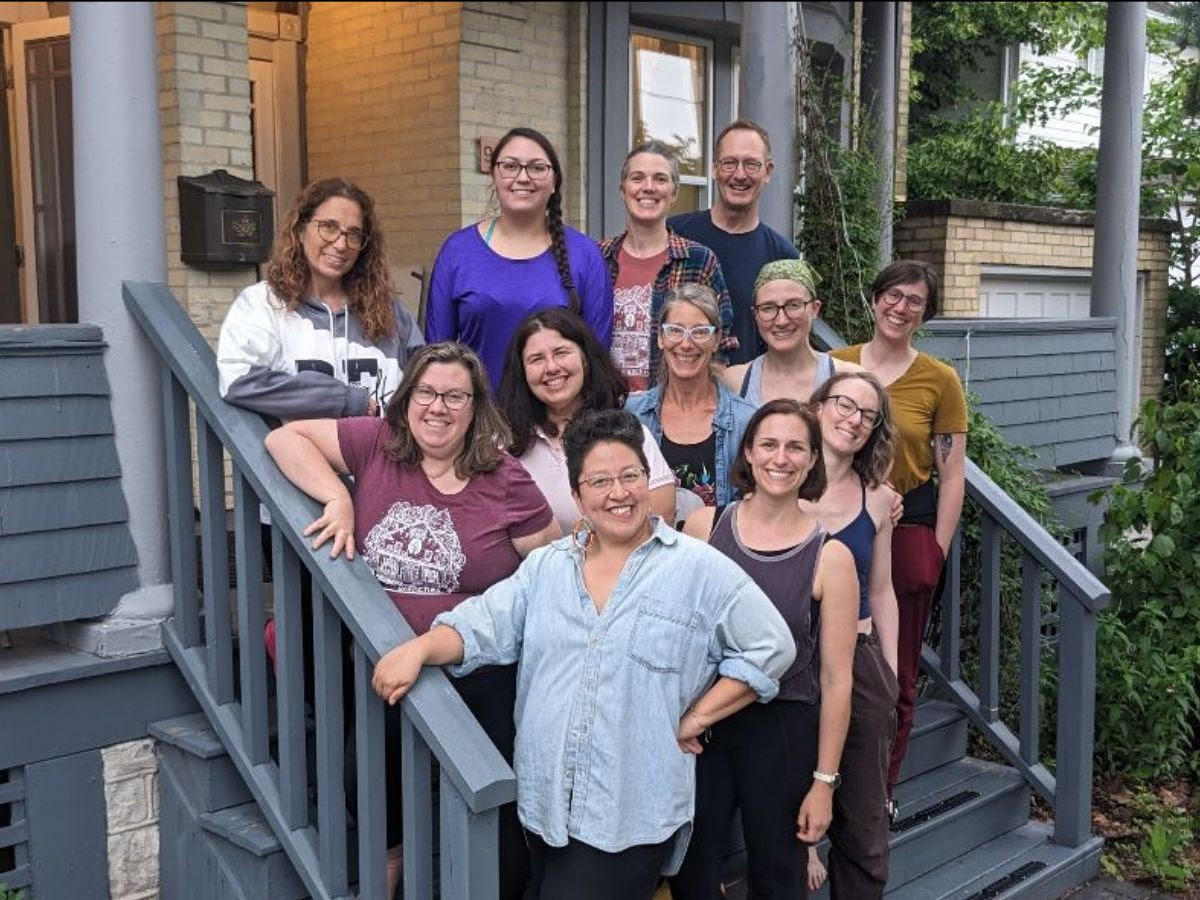
Pictured here are a handful of the newly-initiated teachers: a mix of people who were already sharing yoga in movement and wellness spaces, or who have new-found passion for teaching, and some who’ll continue to prioritize their own evolutionary relationship with yoga. Program directors Leena and Emma were continuously impressed by the maturity and thoughtfulness of this group.

Photo Highlights from Final YTT Weekend

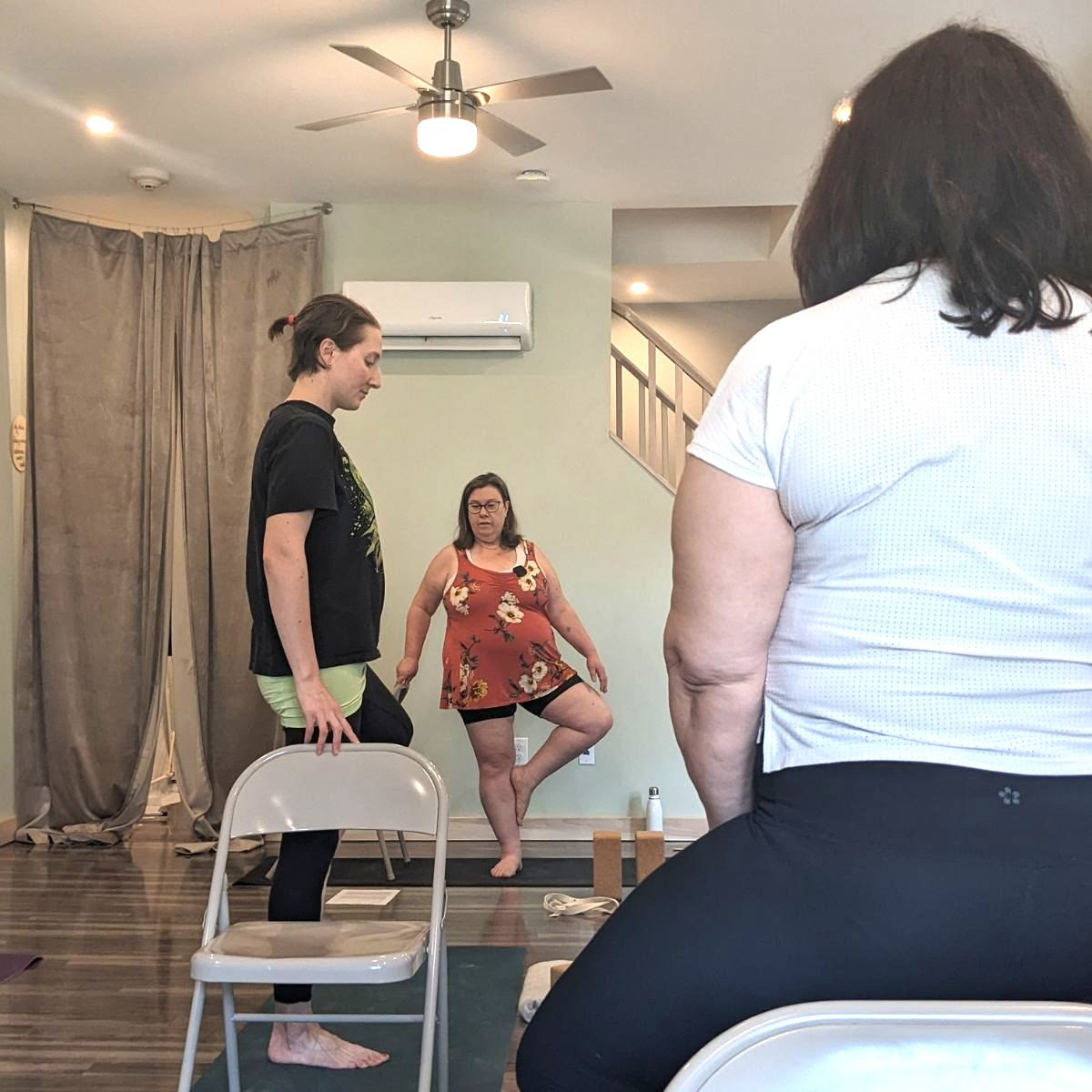
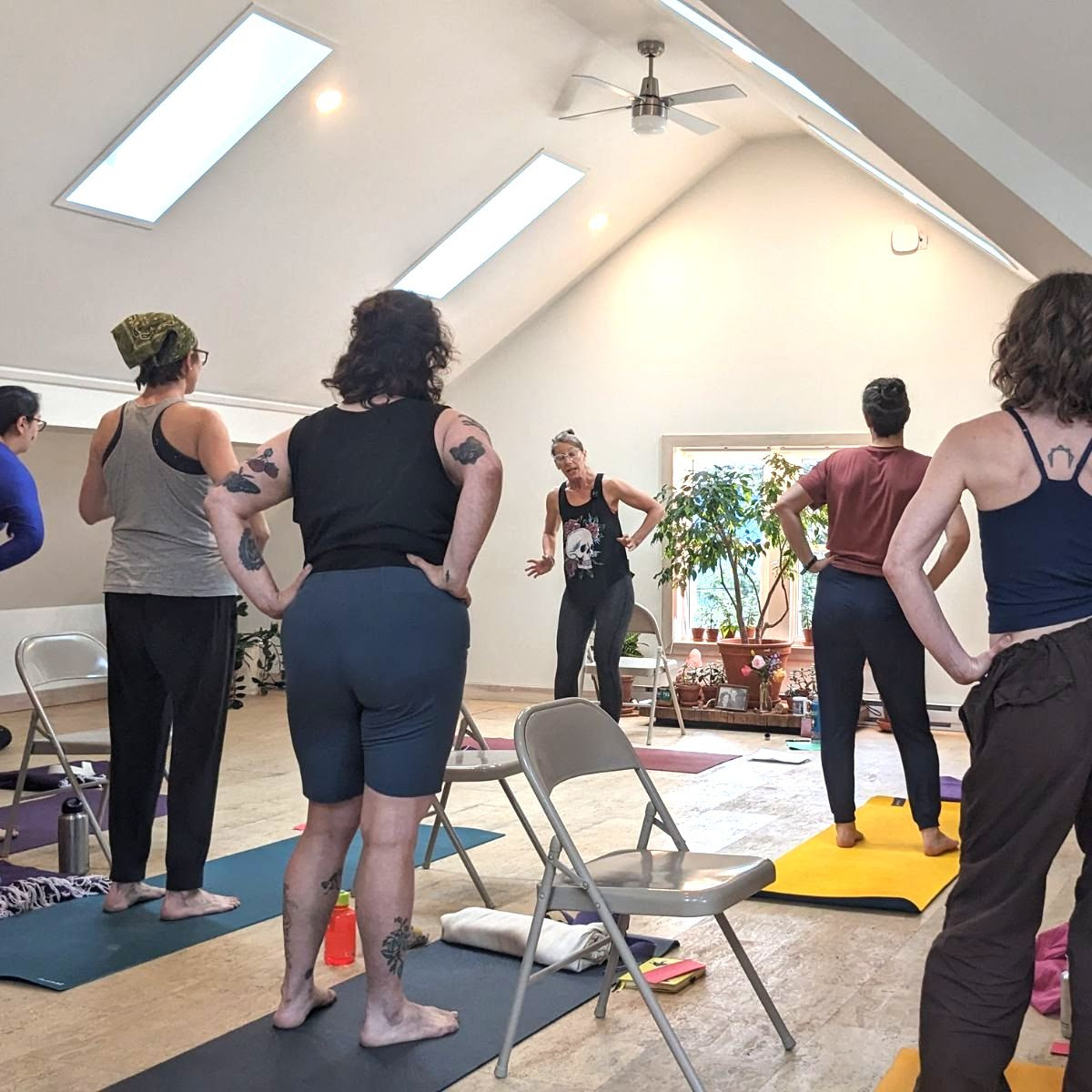
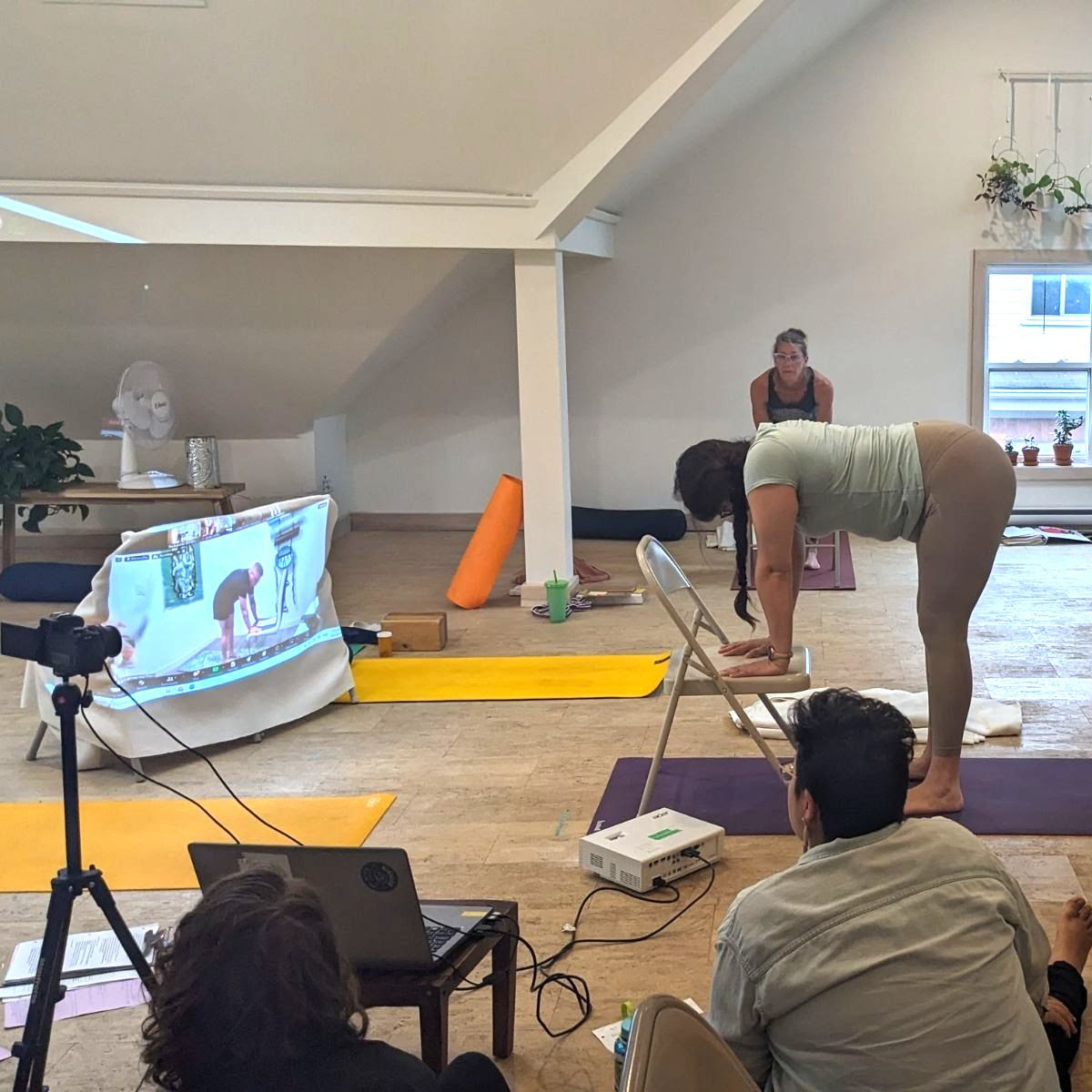
Below are some highlights from our grads’ teaching initiations. We were blessed with virtual lessons from our BC participants, and an in-person visit from our Hamilton participant!

The initiations are the capstone creative project of the program: 30 minutes of solo teaching, with a mission: an intention to serve a specific population, highlight a specific action, and communicate a specific learning goal. 

All teacher-trainees give and receive feedback on one another’s teaching, according to hard and soft skills they’ve been honing over the course of the program.

Everyone made huge improvements, and we are super-duper proud of them.

WANT TO DO OUR NEXT YTT?

Here are some pathways to participation.

Our next full 250-hour Yoga Teacher Training will take place through the 2025-2026 academic year. It’s a long time to wait, but we think it’s worth it.

That said, there are a couple of things you can do in the meantime to:
 a) test out our vibe and make sure it’s a good fit
b) get ready for a big experiential learning journey

Option 1: Prep Program
The perfect toe-dip that you can do anytime.
Get:
-a 20 Class-Pass 
-10 Introductory YTT lessons in our online portal
-If you do the full YTT, we will deduct Prep fees from tuition, making the Prep Program free.

Option 2: Restorative YTT

A 45-hour training that runs over the winter 2024-2025.
Includes
-three weekend intensives
-Yoga Alliance credits
-a deep dive into intentional rest
-Can be done before, after, or totally separate from the full 250-hour YTT.

Meet Our Grads: Min Min

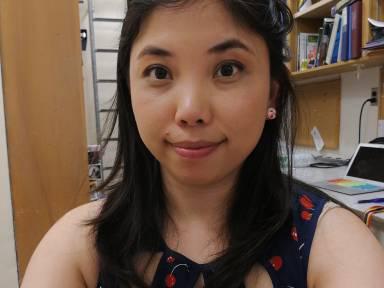
Min Min Tong graduated from our Yoga Teacher Training program in 2018 and has stayed connected to the studio community through teaching and taking classes. We appreciate Min Min’s commitment to social justice and continue to learn from her commitment to anti-oppression work. Here’s what she had to say about her experience.


What is happening in your yoga teaching life?

In my first year, I taught $5 classes (aimed at making yoga more financially accessible) at QSY. It was a wonderful experience. I also subbed several 7:30am classes, which really got my blood pumping in the morning! In the spring of 2020, QSY gave me the opportunity to teach my first 8-week course. I was grateful for having dipped my toes in, but the pandemic put a pause on the program. Since then, I’ve taught classes online via Zoom to office! As a school teacher, I’ve also been able to incorporate yoga and meditation into some of my classes.

What was your biggest takeaway from our program?

The sense of community at Queen Street Yoga has kept me going. It’s no secret that it can be really hard to find paid work the first few years as a yoga teacher. Having support from my fellow graduates, as well as my former teachers, Leena, Emma, Nicole and Monica, was very encouraging, through the periods where I wasn’t teaching or unable to find work. They reached out to me when I had questions and even kept me in the loop when new opportunities arose. I could not have asked to be supported by a better group of people.

“I had so many questions to ask. My curiosity was driving me to learn more and I was looking for a space to grow and be challenged. QSY was such a safe and supportive space. I was able to bring in thoughts and ideas from a personal lens, as a person of colour.”

Did you have any hesitations about doing the program that you had to address? Or obstacles you had to overcome?

I knew that this YTT program was for me because I had so many questions to ask. My curiosity was driving me to learn more and I was looking for a space to grow and be challenged. QSY was such a safe and supportive space. I was able to bring in thoughts and ideas from a personal lens, as a person of colour. I also greatly appreciated that the curriculum covered topics such as maintaining boundaries and explored what consensual touch means. As a victim of sexual assault, I have noticed that too many yoga studios don’t address it in their training. The program at YTT has done a thorough job of addressing some truly important and imperative issues in their training.

What would you say to someone who is trying to decide whether or not to do our training? What could you say to help them decide?

Queen Street Yoga is a place to grow, learn and be challenged. If you are a person who thinks deeply about anti-oppression or systemic disparities, this is a place where you will be engaged. Your voice will be heard and respected.


Choosing a Yoga Teacher Training program is a big decision. Learn more about our dynamic and empowering program on our website, and register for a Virtual Info Session to connect with Emma, Leslie and Leena, YTT Directors.

Meet Our Grads: Kayla

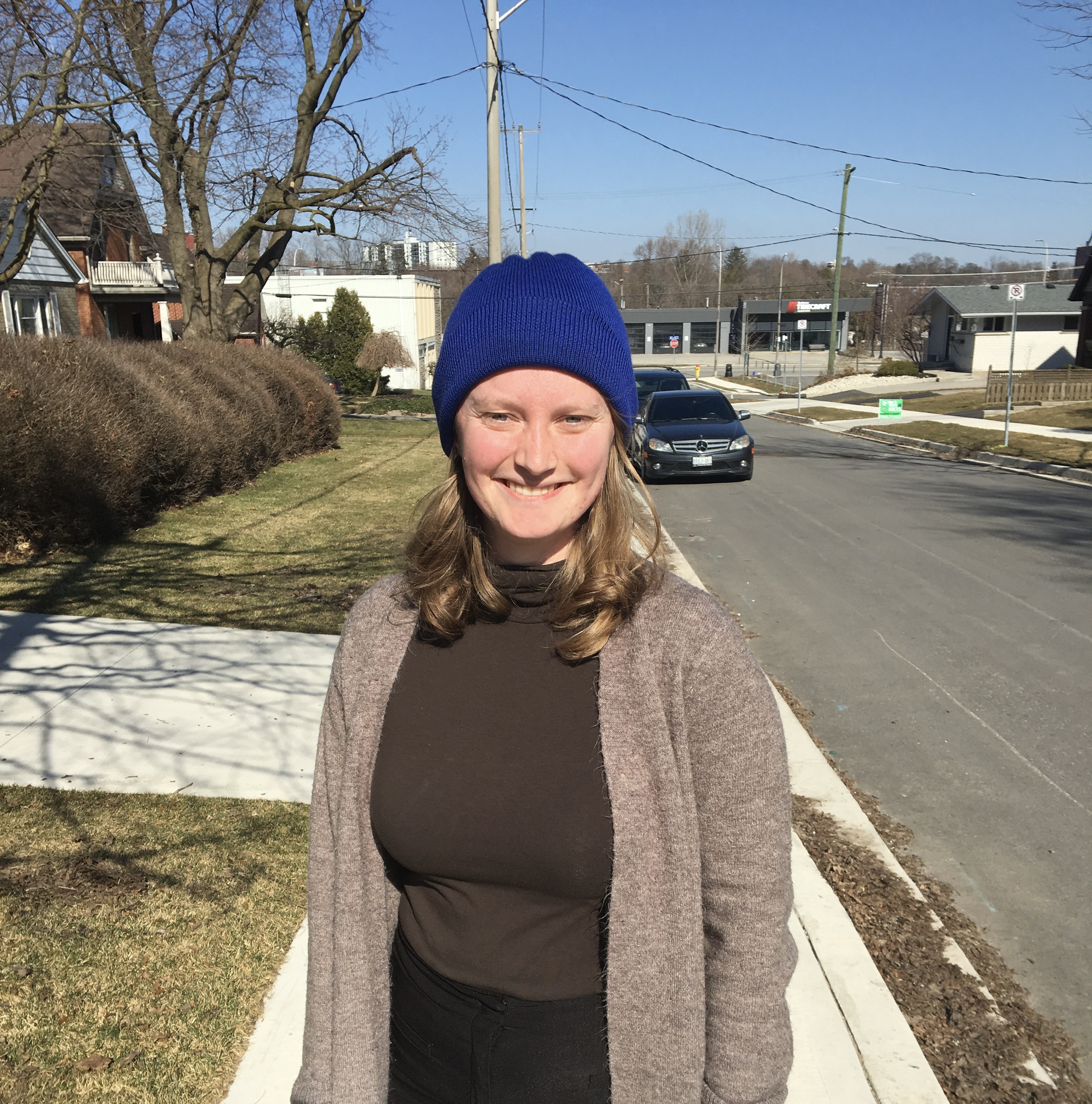
Kayla Haas graduated from our Yoga Teacher Training program in 2020 and has begun her teaching journey online during the pandemic. We look forward to seeing where she goes. You can connect with Kayla on Instagram at @kay.jay.h. Here’s what she had to say about her experience.


What is happening in your yoga teaching life?

After graduating from QSY’s 200hr YTT in 2020, I started teaching family and friends 1-2 times a week online. This year, I taught virtual kids yoga classes through a community centre and completed QSY’s 40hr Restorative YTT. I currently teach a private student through QSY and have subbed a few classes there.

What was your biggest takeaway from our program?

Yoga is so much more than physical postures. I credit the knowledgeable YTT faculty and guest speakers for helping me understand how to integrate yoga philosophy into all areas of my life. This foundational learning encouraged me to seek more information about the roots and evolution of yoga in order to better understand styles taught today.

“The learning that takes place within this training will spill into other areas of your life. You will be challenged to expand your self-awareness and critically examine your worldview.”

Did you have any hesitations about doing the program that you had to address? Or obstacles you had to overcome?

I worried about taking up space in a YTT program, and within yoga spaces in general, as a white woman. I had to reconcile feelings of guilt and uncertainty with my desire to deepen my practice and learn to teach. I knew I didn’t want to treat a YTT as just something to fill my time with, so I made sure I had the capacity to fully engage with the material in this program.

What would you say to someone who is trying to decide whether or not to do our training? What could you say to help them decide?

This program demands an investment of your time and energy for 10 months. The learning that takes place within this training will spill into other areas of your life. You will be challenged to expand your self-awareness and critically examine your worldview. This training was enriching, difficult, comprehensive, exhausting, and nourishing all at once.


Choosing a Yoga Teacher Training program is a big decision. Learn more about our dynamic and empowering program on our website, and register for a Virtual Info Session to connect with Emma, Leslie and Leena, YTT Directors.

Meet Our Grads: Nadine

Nadine Quehl graduated from our Yoga Teacher Training program in 2018 and is dedicated to sharing yoga as a form of community care. We admire her work as an advocate for the incarcerated women she teaches, and are so glad she is sharing her warmth and knowledge in the community. Here’s what she had to say about her experience.


What is happening in your yoga teaching life?

Before the pandemic I was teaching yoga to women at Grand Valley Institution (GVI). Since the pandemic started, I have led free Community Care classes for QSY with my friend Sara. I’m grateful that we were able to share those yoga class recordings with the women at GVI, since it hasn’t been possible to teach in-person there since the pandemic began.

I have been leading mindful movement sessions for my choir Inshallah once or twice on Zoom to keep us connected. I have also shifted teaching yoga for my colleagues at the University of Waterloo to an online format. This year I started the Mindfulness Based Cognitive Therapy Practicum at the Centre for Mindfulness Studies, which I love incorporating into my classes.

“I have had a shift in my personal practice of gratitude, self-kindness and community care – a journey that has deepened significantly as a result of YTT.”

What was your biggest takeaway from our program?

QSY teacher training enabled me to witness and embody the power of connection and compassion, as well as confidence. I started the program thinking that I would deepen my practice only, and not teach afterwards, but I have been teaching consistently since I graduated (and in a prison, which I never would have envisioned). I have had a shift in my personal practice of gratitude, self-kindness and community care – a journey that has deepened significantly as a result of YTT. QSY also gave me a whole new understanding of what ‘yoga’ is and the importance of making it accessible and inclusive and taking it ‘off the mat’ to address issues that need transforming in our world.

Did you have any hesitations about doing the program that you had to address? Or obstacles you had to overcome?

After spending way too many years in graduate school and getting burned out, I was hesitant to enter an intensive program of study, but QSY’s encouraging and caring community made a huge difference in my ability to learn and thrive. I also wondered if I would have enough time to commit to the practice and homework. I was concerned that an academic study of yoga might sap the joy from the practice but, happily, it made me love and appreciate yoga even more. I was terrified of teaching, but going in with an open attitude and intention to do the training to enhance my own practice helped.

What would you say to someone who is trying to decide whether or not to do our training? What could you say to help them decide?

I would suggest considering your availability, as it is a big time commitment and you will get the most out of the program if you can make time not only for the readings and classes, but also for the home practice of yoga. Talking to grads is a great start, and I am happy to chat with you if you want to reach out. Connecting with the faculty, be curious and ask lots of questions about the program.


Choosing a Yoga Teacher Training program is a big decision. Learn more about our dynamic and empowering program on our website, and register for a Virtual Info Session to connect with Emma, Leslie and Leena, YTT Directors.

Meet Our Grads: Chris

Chris Bourke graduated from our Yoga Teacher Training program in 2016 and has gone on to teach and work with several leaders in the yoga and movement world, and is innovating his own approach to yoga for mental health. We are so proud of how Chris is flourishing in his career, and can’t wait to see where he goes next. You can connect with Chris @anchoredtides on Instagram. Here’s what he had to say about his experience.


What is happening in your yoga teaching life?

The QSY YTT gave me an incredible launchpad into many movement training and teaching opportunities. This was in large part due to the way Emma and Leena fostered our unique teaching voices and interests. I remember our final teaching assignment allowed us to pick the ideal community we wanted to teach to, and how we would want to teach. That creative space opened the door for me to explore movement for mental health. I am currently teaching with GOODBODYFEEL and Mindful Strength as well as my own mental health focused practice, Anchored Tides.

What was your biggest takeaway from our program?

QSY was one of the first yoga studios that put a strong focus on anti-oppression and inclusion in their training. We had some remarkable guest teachers that taught us about anti-racism, LGBTQ2S+ spaces, and body inclusivity. That was one of the biggest takeaways – how to build spaces that are welcoming and inclusive to folks. They bolstered the confidence in holding those spaces and the humility it takes to make mistakes, and learn as you engage this work.

Did you have any hesitations about doing the program that you had to address? Or obstacles you had to overcome?

I remember when I first considered signing up for the training I thought “Do I practice yoga enough to do this and become a teacher?” I quickly learned that being a teacher and space holder is less about the postures or the movement, and much more about how we show up compassionately (ourselves included). This training taught me so much about building confidence in front of others from a place of embracing imperfection and not having to know it all.

“That was one of the biggest takeaways – how to build spaces that are welcoming and inclusive to folks. They bolstered the confidence in holding those spaces and the humility it takes to make mistakes, and learn as you engage this work.”

What would you say to someone who is trying to decide whether or not to do our training? What could you say to help them decide?

A Yoga Teacher Training is a really wonderful experience regardless of whether it yields a road towards teaching. You spend a whole year in this loving community of people who support one another and nurture each other’s personal/professional growth. During these wild times of disconnection and change, feeling supported by a community is incredibly invaluable. Aside from that, this training is going to give you some of the most innovative, progressive and up-to-date teaching strategies. Leena is a pedagogy GENIUS! Emma is a whiz in creativity and compassionate sequencing. Leslie is a strength and nervous system powerhouse. You are going to feel SUPER supported and SUPER smart afterwards.


Choosing a Yoga Teacher Training program is a big decision. Learn more about our dynamic and empowering program on our website, and register for a Virtual Info Session to connect with Emma, Leslie and Leena, YTT Directors.