Something I don’t often talk about…

An invitation from Emma, one of The Branches’ co-directors.

In one of my favourite podcasts, the host starts every interview by asking, “What identities do you lead with?” I have been thinking about this question, and wondering how I would answer it in relation to The Branches.

Here at the studio, I most often lead with the identity of co-director and teacher. I sometimes bring in my identity as a mother (since I have many cute stories of my toddler to share). But I notice that my racial identity is not something that I center or share when I’m teaching or relating to students. I realized this only recently, as I’ve started to engage in more spaces with people that share a mixed-race identity. Suddenly, there is a part of myself and my experience that comes out, and it both surprises and enlivens me.

In the back strategy room of The Branches (which is just the Ground Studio with our folding tables), Leena, Leslie, Wendy and I often talk about and consider race and racism. To us, everything is political and has political consequences, and who shows up in our space to practice yoga has everything to do with how those politics are playing out. As we design our programs, write our newsletters and make silly reels for Instagram, we consider accessibility, ableism, racism, casteism, antisemitism, Islamaphobia, privilege and power. We wonder: who does our message exclude? Who does our message privilege? Who will feel comfortable or uncomfortable coming here as a result of our expressions, programs, ideas and jokes?

One place where I feel more able to lead with my identity as a mixed race person is in our Yoga Teacher Training Program. I feel like I can acknowledge and share from that experience more readily. This is because race, racism, power and privilege are important themes in our YTT, and I feel relief and joy in that being part of the culture we create together.

Being in the space of the YTT, among folks who readily acknowledge the influence of white supremacy, capitalism, colonialism, patriarchy and heteronormativity, I can breathe easier. I can become more embodied because more of who and what my body is and is affected by, is spoken about. And I think I am still at the beginning of realizing what embodiment that includes my mixed race identity feels like.
* * *
I want the larger community of The Branches to feel invited into this depth of conversation. And so, for the first time, we are opening up particular sessions in our YTT to the wider community. We have invited some amazing speakers to add nuance and perspective to our understanding and practice of embodiment, and we invite you to join in and learn from them as well.

Here’s the rundown of speakers:
The Branches’
Virtual Speaker Series

So You Want to Chant Om? Context for OM & Namaste
with Tejal Patel
Fri Feb 23, 7-9:30pm
Equity, Access & Representation in Movement Spaces
with Robin Lacambra
Fri April 12, 7-9pmYoga for Trauma: Embodiment & Recovery
with Nicole Brown Faulknor
Sat April 13, 3:30-5:30pm
Bio-psycho-social Impacts on Movement and Mental Health
with Chris Bourke
Fri May 3, 7-9pm
 Racial Justice & Racial Trauma: Accountability in Community Wellness Spaces
with Carla Beharry
Sat May 4, 3:30-5:30pm
If you live in a body, these themes are relevant to you. We believe that centering these conversations can help all of us understand how different bodies experience yoga and movement spaces, and how politics shape all of the spaces we inhabit. Through this series, we can even begin to explore the power we all have to shift the internal culture of the spaces we participate in towards the dream of overturning the larger systems of oppression we are all affected by.

One aspect of The Branches’ mission statement is “Building a better world, with Yoga as our common ground.” This is our one-step-at-a-time way of doing this. Please include yourself in this conversation. We want you there, and we want you to experience what community can feel like when more peoples’ experiences and identities are centred, honoured and integrated.

With so much care,
Emma

A love letter to death for the Solstice

Quiet friend who has come so far,

feel how your breathing makes more space around you.
Let this darkness be a bell tower
and you the bell. As you ring,

what batters you becomes your strength.
Move back and forth into the change.
What is it like, such intensity of pain?
If the drink is bitter, turn yourself to wine.

In this uncontainable night,
be the mystery at the crossroads of your senses,
the meaning discovered there.

And if the world has ceased to hear you,
say to the silent earth: I flow.
To the rushing water, speak: I am.
– Rainer Maria Rilke
Content Warning: this letter from Leslie contains reflections on personal loss, death in general, and the overall state of the world. [ 8 minute read ]
An Initiation into Intimacy with Death
Today is the Winter Solstice. After the gradual decline of Autumn, the ground is now frozen, the leaves have fallen, we have arrived at peak darkness, the dormant pause of Winter, and the death of the year.

Coincidentally, in just a few more days, it will have been 17 years since the Christmas Eve that my mom suddenly fell so ill that she couldn’t attend any of the holiday family events. And in another month after that, it will have been 17 years since her abrupt passing. I was 21. Since then, the dying of the year is forever tied to the most painful death I have experienced in life so far. Christmas cheer is always complex, and the increasing darkness on the way to the Solstice can sometimes hit me doubly hard.

Nonetheless, over the years, I have come to feel that her death was not just a loss, but also an initiation. Learning to look directly at death and darkness, or even embrace them, has become an important part of cultivating the wholeness that we might be seeking through our yoga practice.

I believe it would be wise to get more intimate with darkness, endings and death. This letter is an invitation for you to consider joining me on that journey.

 Death in Yoga Practice: Savasana
Every time we do a formalized yoga practice on the mat, a cycle ends. Savasana, typically the final posture in an asana practice, is named in Sanskrit from the root word meaning “corpse.” In addition to simply resting, to me, savasana invites us into a symbolic and practical acknowledgment of the ending of a cycle.

During savasana, I observe downward trends like the heat dissipating from my body, my heart rate settling back down, and the subtle decrease in muscle tension. All of this illustrates the natural impermanence of each episode of experience, and by extension, of my life as a whole. By practicing the death-like state of stillness and withdrawal from my external senses, I get an opportunity to contemplate my own transience as an embodied being.

My felt-sense of both pleasant and unpleasant sensations arising and passing away during practice, and especially during savasana, calls me to more fully savour what I find to be sweet, and to take any bitterness in a long view, knowing that all things, good and bad, must pass.

 Death in Every Moment: the Breath
Every time we breathe, a cycle ends. Looking at it on the scale of a lifetime, upon birth, we all kick off the adventure with our first lung-expanding inhale. And at some point, if we are granted the privilege of dying gently, one of our exhales will be our last.

When I have the presence of mind and a moment to focus, I softly and gradually slow my cycles of breath and observe what it’s like as I extend and finish my exhales, lingering with my attention in the empty dormancy of the after-exhale, the tiny endings at regular intervals. You might try this for yourself as you fall asleep at night, as you settle at the beginning of your yoga practice, or as you wait a moment before you transition to school or work or home.

Practices like savasana or simple breath awareness nudge me to acknowledge the fact that my time in this human body is limited. When I can connect to this truth, it brightens and strengthens my appreciation for life, and cracks me open to a deeper connection to its beauty. When I am brave enough to embrace these mini-deaths, the encounters spark the questions, What if this moment were my last one? Could I make peace with the life I’ve lived so far? If not, how can I live better?

 Death and The Pain of the World
Integrating the grief from a loved one’s death is one thing. Attuning to the reality of your own death is another. Beyond that, there is a third call that I think would be wise to explore, which is facing the pain, death and loss of living entities, human or non-human, all around the world.

Reading that, maybe your mind jumps to the several humanitarian crises transpiring across the globe due to supremacy-driven political ideologies, or exploitative labour practices in service of more capital for shareholders. I know some of you will have immediately thought of our animal relatives, or the larger interconnected web of being that includes all living things, and the animate, ensouled world where rocks and rivers have personhood, too.

It is dark out there, but I believe that bravely witnessing the darkness has the potency to light up a fire in our hearts. An interview I watched recently was summed up by the host, Daniel Schmachtenberger, like this,

“When we are actually open to the beauty of reality, there’s a sense of awe, and a gratitude, and a humility that comes with that. But when we’re open to the beauty-of-reality being harmed, which is in the factory farm, and on the war field, we also feel the suffering of others, such that it’s overwhelming. And the overwhelm in the suffering, and the overwhelm in the beauty are related, because if the reality wasn’t beautiful, you wouldn’t care. And both of them make you transcend your small self, and both of them motivate a sacred obligation – the protective impulse.” 

Just because death is inevitable doesn’t mean that we should ignore injustices that steal life or cut it short. I call on the truth of what Dare Carasquillo calls The Non-Dual Sacred, which they describe as “an ethos that holds nothing to be permanent, yet chooses kindness and collective wellbeing in each moment.”

 Loving Kindness at the Death of the Year
This time of year, the annual death of the light with all its complications, has begun to feel like a familiar friend. It gives me solace to be reminded that endings – deaths – are just as much a part of existence as beginnings or births. Upon the Solstice, I’m reflecting by marking my wins, joys and achievements, but also mourning losses, grieving missed opportunities, and mindfully releasing failures. Looking back, can you see all that transpired, including the parts that were difficult, sad, or unresolved? What better way to enter the new year than integrating all aspects of reality – dark and light.

Looking ahead, soon we will all feel the cyclical return of the light – the rebirth of the year. This past the month, at The Branches we’ve been emphasizing loving kindness, and offered a gentle introduction to metta practice – a practice of cultivating positive regard and universal friendliness to all beings. We think of this as the emotional foundation upon which caring action is based.

If this letter has touched you, I invite you to connect to the awe and appreciation for all life, perhaps through death contemplation, or through metta. When you connect to the beauty of the world, what protective impulse do you feel called to act upon? Which aspect of collective wellbeing does your heart sing for you to support? If your yoga practice is the site of deepening interrelationship with the world, let this darkness be a bell tower.

See you in your next savasana,
Leslie


Sources
 In this letter, I’m drawing from reflections on the talks and writings of Dare CarasquilloThe Emerald PodcastDaniel SchmachtenbergerThe Numinous Podcast, the poem “Let This Darkness Be a Bell Tower” by Rainer Maria Rilke (translation by Joanna Macy and Anita Barrows. Source: On Being “A Wild Love for the World“), and probably many more.

My Secret Revolutionary Agenda

Emma here, and I’m going to let you in on my secret revolutionary agenda for teaching yoga. My agenda is Body Positivity, with a side of creating a better world.

When I teach a yoga class, I’m teaching breath, poses and mindfulness. But underneath all of that, I am inviting presence, softness and forgiveness for all the ways that we have abandoned our bodies, and the bodies of others. I am creating space for people to come back to their bodies, rekindle connection, and emerge with a renewed relationship with their bodies. This is how I am quietly working to change the world. 

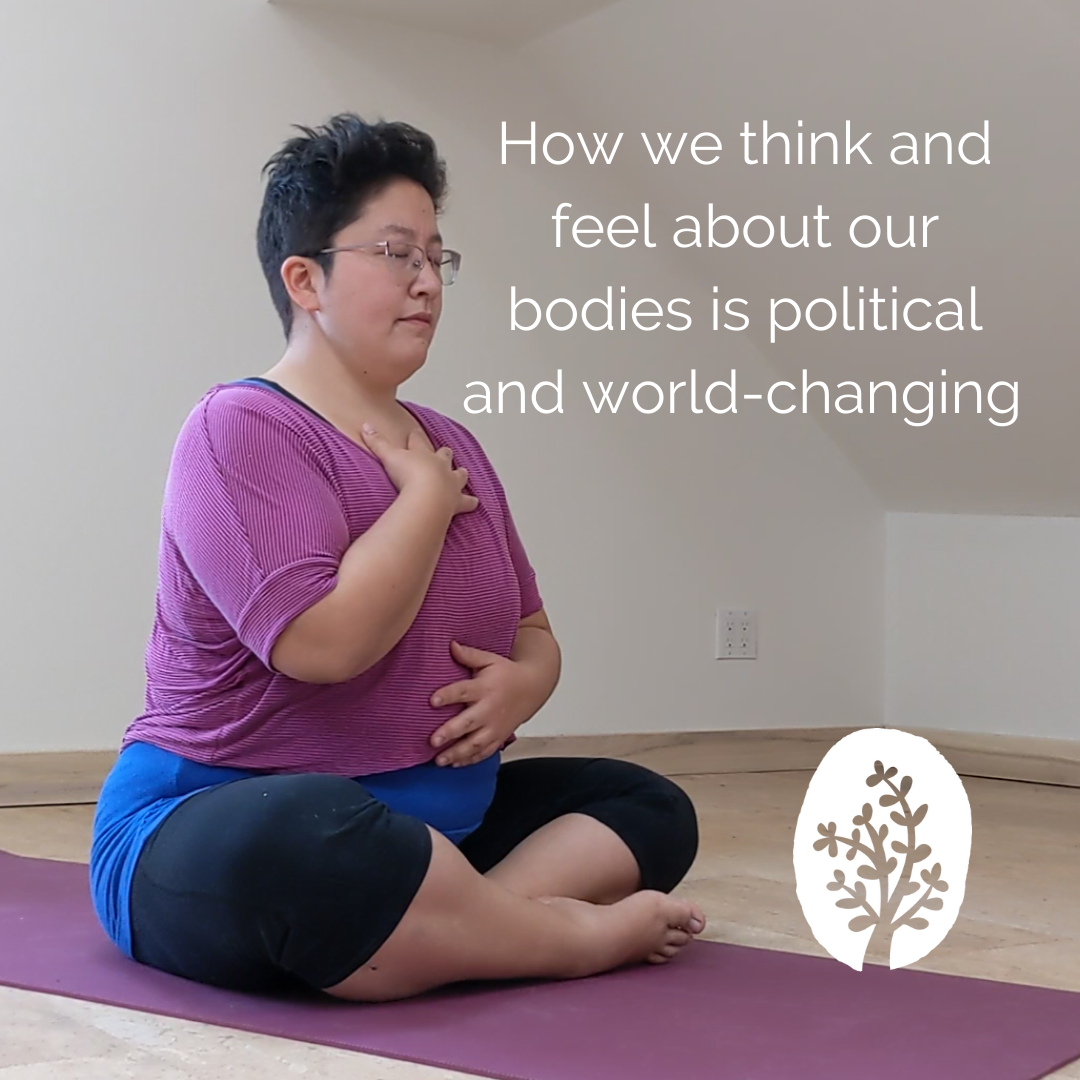
How we think and feel about our bodies is political and world-changing because it affects how we think about the bodies of others around us. It affects which other bodies we believe are deserving of care, attention, love or rest. It affects how we vote, what we buy, who we listen to, and how we bring up our children. Body Positivity as a practice can reshape how we see not only ourselves, but all the bodies around us. 

It’s about unwinding our attention from how we look to what we want – what kind of world we want to live in. If we’re not preoccupied with our weight or shape or height or skin, what would we spend our time building? Body Positivity is about remaking our world, remaking our definition of beauty and worth, remaking our lives to celebrate the beautiful differences that we have and are. 

Body Positivity was at its inception, a political stance. In the mainstream it has been whitewashed and watered-down to simplified slogans like “love the body you have”. Body Positivity was created by Fat, Black, queer women and femmes, and was intended as a political statement/practice for those whose bodies were the least accepted by the mainstream. Remembering this history, we can think of Body Positivity as a collective practice with a radical intention. Rather than mainly considering our perception of *our own* bodies, can we commit to accepting, loving or uplifting *all* bodies? Particularly those bodies that we might not see regularly represented in our world?

A Body Positive Yoga Practice does not need to include directives to LOVE YOUR BODY (has hearing that helped anyone actually love their body, ever?). Body Positivity is not about cheerleading or slogans. It is about presence and awareness, excavating old beliefs and cultivating new ones. 

I rarely say things like “Love your body” in my classes, because it isn’t that simple, and it isn’t the point. You don’t learn to love something by being told to do so. You learn to love something by getting to know them, and seeing their wondrous and curious quirks! You learn to love something with presence, attention and consistency. 

A few years ago my friend Simone shared a Body-Positive idea with me that I have never forgotten. It seemed like an idea to remake the world. It was revolutionary and ground-changing and incredibly simple. It was this: At the Jewish summer camp where Simone worked, they had one rule for the kids. NO BODY TALK. This meant that talking about other people’s bodies was off the table, including compliments (about clothes, jewelry, haircuts).  

I was flummoxed. 

“So the kids can’t even say they like another kid’s shirt?”

“No, because one kid getting attention for their shirt might make another kid self-conscious if they never get compliments on their clothes.”

I continued to prod.

“What about if you were wearing something really interesting, like a really unusual hat?”

“They can talk about that. They can ask questions. One thing we suggest is that they ask for the story of someone’s hat or shirt. That way it’s a bit more about curiosity than approval or status.”  

I loved this idea for so many reasons, one of which is that it de-centres what is at the surface and asks us to look deeper. It’s easy to talk about someone’s haircut, but how are they actually doing under there? Body Positivity is not about just saying nice things to yourself or others; it’s about really getting to know ourselves, learning the deeper stories and hearing the difficult truths. 

My deepest hope is that the practice of Body Positivity will help us recognize and celebrate the gorgeous differences in all bodies, and that out of that will grow the seeds for a better world. 

Many of these ideas were inspired by Sonya Renee Taylor’s work, and her amazing book “The Body is Not an Apology”. What I am calling Revolutionary Body Positivity, she calls Radical Self Love. I really, really recommend her book.

Want to reflect a bit more on these ideas? I made you a downloadable set of journaling prompts for you to cozy up to with your pen for some deeper thinking and feeling.

And, if you want to be part of an intentionally Body-Positive space, join our 30 Days of Body Positive Practice, starting Jan 2.

Here’s our new name, you can take it or leaf it

A Post from Leena Miller Cressman, Queen Street Yoga Owner/Director 

We needed a new name. But how to choose?

After the weighty decision to move from our home of 15 years, 44 Queen Street South, the decision to find a new name was obvious. However, what to rename ourselves ended up feeling like a monumental task. It took several months of brainstorming, testing, and soul-searching before we finally reached a decision. I felt a huge responsibility to rename this studio, since Queen Street Yoga has been a special place for many people for a long time – including me. This task felt akin to renaming a teenager. 

I wanted a name that felt true to who we already are, and would lead us into what we can become. This has been an opportunity to think carefully about why our studio exists. And now, I am proud to introduce you to our new name: The Branches.

We wanted this new name to connect to our values. The branches of Yoga include so much more than just asana (postures). It is meditation, community service, and a spiritual pathway to wholeness. In addition to being a way to care for our bodies, we believe Yoga and movement practices can be a catalyst for social and environmental justice. Yoga practice can help us recognize our interconnectedness. Yoga can give us sustenance to care for ourselves and others. With Yoga as our common ground, we can learn to engage with the world more wholeheartedly. 

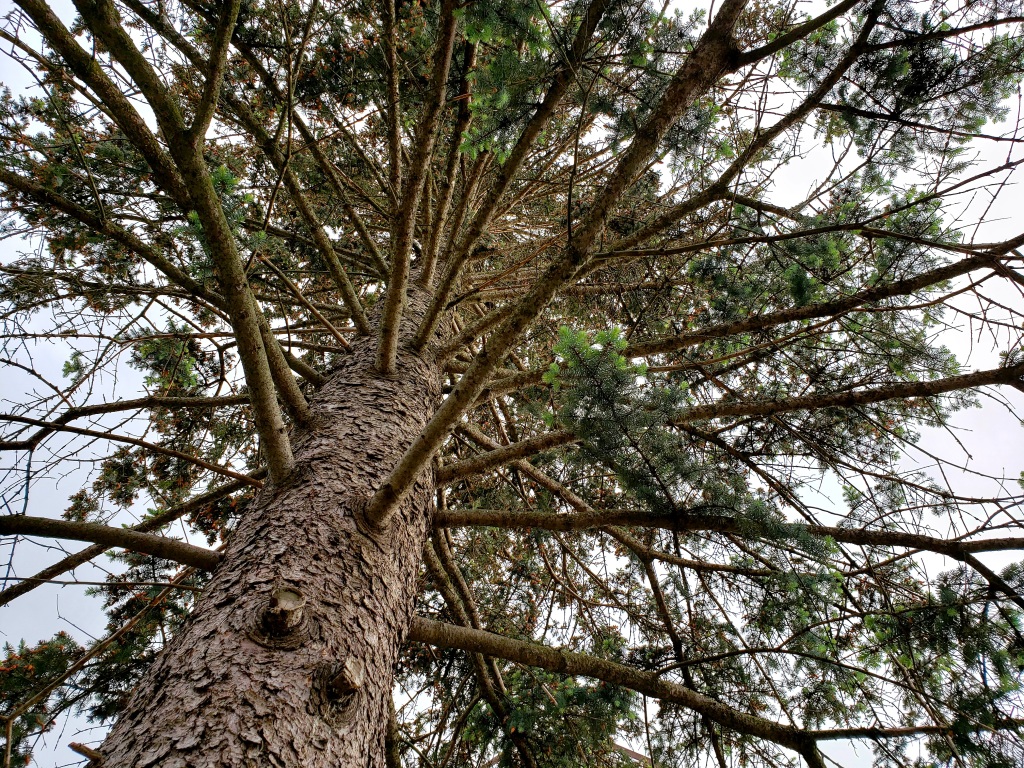
Our studio has been around for 16 years and we hope “The Branches” conjures the image of a huge, mature tree. We’re not a young sapling. We’ve got deep roots, a sturdy trunk, a big canopy, and we’re home to lots of life. The Branches represent the diverse people who have gathered in our community for the past decade and a half, and the many new people we are connecting with in online classes. Our new name speaks to the many people who have graduated from our Yoga Teacher Training to seed their own classes in schools, prisons, community centres, backyards, and seniors’ homes. Our strong branches reach far beyond a physical location.

We’re not a young sapling. We’ve got deep roots, a sturdy trunk, a big canopy, and we’re home to lots of life.

The Branches is a place of growth and nourishment. In our new location, no longer beholden to landlords and threatened by ever-increasing rent prices, we have more freedom to put down roots and create inclusive community space. We are working to build a ramp to make our ground-floor studio accessible. To remove financial barriers, we’re now offering sliding-scale prices for all our classes. We hope that our space can become a hub for community action by offering low-cost meeting rooms. Our new location is easily accessible by public transit, walking and biking. We’re in the middle of major renovations and have invested in a small environmental footprint by eliminating natural gas and retrofitting our building with energy-efficient heating, cooling and insulation. 

Come practice yoga with us outside under the branches of the maple, linden, and spruce trees

So welcome to The Branches. We’re so excited to practice together with you in our brand-new yoga space, whether in person or online. It’s going to be beautiful! This summer, as we await the hopeful resolution of the pandemic and our renovations, come practice yoga with us outside under the branches of the maple, linden, and spruce trees on our spacious back deck. 

P.S. We have a brand new website to match our name launching soon!

Yoga as Refuge and Resistance

A few weeks ago, Leena and I went to a climate change support group. The event alternated between conversations in pairs and as a whole group. We talked about our love and appreciation of nature and our pain and worry at seeing the climate crisis evolve. We ended by envisioning new actions we could take, as individuals and as communities. 
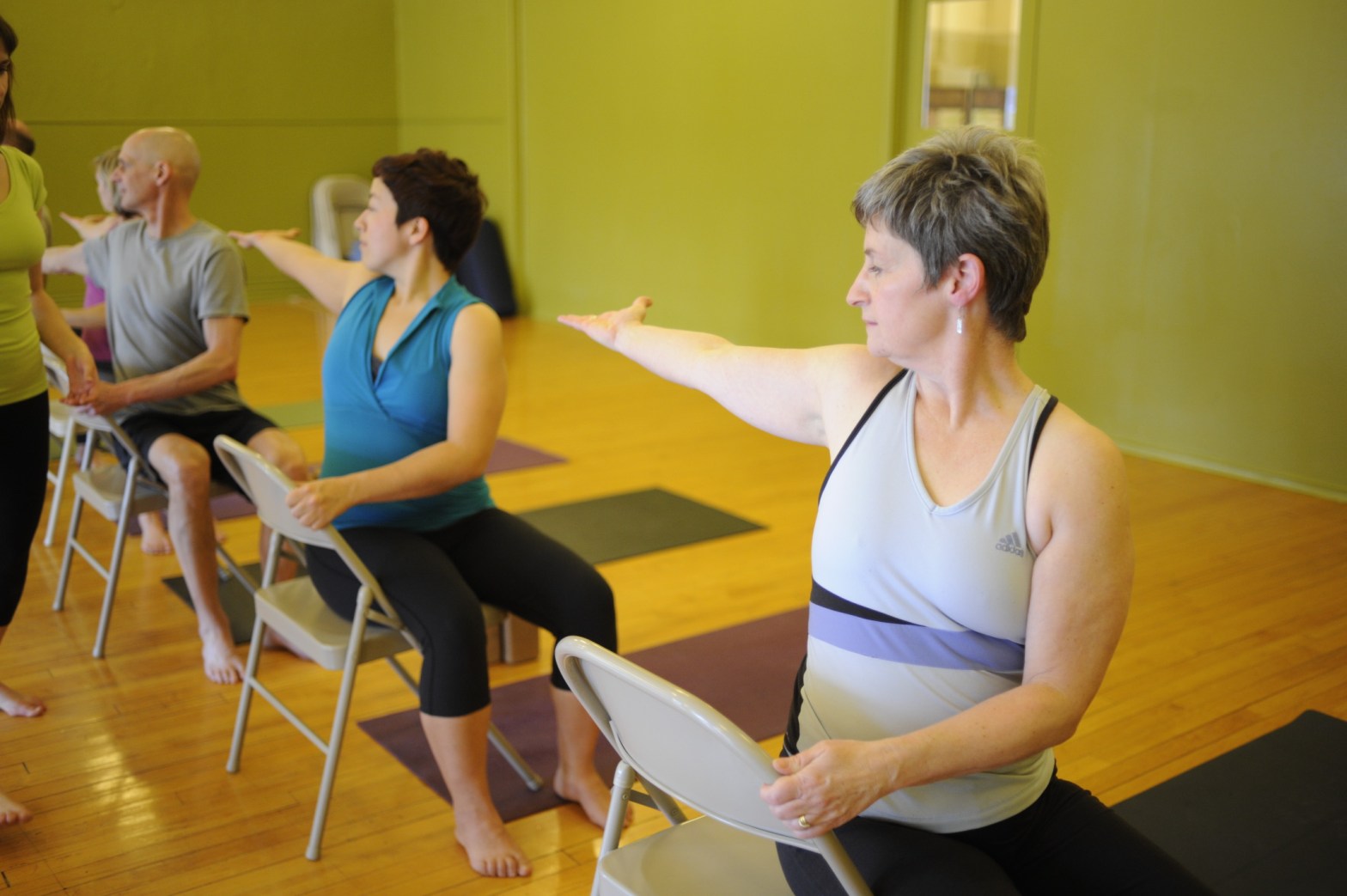
I thought I would leave the group feeling sad and overwhelmed, but instead I left energized and upbeat. I felt relieved to be sitting in a room of people talking about the crisis, rather than avoiding it. 

And it brought Leena and I back to wondering what the practice of yoga can be at this time. If there can be a place for yoga to be a part of the change we want to see, rather than carrying on like it’s business as usual. 

Yoga is a business, and Queen Street Yoga exists within capitalism. Yoga can be viewed as a tool of capitalism, a way to keep the cogs in the machine going. Yoga can help reduce stress in the workforce so everyone can keep consuming and the machine of big business can continue, unchecked. 

Continue reading “Yoga as Refuge and Resistance”

How Can We Acknowledge Cultural Appropriation in Yoga?

In acknowledging the various cultural objects and practices that are part of QSY, we are hoping to begin to address elements that may be alienating for some people in accessing our space, or start a discussion with those who might not have considered this topic before. We welcome feedback and critique about our efforts.

At Queen Street Yoga, we are actively working to make our space more inclusive, more accessible, and anti-oppressive. As part of this work, we would like to acknowledge the cultural objects and practices that are present in our studio. Cultural appropriation is a reality in our world; cultures constantly borrow (or take) designs, images, clothing, and practices from one another. However, when a dominant culture, such as North America, does this to less politically, economically or socially powerful culture such as India, and those aspects are used outside of their original cultural context, this can have the effect of reducing or commodifying those aspects of culture in ways that can be disrespectful.

Here are some questions that we try to keep in mind as we consider the presence of cultural objects and practices at QSY. We invite you to try them on for yourself as well.

Continue reading “How Can We Acknowledge Cultural Appropriation in Yoga?”

When the Poses Don’t Work – Adaptive & Accessible Yoga

This post is written by Sara F, a graduate of our 200-hour teacher training program. She’s been our a familiar face on Sunday nights, hosting at the front desk during our 6:00pm $5 Basics. Keep your eyes open for Sara on June 1 at 1:00pm for our Yoga in the Park: Pride Edition.


Have you ever been in a yoga class where the teacher instructs a pose, and you either stand/lay there knowing the pose won’t work for your body, or you silently struggle into it and hope it will end soon?
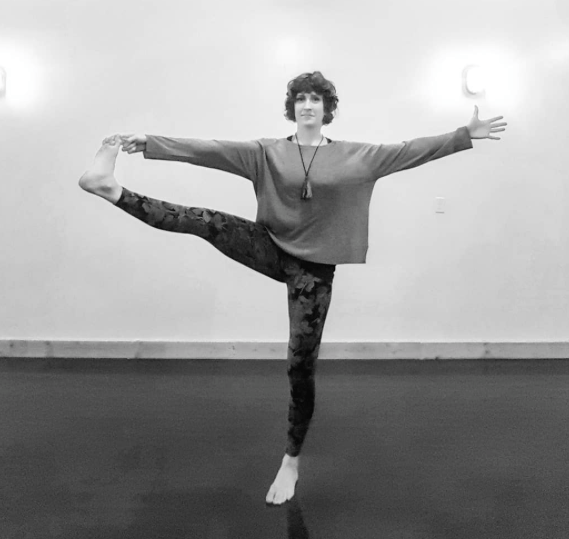
Or, on a more positive note, have you been in a yoga class where the teacher offers variations of a pose, often with different props? If the teacher gave different options, you have experienced accessible or adaptive yoga, which offers solutions that allow people of all abilities and body types to practice and benefit from yoga. At Queen Street Yoga you may have heard teachers refer to pose options as “bus stops,” and how far you ride down the bus route is up to you.

Continue reading “When the Poses Don’t Work – Adaptive & Accessible Yoga”

Strong or Flexible – Why Not Both?

When you see the class title Strength & Flow, what feelings or images come up? Does it make you think of a bootcamp class at the gym: grunting and burpees and shouting? Or maybe it brings up an experience of tightness in your body. One of the most commonly cited reasons for coming to yoga that I hear is, “I want to become more flexible.” Those same people often wonder if going to a class focused on strength is going to make them feel more stiff, rather than more flexible. We’ve got news for you: strength is flexibility’s best friend.

First things first though; don’t be nervous to try this class! You should know that Strength & Flow is actually quite doable, and nothing like bootcamp or gym class. The great thing about it is that it’s just as customizable as our other classes. The depth of your squat, the amount you can hinge at your hip, the time you spend time in plank, or the number of push-ups (with knees down if you want!) is up to you. You can sense the balance between fatigue and energy in your body on that day, and act accordingly. (And that’s where it becomes yoga.)

So why not “Flexibility & Flow,” when we know that flexibility is a goal for most people? Flexibility gets singled out as the physical quality that folks most desire. I get that – I began yoga without being able to touch my toes, and I used to fume with frustration and envy in seated poses because there was no way that I could straighten my knees, or tilt my pelvis forward – my back was rounded, my hamstrings felt tight, and that was that.

But: is flexibility all that it’s cracked up to be? And is passive stretching even the best way to feel and move better? You can probably tell that I don’t necessarily think so.

Continue reading “Strong or Flexible – Why Not Both?”

Your body and mind are not a problem to be solved

We’ve all done it. Declared a new path forward (“No more facebook, I am going to read a book instead!”) only to find ourselves, hours later, back in the habit. Scrolling, barely present, and regretting it later.
It’s not your fault. There are literally millions of dollars being poured into making smartphone apps, television shows, and sugary/salty foods addictive. It’s big business. Manipulating human habits is an enormous business.

We are a small business. We want to make space for people to connect with their bodies, examine the habits of their mind and movement, and learn to care for themselves in our overly busy world.

It’s hard to compete with big business. And we don’t really want to. We are not interested in manipulating people into yoga and meditation. We refuse to do it. Many marketing strategies suggesting that to grow your business, you need to create a problem for people, and tell them how you are going to solve it. (We recently saw a website for meditation that wanted you to click on “10 ways you are messing up your mindfulness practice”. Yuck.)

Continue reading “Your body and mind are not a problem to be solved”

“If you can’t do crow pose, you’re not a good person.” Nah. We don’t think so.

Sometimes when I am teaching, I feel a bit like a stand-up comedian. Depending on the mood and tone of the class, I might crack a lot of jokes, and add silly sound effects. Like a stand-up comedian, I try to poke fun at assumptions in our culture, usually those particular to the context of a yoga class.

With a sense of irony, I say things like:

“And if you can’t do crow pose, just know that you’re not as good of a person as everyone else.”

or

“Come out of this pose whenever you want. But you might not. Because peer pressure is real.”

When people laugh, I know I have struck a chord. The laughter denotes recognition of some sliver of truth. The truth that we still might be holding ideas about our physical abilities being equated to our moral character. Or how we have been conditioned to go along with a group, instead of listening to our individual needs.

Continue reading ““If you can’t do crow pose, you’re not a good person.” Nah. We don’t think so.”