on deadlifting during climate emergencies

This post is from the mind and heart of Leslie, one of The Branches’ co-directors and co-owners.

Lately we’ve been (lightly) waxing poetic about summer in our recent posts, saying things like it doesn’t last forever, or it only comes once per year, and asking how you like to make the most of it. Gardening, beach-days, camping, or maybe hiding out in the A/C or basement with a good book?

Yoga in the Park, a staple of Branches summers, wrapped up yesterday a week later than planned. We had to dip into our reserved rain dates to make up for a cancellation earlier in the season. But this free community offering hadn’t been cancelled due to rain – it was the abysmal air quality.

No matter how each of us likes to spend the season, for nearly a week last month, summer was no longer about seizing the day, it was about… surviving. The wildfires in Northern Ontario that resulted in what was sometimes the worst air quality in the world had us canceling outdoor activities, shuttering windows, and for some, wearing masks while outdoors as a way of protecting our health.

I sometimes think (more like delude myself into thinking) that I did all my grieving around climate disasters decades ago when I first started reading the work of thinkers like John Michael Greer and Joanna Macy. Then this year’s heavy smoke – and the five-day self-imposed prohibition on going outside – brought a fresh wave of despair. The fact that I am now a parent adds its own weight. A more realistic expectation might be that these feelings will renew themselves alongside other markers of climate changes on cyclical, incremental, and even exponential patterns.

If I can sit with these feelings, I remember that there are a few things I already know for sure about climate stress and its causes: one is that it doesn’t do me any good to pretend it doesn’t exist. So thanks for reading this letter and joining me in recognizing our shared reality. Another truth is that whether or not we feel that correcting the course of human civilization is possible, we still need to adapt to the daily and yearly fluctuations of climate patterns as they get wilder and weirder. And finally, we need to do that adapting together.

One sign of adaptation on a micro scale at the studio is that three summers ago, extreme heat events became frequent enough that we had to add a heat wave policy for yoga in the park and classes on the back deck. Two summers ago, we added one about air quality due to the increasing incidence of wildfire smoke. Weather extremes are no longer rare or anomalous, so new norms required guidelines our staff could refer to. We’re grateful for the HVAC system we chose when we renovated the building – it includes top-of-the-line HEPA air filtration – but we are considering additional resources to enhance the indoor air quality even further. We take our responsibility to provide a supportive space in which to practice seriously, which includes the basics, like air.

We also aim to emobdy the values of resilience-building and social change, and these feel relevant in specific ways in light of ecological and climate disaster. There is a time and place for personal resilience, and we sincerely hope that your yoga practice and strength training sustain you mentally, emotionally and physically for the joys, but also for the challenges that the coming years and decades will bring. If you’ve been feeling frozen in the face of all that is f*cked up in our province, consider this your reminder and gentle nudge (or hearty pull) that you should still come do your deadlifts, your supported sidebends, or whatever practice keeps you clear-eyed and afloat. The world needs you feeling good enough to show up and share your gifts as we navigate difficulty together.

Having a safe(r) environment for practice might mean the building or room itself, but our responsibility doesn’t end at the doorway to the studio. Adaptation isn’t just air purifiers, and resilience must go beyond our own joints and mental attitudes. Let’s not forget that for some Ontarians, including those of settler-descent, but much more so Indigenous northerners, that the wildfire smoke has been a concern of minor importance compared with the fires themselves, which destroyed homes and displaced thousands. From our home-base in Kitchener, we can’t do the work of rebuilding the communities, but we can contribute to immediate emergency needs, especially through our chequing accounts. Here is an article that outlines a mix of specific First Nations, and some larger organizations that support those affected by the wildfires, who could really use our donations.

When surges of chaos or emergencies rise, I have to coach myself to do two things: one is to access whatever inner and outer resources I have to stay present instead of numbing out, and the other is to find a balance between dealing with present and future challenges, and connecting to joy so that I don’t wind up back in numbness. Easier said than done, but barbells and bolsters are not just to grow my resilience, they are a part of my presencing and joy practices, too.

There is so much more I want to say about our provincial and federal governments and the choices they’re making that seem not to respect our shared home here on Earth. But I’d rather hear back from you. How did you deal with our smoky air last month? Are there any beliefs or affirmations you say to yourself when a wave of climate chaos spikes up? Do you have any charitable organizations, or other forms of support you’d like to tell us about? We love hearing from our Branches community, about this, and everything.

Yours in solidarity,
Leslie
Yoga as Refuge and Resistance

A few weeks ago, Leena and I went to a climate change support group. The event alternated between conversations in pairs and as a whole group. We talked about our love and appreciation of nature and our pain and worry at seeing the climate crisis evolve. We ended by envisioning new actions we could take, as individuals and as communities. 
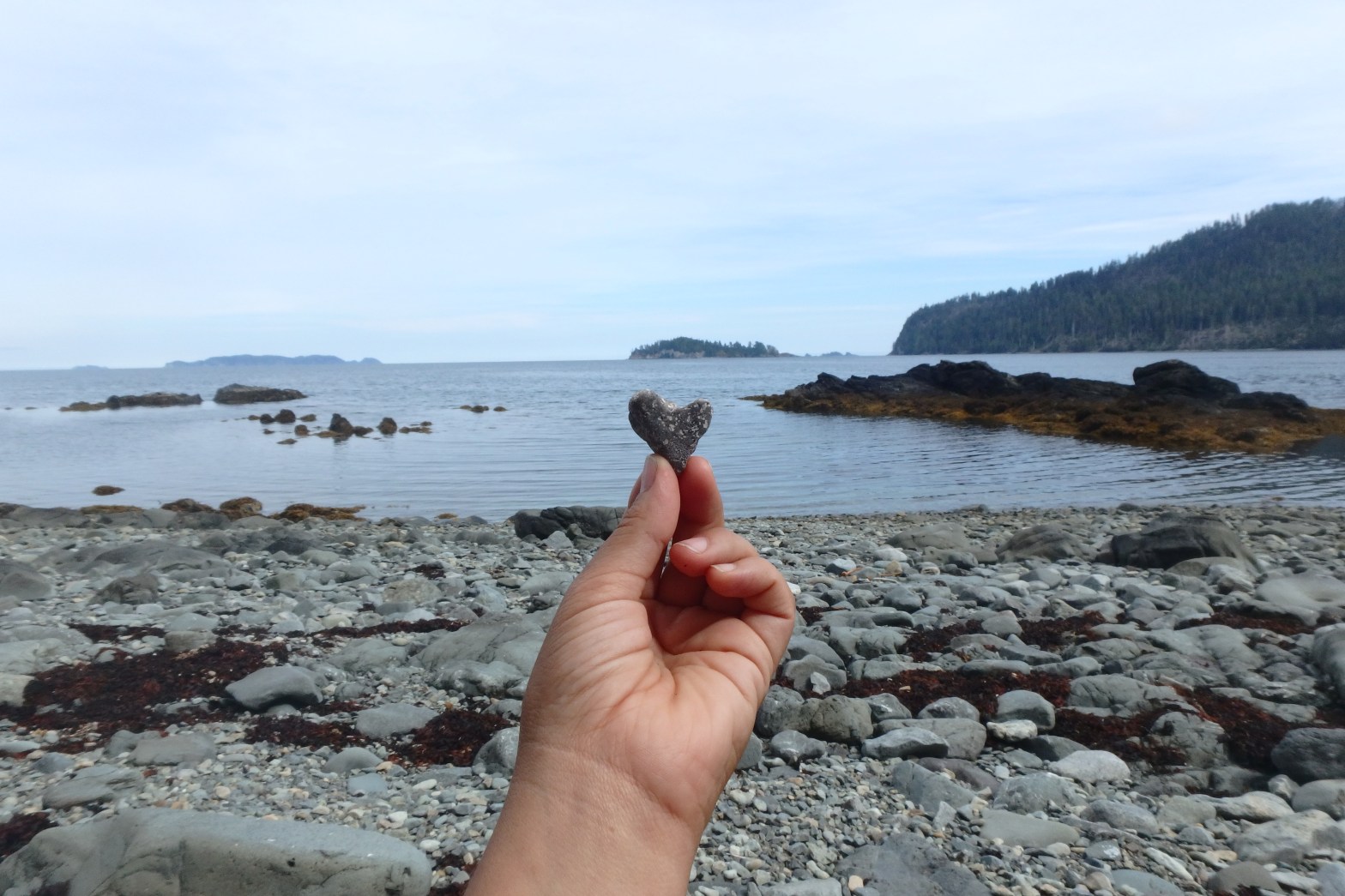
I thought I would leave the group feeling sad and overwhelmed, but instead I left energized and upbeat. I felt relieved to be sitting in a room of people talking about the crisis, rather than avoiding it. 

And it brought Leena and I back to wondering what the practice of yoga can be at this time. If there can be a place for yoga to be a part of the change we want to see, rather than carrying on like it’s business as usual. 

Yoga is a business, and Queen Street Yoga exists within capitalism. Yoga can be viewed as a tool of capitalism, a way to keep the cogs in the machine going. Yoga can help reduce stress in the workforce so everyone can keep consuming and the machine of big business can continue, unchecked. 

Continue reading “Yoga as Refuge and Resistance”

Walking Backwards – Widening My View

This blog post was written by studio director Emma, who has been travelling across Canada and in the United States for the last few months on a sabbatical from teaching. Emma will be back to teaching at the studio in November, and wishes to share this update about her trip with the QSY community. This post relates to the recent work Queen Street Yoga has been doing on Indigenous land acknowledgement and educating ourselves about the cultural genocide of First Nations populations in Canada.

At a contact dance workshop this summer, I participated in an exercise that included walking backwards along a forest path. The exercise encouraged us to sense the space behind us, which is a useful awareness to cultivate in dance. I walked backwards for over an hour along a winding forest path, over jagged rocks, bumpy tree roots and clumps of moss. The sensation was fascinating. I realized that I have had a habit of looking down at the ground as I walk, in order not to trip. Facing away from where I was walking to required me to slow down a great deal and sense carefully with my feet the texture and topography of the ground. Looking down was no longer a helpful strategy. My gaze was up and my awareness surrounded me like a sphere. I was no longer focused on moving ahead, on getting somewhere; I was filled up with the view of the landscape I was moving through, and an energetic sense of the landscape I was backing into.

One of the most noticeable differences in the experience of walking backwards is that your view is constantly widening.  Rather than things disappearing from your peripheral vision (which is what happens when you move forwards) the landscape appears slowly at your sides and seems to bloom out and emerge from the edges of your vision. What you see seems to grow in context and size, rather than shrink in anticipation and pursuit of your destination. Walking backwards, one is not preoccupied with the destination, rather, with having the fullest sense of the landscape, and of treading carefully on the ground. Continue reading “Walking Backwards – Widening My View”

Finding Your Soul-Mat: a guide from Queen Street Yoga

Sorry, I couldn’t resist the pun! I hope this post is a helpful guide to finding the mat of your dreams.

A quality yoga mat that suits your preferences can really enhance your practice. Ideally, if a mat is serving your needs, it should be functional and supportive enough that it becomes unnoticeable, so you can focus on enjoying your practice.

We carry four different types of mats at QSY and choosing the mat that is most suitable for you is really up to personal preferences and priorities. In this post, I’ll give what I consider to be the pros and cons of the mats we carry, so that if you’re in the market for a new mat, you can find one that feels like the best fit for your needs.Continue reading “Finding Your Soul-Mat: a guide from Queen Street Yoga”

A Climate Change Collage

Emma shared this post about climate change and yoga teaching on her own blog yesterday morning. We’ve reposted it here to share it with the wider QSY community. 

In the past few months I have been re-inspired (particularly by this article) to set the tone of my yoga classes to include the awareness of rapid climate destabilization (aka climate change) as a present reality and backdrop to the “personal” or “internal” practice of yoga. I have also started to (subtly, slowly) introduce issues of race/racism and gender/sexism into the space of my asana classes. I hope to become more skilled at grappling with these pieces in my own life, as well as making them familiar vocabulary/reference points in my classes. I feel a bit clumsy at the moment, almost like I am learning to teach all over again.  These pieces (grappling with the reality of climate change, naming and responding to systems of oppression) feel closest right now to my spiritual core, so it makes sense that I am sharing them as part of my practice. I appreciate and acknowledge the work of others that continue to inspire and inform me in this arena (some of these others include Christi-an Slomka, Michael Stone and Matthew Remski). It is also such a gift to work side by side every day with Leena Miller Cressman, who values these pieces with the same fervour as I do, and together we are bringing these pieces to life at our studio.

So, last night in one of my classes at Queen Street Yoga I shared a passage, a poem and a question. I called it “A Climate Change Collage”. In my recent reading and searching for insight about the decline of the ecological world, I felt as if a conversation was emerging between the different pieces I was reading and collecting. I cobbled them together and read them to my class to frame our practice for the night. The passage was by Martin Keogh, from the introduction to a book of essays called “Hope Beneath Our Feet: Restoring Our Place in the Natural World“. The poem was by The Reverend Victoria Safford, and I had heard it read aloud by Parker Palmer during a recent podcast produced by On Being. And the question was from an interview between EcoBuddhism.org and Joanna Macy, which a mentor had shared with me earlier in the week.

Continue reading “A Climate Change Collage”

Open Letter to the Kitchener-Waterloo Community and Local & Provincial Government Regarding the Smart Growth Plan of Waterloo Region

Have you heard that our region’s Smart Growth Plan that supports healthy urban densification and curbs suburban development that is harmful to our forests and farmland is UNDER THREAT?! Check out Smart Growth Waterloo Region and take a moment to share your voice with local and provincial officials. This is an environmental concern that we CAN take positive action on. Below is a letter that Queen Street Yoga has written to leaders and the community on the Region’s Smart Growth Plan and our battle with the Ontario Municipal Board. Continue reading “Open Letter to the Kitchener-Waterloo Community and Local & Provincial Government Regarding the Smart Growth Plan of Waterloo Region”

Earth Day Garden Makeover

Though it was cold and snowing on Earth Day, a bunch of dedicated yogi-gardeners came together to make-over the garden space at the entrance of Queen Street Yoga. Here are some pictures of the garden adventure!

The little garden is a wind trap for litter, so we started by clearing out four bags of garbage from in and around all the bushes.Continue reading “Earth Day Garden Makeover”

Earth Hour, Every Hour

Image
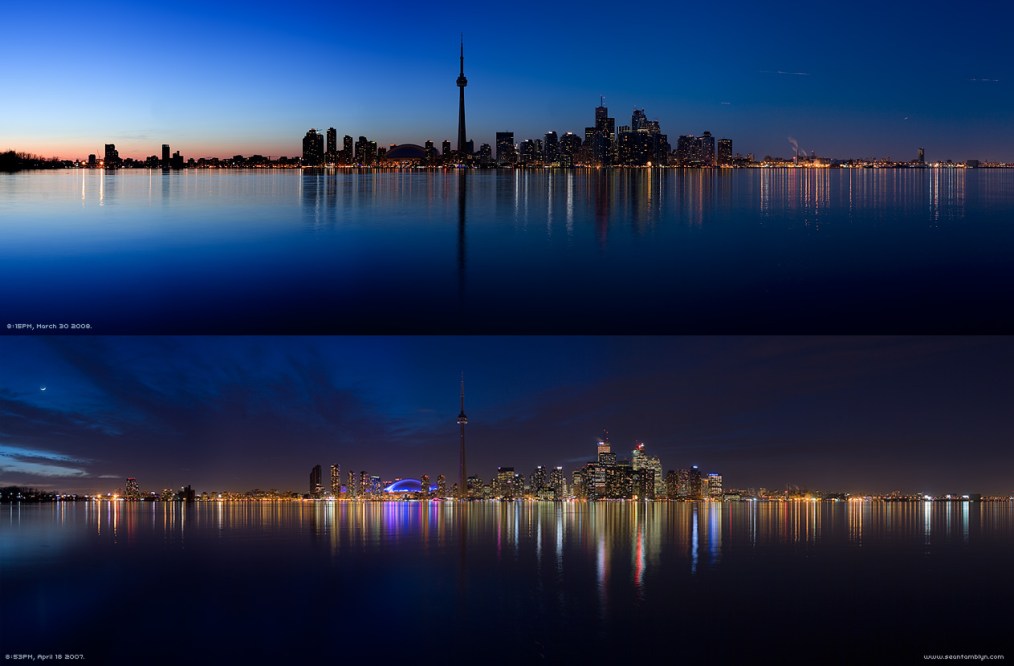
Toronto skyline dims during Earth Hour 2011

A post from Leena!

All over North America this weekend communities turned off their lights and celebrated Earth Hour. It is special to turn off the lights, and important to have time set aside to be aware of the power we take for granted for an hour each year.  And, I think our yoga practice has the possibility helping to shift our relationship to the planet in a much more long-term way.Continue reading “Earth Hour, Every Hour”