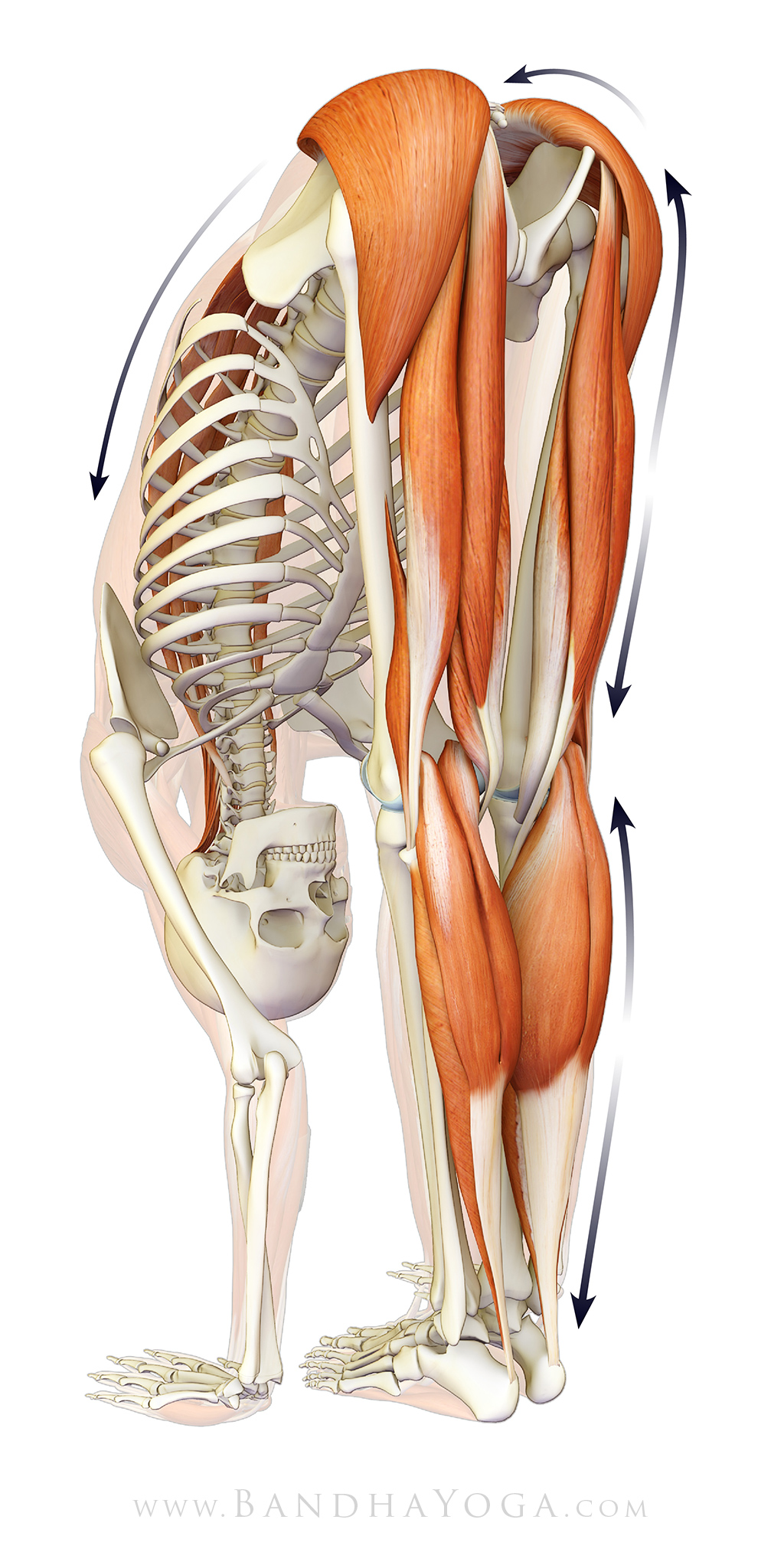
Yoga Tips from QSY: Everyday Calf Stretch

This quick Yoga Tips video with Leena discusses why you probably need more calf stretching in your life, and how to do a basic stretch. Add this stretch to your everyday routine to help counteract the effects of sitting, positive heeled shoes and walking on hard flat surfaces. And go find some fun trails to walk on too!


Get your calf stretches in without taking precious time out of your day by doing them while you’re working at a standing desk, brushing your teeth or doing dishes. You can use a rolled yoga mat, a halfdome, or even a Yoga Tune-Up ball. Or, if you’re outside on a walk (Woo! Good for you!) use a stone, a curb, a tree stump or fallen branch. Walking uphill is also a great way to stretch your calves and load your feet, ankles and legs in a new way! Continue reading “Yoga Tips from QSY: Everyday Calf Stretch”
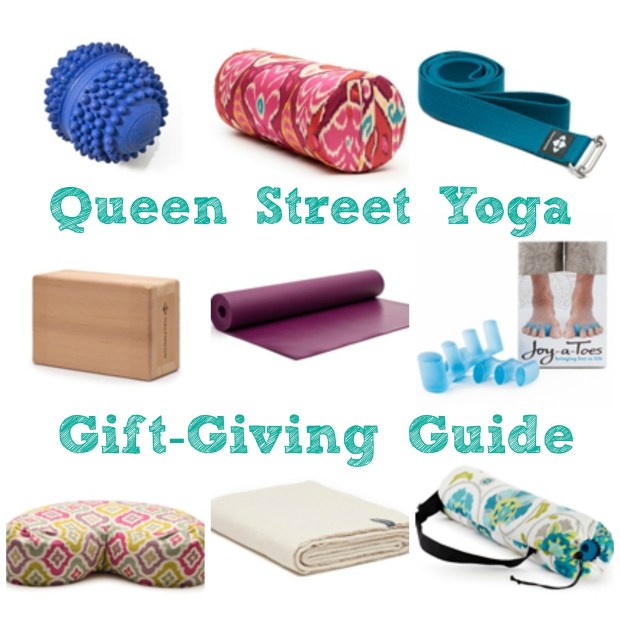
Yogi Gift Giving Guide

The season of gift-giving is approaching. At Queen Street Yoga we are stocking up on all the yoga props you could ever need for enhancing home practice and self care. We’ve got plenty of items for yogis and non-yogis in your life. Check out our gift-giving guide below.

AND…ANNOUNCING OUR HOLIDAY SALE!

Get 15% off all retail items at QSY between Nov 27-Dec 24. We can also special order any Half Moon props for you – our last order will go out Dec 4th, in order to have all items arrive before Christmas. Please check out shophalfmoon.com and email us by Dec 4th with any requests you have.

QSY gift giving guideContinue reading “Yogi Gift Giving Guide”

Honing our Internal Senses: NEW Slow Flow Classes & A Free Home Sequence

By Leena Miller Cressman, QSY Director. You can find Leena teaching Slow Flow on Monday nights at 5:30pm. Her classes include exploration of balance and joint proprioception, aspects of the Tensegrity Repair Series, and space for deep breathing and relaxation.

LEARNING NEW WORDS

As a kid, I always loved learning new words. I loved the sounding out the unfamiliar configuration of letters, and discovering a new way to describe or convey the meaning of something. I still love new words, and this is one of the many reasons I love studying and exploring anatomy and physiology, it gives me the chance to learn all sorts of new (and sometimes strange) words and ways of describing the human body. Like gastrocnemius! Listen to it pronounced it here. It is just so much more fun to say than “calves”.

Two words that I think should be on every yogi’s vocabulary list are interoception and proprioception. Interoception and proprioception are two distinct types of perception. Here’s how I’d define them:

  • Interoception: Our perception and sensing of internal sensations, feelings, movements, and responses of the body. If you sense a pang of hunger in your belly, or notice pounding of your heart when you’re nervous that is introception. It is the opposite of exteroception, which is an external sensation on the body, like feeling wind in your hair, or the warmth of your hand in your pocket.
  • Proprioception: Comes from the latin “one’s own”. It’s our sense of where our body is in space. It’s our ability to sense the relative positioning of our joints, joint angles, and muscle length, and to feel our movement and what will bring greater equilibrium. Proprioception is what allows you to feel how deeply bent your knee is in Warrior 2 without looking at your leg, or allows you to navigate a dark, unfamiliar room at night.

Continue reading “Honing our Internal Senses: NEW Slow Flow Classes & A Free Home Sequence”

Hamstring Strength and Flexibility Sequence

By Leena Miller Cressman, QSY director and resident body-nerd.

One of my favorite well-informed yoga/anatomy-nerd bloggers, Jenni Rawlings, recently had a great blog post and video exercise reminding yogis to strengthen their hamstrings. A lot of yoga sequences and postures encourage flexibility and lengthening of the posterior chain of muscles, specifically the hamstrings.


posterior_kinetic_chain_blog44Due to the amount of sitting we do in North America, the posterior chain becomes shortened for many people, and we lose range of motion in the hips and hamstrings in movements such as forward bends. Think of the difference in the geometry of the knee and hip, and the different loads and length of the muscles and connective tissue lining the back of the leg (from the ankle, up the calves, up hamstrings, up to the butt) in a standing position vs. a chair sitting position. In a seated position, the chair (or couch or car seat) acts like a sitting vs standingsort of cast, holding the body in one static position and the
posterior chain can become shortened in that resting position. When it comes to mobility, when you don’t use it you lose it.

But, stretching isn’t the only way to improve range of motion and mobility. Strengthening is a great way to help increase range of motion too. This is commonly misunderstood. Much research has found that contrary to popular belief, strength training does not make you more “tight”, in fact it can help increase range of motion and functional mobility just as much, or possibly more than stretching. Continue reading “Hamstring Strength and Flexibility Sequence”

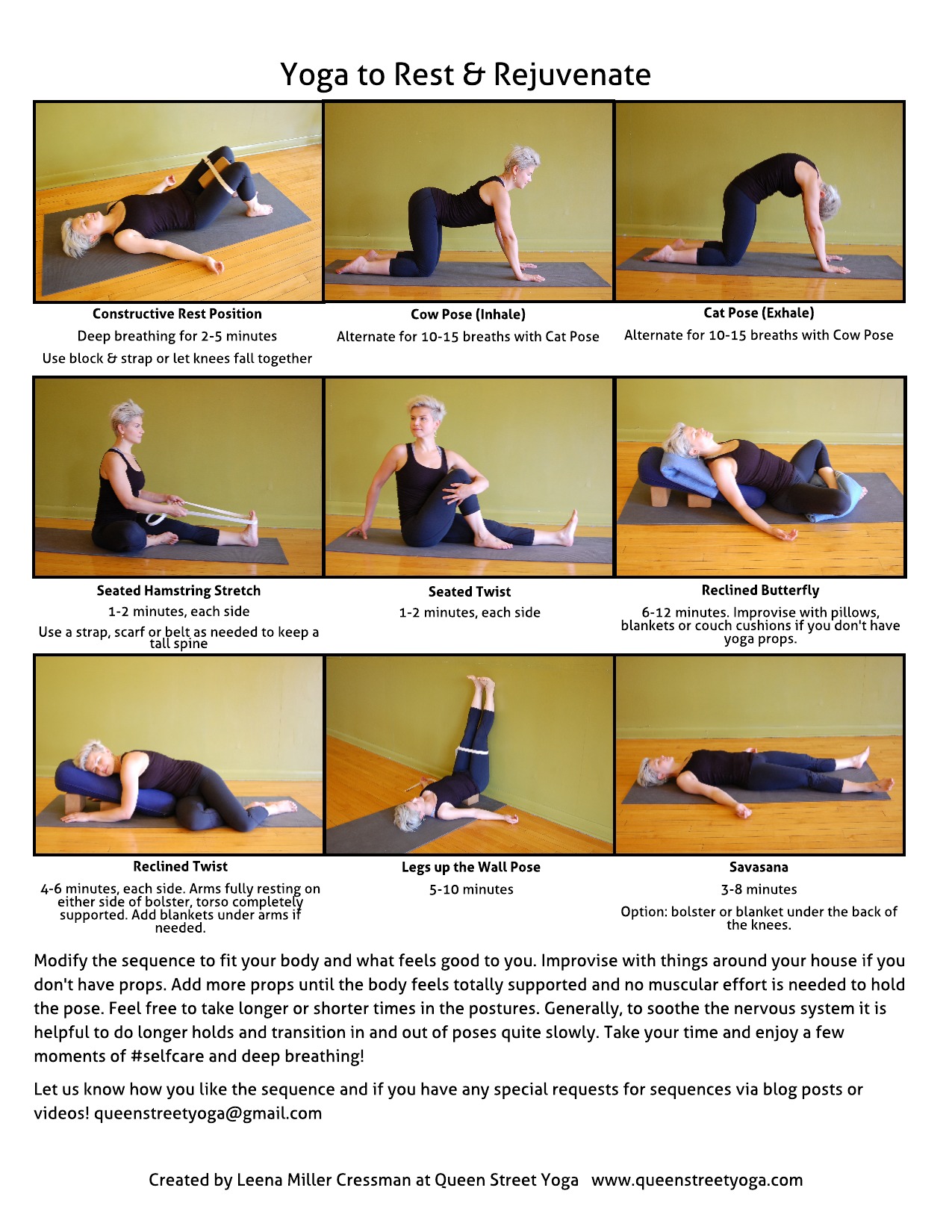
Yoga to Rest & Rejuvenate

Fall has arrived, on a bright and airy Monday in September. While typically we celebrate the turning of the year on January 1st, September can feel like the true start of the year for anyone who is in school. Our Yoga Teacher Training begins this friday, so we are certainly in the back-to-school spirit!

Preparing for the Teacher Training and our Open House has Leena and I quite busy. We anticipate that the fall’s events and gatherings will keep up their regular pace from now until Christmas, so we are taking extra care to encourage ourselves and students to practice #selfcare this fall and find little pockets of time to slow down, breathe and renew ourselves. Leena put together this restorative sequence as a resource for anyone who might want to try slowing down at home. Continue reading “Yoga to Rest & Rejuvenate”

Cool It!: A short practice to calm the nervous system & release the lower back and hips

This post and sequence was created by Leena as a follow up to last week’s post on #Selfcare, Restorative Yoga & Community Acupuncture.

The first few weeks of September are this funny in-between time. We’re on the threshold of transitions: the end of vacations, the weather turning (eventually) from summer to fall, back to school, back to routine, etc. Here at the studio we are gearing up for a packed fall schedule of special offerings, including lots of great pre-registered courses and a nearly sold-out Yoga Teacher Training program.

Here’s a quick little practice to help you cool off and calm down in this early September heat wave. It’s a great sequence for helping to soothe an over-reactive nervous system and find more ease in the lower back and hips. It would be nice as a before-bed sequence to help you get a good night of sleep. You can even do the last pose, legs up the wall, against your headboard. Enjoy!Continue reading “Cool It!: A short practice to calm the nervous system & release the lower back and hips”

Yoga Tips with QSY – Wrist Safety & Alignment

Many people experience pinching or pain in their outer wrists when they bear weight on the hands in poses like Plank or Downward Facing Dog. In this video we get clear on the width of hand placement, the direction of fingers, and where to press into the hand to prevent pinching or pain. We also offer some yoga “hacks” with props in case you need some extra cushioning or support for your wrists.

Have an alignment question about a particular pose or particular area of the body? Leave a comment and we will try to make a video to answer your question!

Yoga Tips from QSY – Align Your Shoulders in Downward Dog

Shoulder alignment can be a tricky part of Downward Dog. You might feel like the instructions from your yoga teacher are telling you opposite things. In some ways we might be telling you opposite things, because in a drop-in class we are trying to give alignment information for lots of different types of shoulders (from very mobile to very stable). In this video we get explicit about how to align your shoulders if your shoulders are more stable and have the tendency to “tent” forwards and how to align your shoulders if your shoulders are more mobile or tend to “collapse” downwards.

Have an alignment question about a particular pose or particular are of the body? Leave a comment and we will try to make a video to answer your question!

A Summer Sequence for Strong Shoulders- *FREE* Printable Download

killarneyFor me, a summer in Ontario isn’t complete without at least four or five days of back-country canoe camping in Killarney Provincial Park. Killarney is about five hours north of Kitchener-Waterloo on the north side of the Georgian Bay. It boasts some of the most beautiful lakes, scenic mountains and dramatic rock faces that I’ve had the pleasure of canoeing and hiking along. killarney canoes

If you’ve never been canoeing, let me teach you a new vocabulary word: Portage (noun or verb). I’m glad Canadians are at least bilingual enough that you can pronounce it the more elegant way en francais up here. Honestly, Americans butcher this word. Pronunciation aside, when you hear portage think carrying a huge pack on your back and a canoe on your shoulders for anywhere between a few dozen meters to a kilometer or more! Given that I’m only 5’3” and the canoe is 17’ and about 50lbs, a little extra prep for my shoulders and upper body before heading on a trip is super helpful.Continue reading “A Summer Sequence for Strong Shoulders- *FREE* Printable Download”

Finding Your Soul-Mat: a guide from Queen Street Yoga

Sorry, I couldn’t resist the pun! I hope this post is a helpful guide to finding the mat of your dreams.

A quality yoga mat that suits your preferences can really enhance your practice. Ideally, if a mat is serving your needs, it should be functional and supportive enough that it becomes unnoticeable, so you can focus on enjoying your practice.

We carry four different types of mats at QSY and choosing the mat that is most suitable for you is really up to personal preferences and priorities. In this post, I’ll give what I consider to be the pros and cons of the mats we carry, so that if you’re in the market for a new mat, you can find one that feels like the best fit for your needs.Continue reading “Finding Your Soul-Mat: a guide from Queen Street Yoga”