Adapting Yoga for a Pregnant Body

This blog post was written by Michelle, one of our yoga teacher trainees, who recently gave birth to a healthy baby boy. Check out her post on adapting her yoga practice for a pregnant body.

I received the exciting news that I was pregnant during my first week of my year long yoga teacher training. As I approach my due date, I’d like to share how I’ve adapted my practice while growing a human being and the benefits that yoga has provided during my pregnancy. The points below are from my personal experience and may not apply to all pregnant students, but I hope they can be useful if you are expecting or if you are a yoga teacher with a pregnant student in your class.

Most Regular Yoga Poses can be Adapted

When possible, I try to go to special pre-natal yoga classes, but they don’t usually work with my schedule. And, as a regular yoga practitioner, I find that pre-natal classes are often missing some of my favourite aspects of asana (poses), such as surya namaskar (sun salutations). Mostly, I continue to do my regular practice and go to open level classes, adding a few adjustments, which I’ve outlined below.
Continue reading “Adapting Yoga for a Pregnant Body”

Don’t “Unfriend” Your Pain — Follow it!

Kate Ter Haar - Pain is inevitableSharon has been teaching Physical Education in schools for many years. She recently retired and has turned her learning towards yoga teaching, participating in our 2014 Yoga Teacher Training. In this blog post she shares about learning to listen to pain and seeing it as a friend trying to help. 

Body Talk

Most people notice pain as it begins.  It is our body talking to us – “Stop what you’re doing!”  Pain is trying to help us and support us throughout our lives to keep us safe. Our own personal goodwill ambassador !  Why then do we choose to ignore such a valuable friend? The way out of pain is to attend to it and be sure to acknowledge it through self-awareness. Drugs and other substances are only a temporary solution to blunt or mask the pain. Welcome the pain and know that through its support early on, you will get well again by listening to your body.

Pain’s arch-enemy is the ego. Your ego is what you think you are. Our ego, we listen to all the time.  It’s what makes us do really irrational things sometimes . . . often even things that hurt us. We really should change things around . . . Listen less to our ego and more to our pain. I think in the long run we probably would be much happier.
Continue reading “Don’t “Unfriend” Your Pain — Follow it!”

10 Days of Silent Meditation – Leslie’s Learnings on Aches & Pains

This post was written by one of our work trades and Queen Street Conversations organizers, Leslie! Leslie spent 10 days this past summer in meditation at the Ontario Vipassana Centre. In this post she shares what she learned from sitting still and breathing.

Experimenting in mind-matter

Did you ever wonder what it might be like to get up at 4 AM and sit directly on your ischial tuberosities (those are your sitting bones 🙂 ) for ten or more hours… for ten days in a row? Me neither – but this past August I did happen to find out, and am here to report back on exactly how that kind of thing feels. It’s tough and it hurts, but wouldn’t you know, it’s worth the struggle.

The precise details of this experiment in living monastically can be found on the website for the Ontario Vipassana Centre – a fully-functioning retreat and service space in the tradition of S.N. Goenka, offering the opportunity to learn about and practice Dhamma and the meditation techniques of Anapana and Vipassana. For me, a school teacher in summer-mode, the schedule was punishing. The noble silence was astounding. And with seven hours of self-directed meditation time and three and a half hours of group sitting, the mental work, boredom and solitude ran the gamut from insufferable to incredible. With a mere six-week course of introductory meditation at Queen Street Yoga under my belt, I pretty much dove into the deep end after one quick toe-dip.

So what exactly happens when a run-of-the-mill yogi (in the modern, Western, I “do” yoga  kind of way) gets serious about exploring the reality of their mind-matter conscious experience?

Continue reading “10 Days of Silent Meditation – Leslie’s Learnings on Aches & Pains”

yoga without Yoga: Reflections on posture, practice and prayer

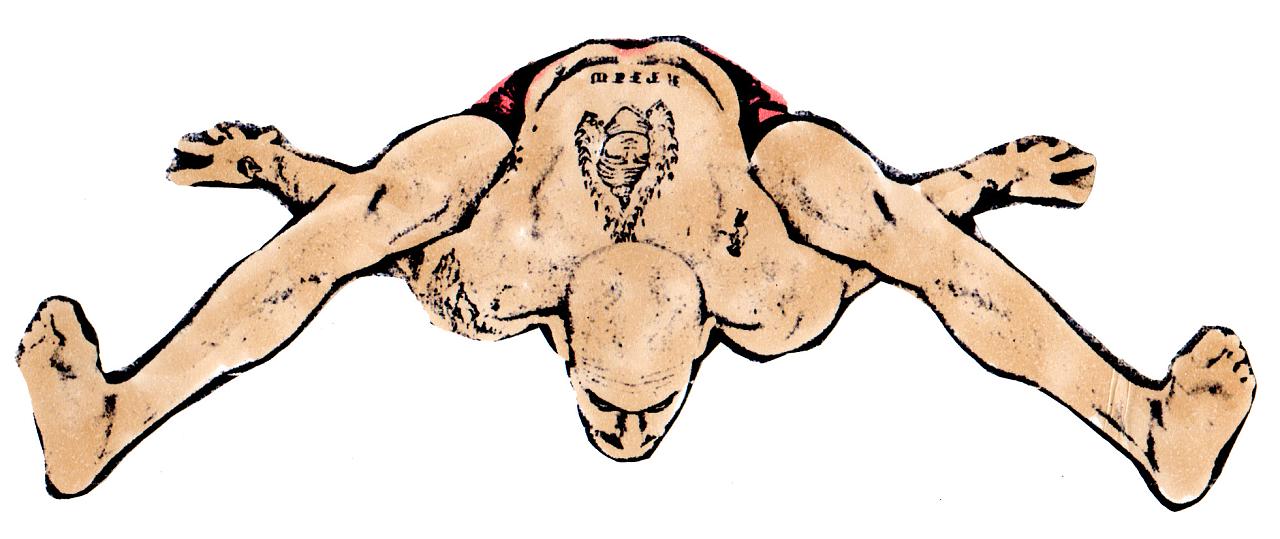
Barry Silver kurmasana

This post is by Neman, one of our yoga teacher trainees. In this post it he reflects on the relationship between asana (yoga postures), philosophy, religion and teaching yoga in the modern world.

Halfway through this inspiring yoga teacher training program, I’m stuck on something that seems to be nothing to pretty much everyone else. When I started, I thought that yoga meant asana – the postures. Wow, was I wrong. Karma, bhakti, jnana… where was asana? Fresh new words (some I didn’t even realize I knew – cool!) were describing much more about yoga to me than I bargained for. Hey, it’s not like I pretended I knew my way around the (yoga) block, but it was fascinating to see how much more there was, and how relatively insignificant downward facing dog is to yoga itself.

The core yogas as described in the Bhagavad Gita – there are many – include work (karma), devotion (bhakti), and knowledge (jnana). But where was the yoga for my core? Not there. The Bhagavad Gita is a primary text in Hindu philosophies and yoga studies. It’s a discussion between Arjuna, a very important prince and conflicted warrior, and Krishna, his chariot driver, who just happens to be, well, the Krishna. Yeah, that one. God. Krishna discusses duty, devotion, destiny, and dharma – but not down dog. References to asana are very limited and do not at all describe what we do in stretchy pants.

Continue reading “yoga without Yoga: Reflections on posture, practice and prayer”

Yoga for Kids: Tips for Creating a Fun and Healthy Practice

Thinking about introducing some yoga to your children, or children in your life?  Try some of these simple strategies for a fun and empowering experience. Forget what you’re accustomed to from yoga classes geared for adults! If your kids love yoga, consider signing them up for our upcoming Kids Yoga class, starting Wednesday Oct 8. 

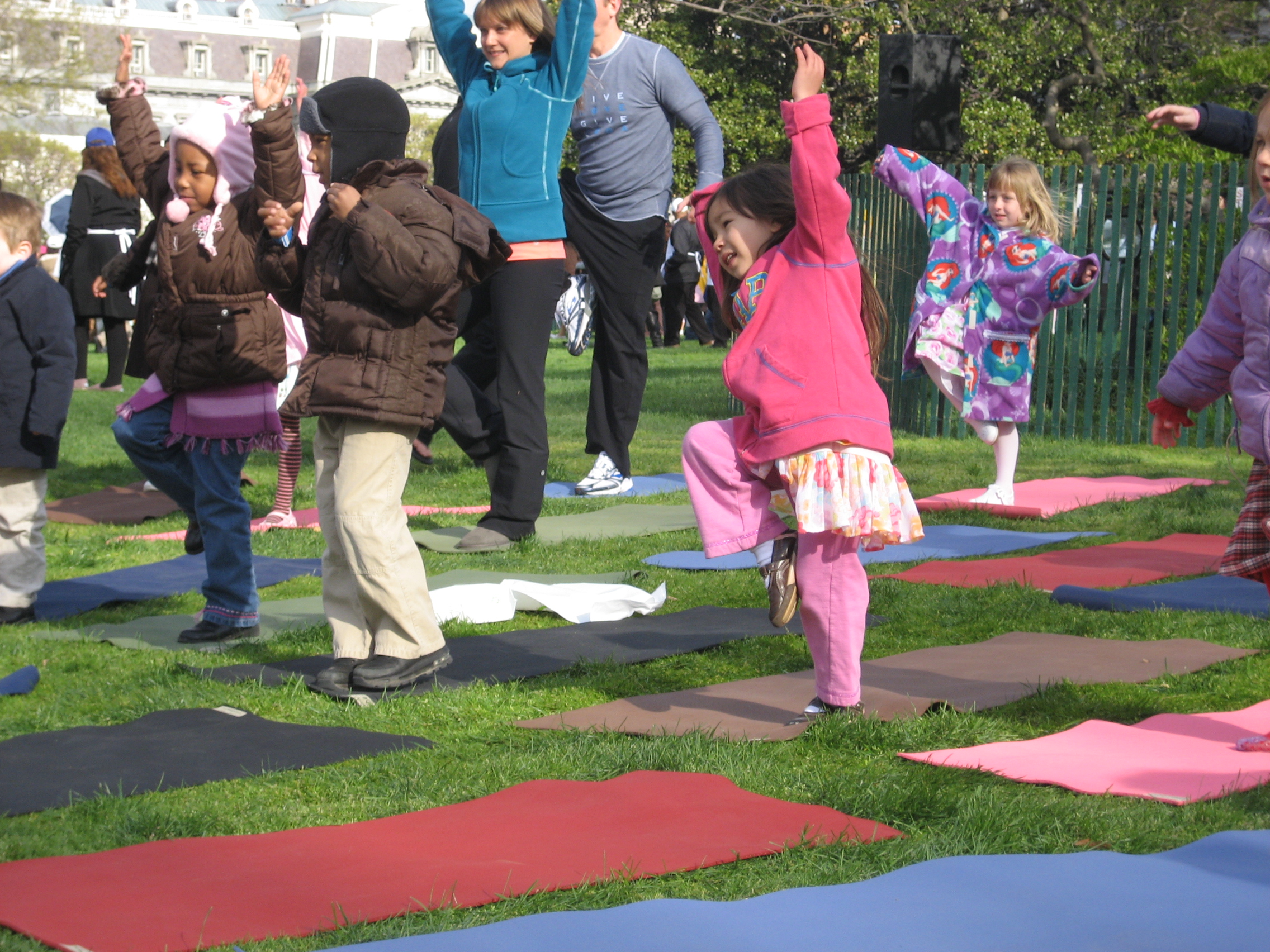
Amanda Hirsh - kids learning yoga tree pose

Do you ever wish that you had started yoga sooner? Imagine if your practice began when you were a child.  Consider how a yoga and meditation practice might have benefited your approach to homework, tests, competitions, parties, and knowing what you need.

Just like adults, children have tight spots too.  They’re spending many hours in front of screens, sitting in class, and experiencing growth spurts. They will benefit from exercies that increase range of motion. Yoga can also help children feel more confident and to trust themselves. They may even learn when it feels good to transiton from hyperactivity into feeling calm, and how to enjoy relaxation and stillness.

That being said, put 30 kids in a field and ask them to assume Mountain Pose and quietly breathe laterally into their rib cage – it’s probably not going to happen. Unless you try some of these techniques!

Keep it short

Set an intention to make the experience feel good and be realistic about attention span. If it’s a fun memory, they’ll want to do it again another time. For toddlers, aim for no more than 5-15 minute sessions. Older children may enjoy half an hour or 45 minutes with games and a brief relaxation.

Continue reading “Yoga for Kids: Tips for Creating a Fun and Healthy Practice”

Playing with Yin and Yang in your Yoga Practice

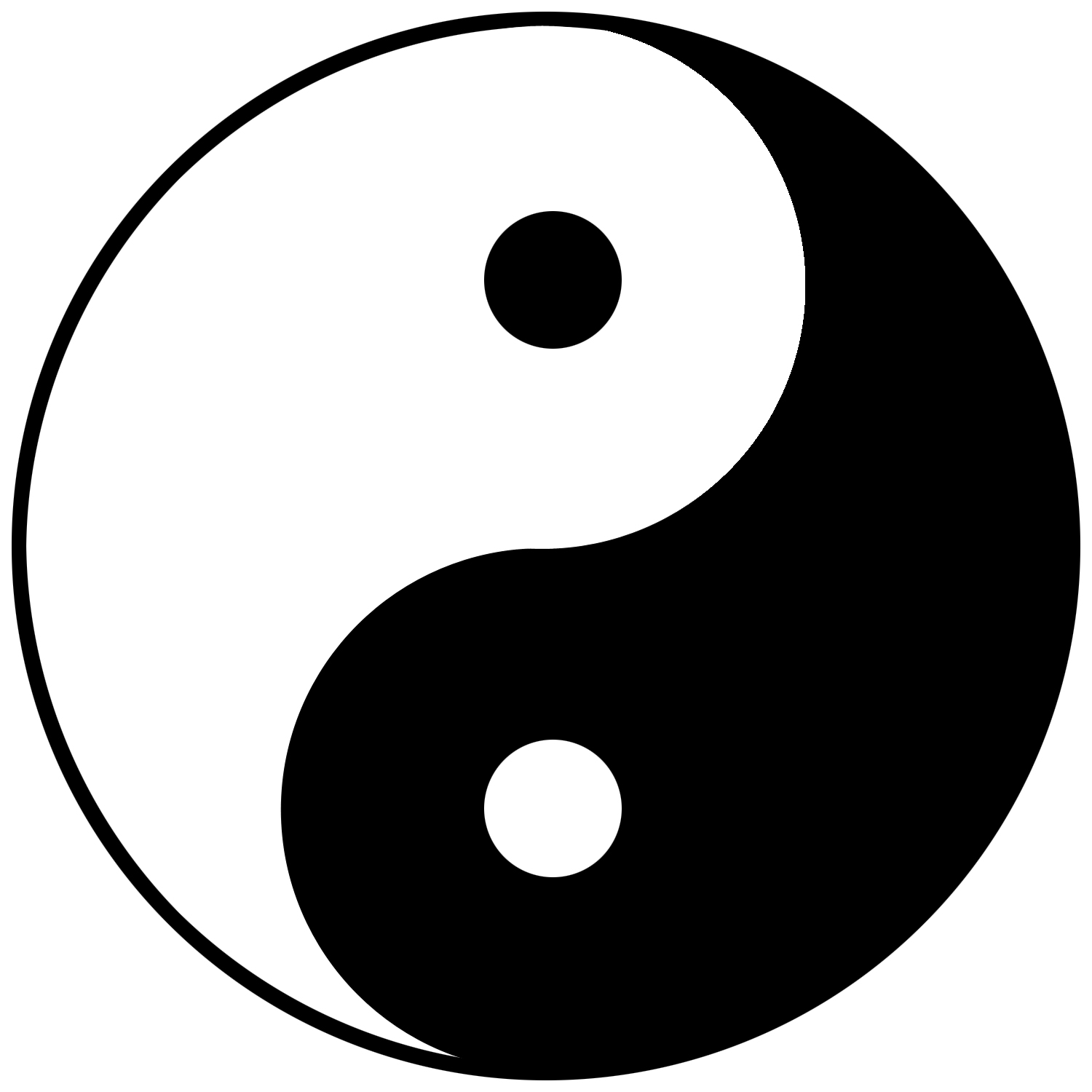
Ying_yang_sign

In this post, QSY teacher Jen shares about incorporating the principles of yin and yang into your practice. Check out her weekly Yin class to learn more, or sign up for her upcoming workshop on Sunday Sept 28 – “Wonderwall: The Ultimate Yoga Prop“.

What is Yin and Yang?

Philosophically, yin is comparative relativity; the idea that without dark there can be no light. We’ve all seen a yin yang symbol, at least in passing.

Looking at this graphic representation, you can see a few things. One is that yang and yin are two pieces of a whole. One cannot exist without the other. Another is that yang contains a piece of yin and vice versa. There is a contrast, and within that contrast you will also find relativity. Surrounded by black, the smaller white circle looks a little more gray. Surrounded by white, the smaller black circle looks a little more stark.

How do Yin and Yang show up in yoga practice?

In practice, when you add just a bit of yin to your yang practice it will most likely feel a little more active. Your muscles will be firing and may resist softening. In reverse, if you add just a bit of yang to your yin, it will feel even more starkly active. Finding the balance is your practice. This will be different for everyone. I have a pretty busy day to day in the summer, what with four kids at home. I also practice a different active sport, so I find my balance in slower yoga practice. In the winter when I am a little more sedentary, behind the computer a lot working on school work, I tend to gravitate a little more towards flow yoga. Finding balance incorporates your whole life. Consider yin as a spectrum of experience (maybe, consider everything that way). If your experience with water has been only hot springs, jumping into a swimming pool will perhaps be a little overwhelming. You might tense up, you might be afraid that you won’t make it. Instead you can ease in, starting at the shallow end and getting a little deeper every time. The best preparation for practicing yin poses is to practice yin poses.

Continue reading “Playing with Yin and Yang in your Yoga Practice”

Stop Worrying About How Long You Can Pay Attention To Your Breath

This post about meditation is by Dave Wellstood, who is currently in our Yoga Teacher Training Program. In this post he shares a simple but very helpful instruction that turned his meditation practice around.  

IMG_7419I find my meditation practice to be very rewarding.  When I tell people that, they often respond by telling me that they are no good at meditation or that they simply can’t do it.  I remember when I felt just like they do and I want to tell you about the small change I made that turned it around for me.

When I first started to meditate, someone told me I should sit quietly and pay attention to my breath. In hindsight that instruction was where things started to go wrong.  It gave me completely the wrong idea about what I was supposed to do.

I thought that meditating was like doing tree pose.  In tree pose, the goal is to balance on one foot.  Success means standing on one foot for longer and being more stable.  Sometimes you lose your balance and that’s expected but not desirable.  Similarly, I thought that success in meditation meant being able to keep my attention on my breath for longer and longer.

Continue reading “Stop Worrying About How Long You Can Pay Attention To Your Breath”

September Sequence for Hips & Shoulders

I am relishing every last bit of these warmer August days, but it’s undeniable that September is on its way. In the yogic and Ayurvedic understanding of the seasons, autumn is the season of wind and movement.  It brings cool and blustery days, crisp nights, the bustle of back-to-school, and the intensity and pace of work often increase. To help yourself stay grounded and even-keeled for whatever the fall brings, commit to more regular yoga practice, make time for coziness and cuddles with loved ones, and nourish yourself with warming stews and root veggies. Here is a sequence that helps to cultivate over-all strength and release tension shoulders and hips. I hope you’ll find it both energizing and grounding as we savour the end of summer and transition to September.

Continue reading “September Sequence for Hips & Shoulders”

Your Yoga Teacher Isn’t a Magician

In this post Leena reveals some trade secrets of her profession…

Have you ever been in a pose and your yoga teacher came along and said one tiny thing to you or gave one little adjustment to you that changed the entire pose and made it feel better and way more possible? Sometimes that moment feels a little bit magic. Though it’s kind of fun for people to think we are psychic wizards, here’s the truth:  yoga teachers aren’t magicians. Teachers that study alignment-based yoga have systems of understanding the mechanics of the body, and there are reasons why that little adjustment made all the difference. When applied carefully, and in sequence, these biomechanical principles can help make an impossible pose feel more doable, help you stabilize when you feel you’re about to collapse, or help you open up just a bit deeper in a pose.

In a survey of our 2014 teachers-in-training, we asked: What are the most helpful things you’ve learned so far in the training?  The most common response was: Learning about the Loops!  The 7 Loops (which are a foundation of alignment methodology from Anusara Yoga), are a concept that help us align our body and support key joints and junctures in the body.

Realign with Gravity

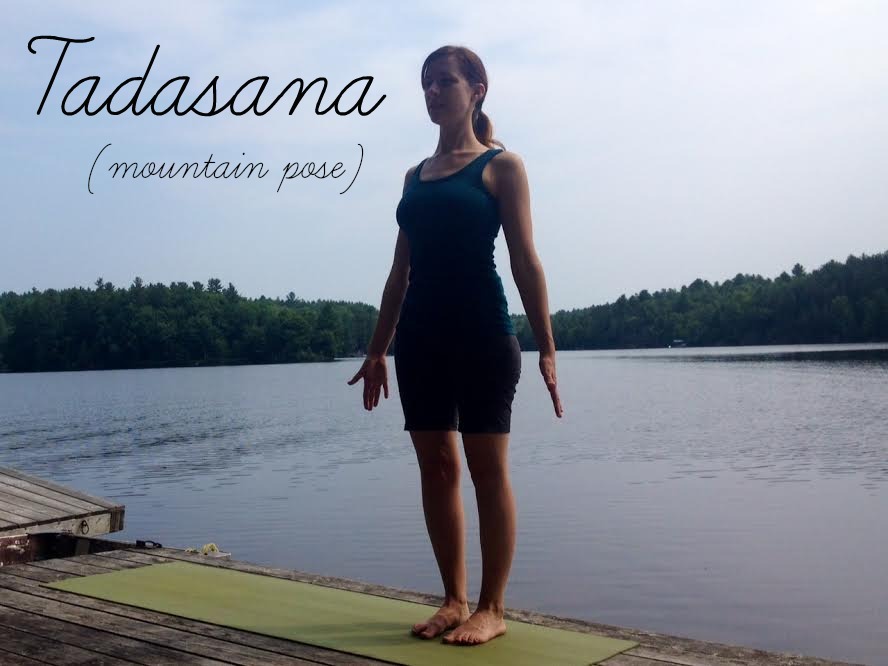
The the aim of Mountain Pose (Tadasana) in our yoga practice is to find equal standing (Samasthiti). The knees are stacked over the center of the ankle, the pelvis is centered over the legs, the spine is elongated with its natural curves, and the head is centered on top of the spine. When our bones “stacked” in this way, then the force of gravity moves through down a central vertical axis evenly, our joints can decompress and our muscles can be fairly relaxed.

tadasana

Continue reading “Your Yoga Teacher Isn’t a Magician”

How I Fell in Love with the Tensegrity Repair Series

In this post Leena reflects on what she has learned from practicing the Tensegrity Repair Series, and shares a bit more about what the term “tensegrity” means and where it comes from. 

Grease for your Rusty Parts

3047463156_22b2c9c090_z

Photo by mtneer_man on Flickr

Ever get up from your desk, and feel your joints creak like a rusty old car? Perhaps due to the amount of time we spend sitting in chairs, seats, and couches in North America, the average person I see has core weakness. This instability in the core is often coupled with tightness and lack of mobility in the hip joints and shoulder joints (and by core, I’m not solely referring to the abdominal muscles, but also muscles of the pelvis, deep core and back muscles.)

The Tensegrity Repair Series is a set of 20 simple exercises designed to restore healthy range of motion to the hips, shoulders, and spine. It helps to build supple strength in the core muscles, and balance and stabilize the pelvis. Overall, I’ve found it to be an amazing antidote to the most common structural and postural imbalance issues that I have personally, and that I see in the general population. It brings that little bit of grease back to our creaky parts.

It wasn’t love at first sight…

I was first introduced to the Tensegrity Repair Series a few years ago by my friend Christi-an, and I was intrigued but also annoyed by it. Trying it was a total hit to my ego. The exercises looked so simple, yet seemed to point a finger directly at all the little places in my body that were weak or not fully participating in my yoga practice. Unlike yoga asana (postures), in the Tensegrity movements, it was much harder for me to cheat. So, in the way that you often do when you encounter something truly good for you, I completely ignored our brief encounter and kept doggedly doing what I was previously doing.

Continue reading “How I Fell in Love with the Tensegrity Repair Series”