What I didn’t understand about pain

It’s Nicole writing today on the “other side” of a complex shoulder condition, which coincided with a perfect storm of involuntary change, including the recurrence of my autoimmune disease, the gateway into perimenopause, and a tumultuous personal time. It’s been tough!

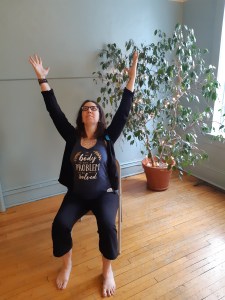
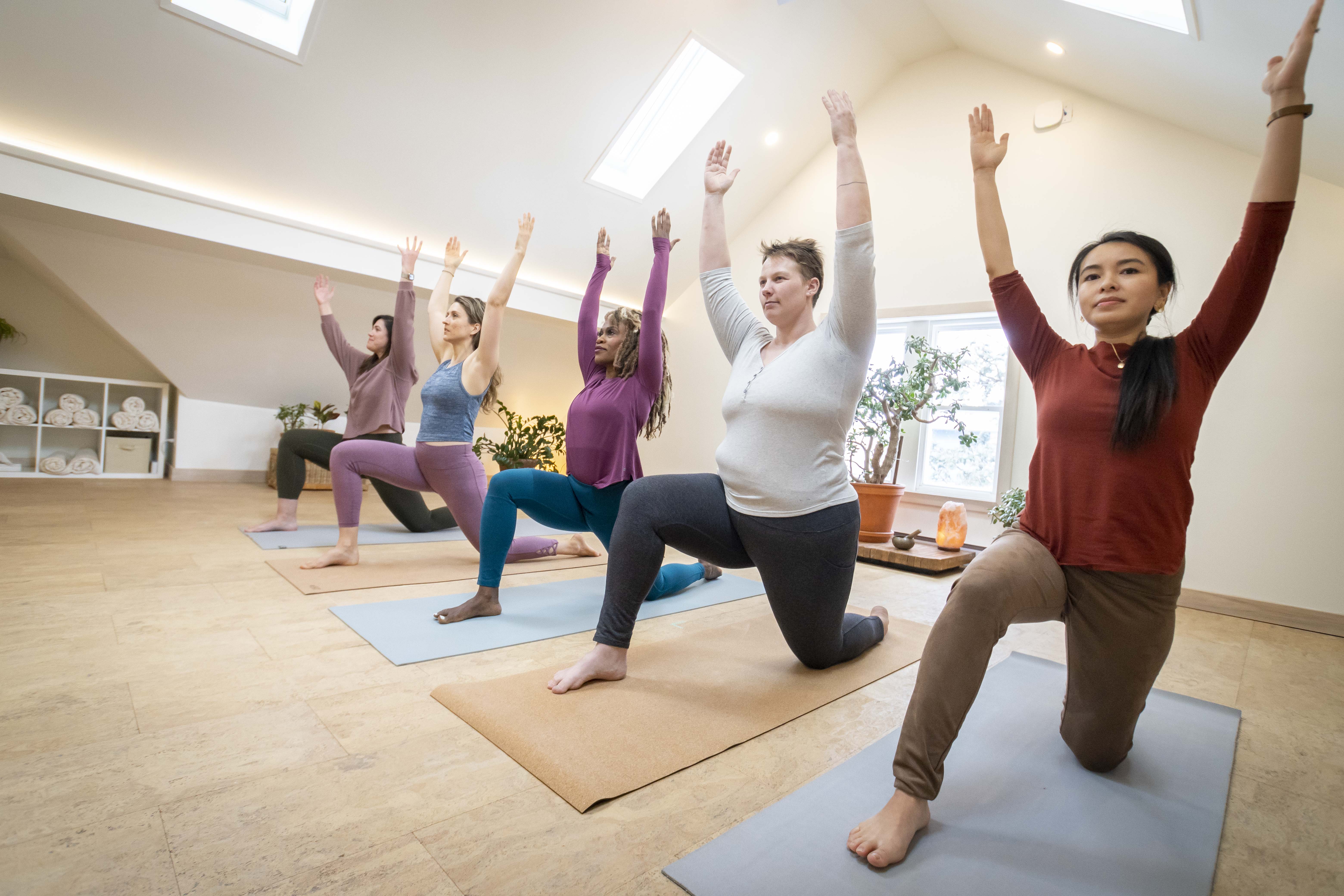
That’s me on the far left in the photo below. Check out that shoulder action! If you look closely, you can see that my right shoulder doesn’t go as far into the overhead range as my left does – by no means is it “perfect”, but it’s so much better than it was. Progress!
In addition to physiotherapy and surgery, my shoulder recovery journey ended up including a 300-hour training program with Mindful Strength. Unrelated to my personal experiences, I wanted to learn more about pain and strength training as a teacher, so I enthusiastically signed up while unaware of how personally relevant these topics would become.


During the course, I learned that I was in fact dealing with a frozen shoulder and an anatomical joint impingement, both pretty painful experiences. This made the learning feel particularly timely and personally relevant. We examined the typical beliefs about pain that don’t actually stand up to scientific scrutiny, including these two potentially harmful ones:

  • Misconception No. 1: “Pain is well-correlated to tissue damage.” Contrary to this widespread belief, the science says that not only can you have tissue degeneration without any experience of pain (it’s actually very common, especially in active adults), but you can also have pain in the absence of injury or tissue degeneration.
  • Misconception No.2: “Any instance of pain has a single cause.” In fact, the science shows that pain is multifactorial — a fancy way of saying that it’s caused by a complex interplay of factors

The Bio-Psycho-Social Model

Central to my expanded understanding of persistent pain — defined as lasting for 6 months or longer — was the bio-psycho-social model. This framework situates pain in the context of one’s entire life, including factors both inside and outside your realm of control. Through this lens, pain has multiple influences beyond biology, with thoughts, behaviours, and social experiences holding equal weight.

It turns out that social connections and support (or lack thereof), along with your own beliefs about pain — and in addition to your biology — can directly impact your experience of it! 

Read that one more time to let that sink in!

This isn’t to say that pain is all in your head (it’s so real). Instead, when considering what influences our pain, we should also acknowledge our whole human experience and the rich stew of possible contributors.

From Frustration to Hope

As a yoga teacher, a participant in a 300-hour training, and a moderately active person, I was often gritting my teeth in frustration and discomfort. Outside of my professional identity, I was emotionally and physically drained by daily chores, errands, and activities — that were equal parts painful and fatiguing. I realized that I had to apply my expanded view of pain to my choices for treatment and recovery, including which activities to continue or restart. 

As I progressed through the formal diagnostics and treatment avenues, I identified an important truth that changed everything: strength training, done conscientiously, didn’t exacerbate my overall condition — in fact, I felt better mentally, physically, and emotionally following a workout, plus I got a sense of connection to my training group. Of course, my pain didn’t magically go away, but my perception of my capacity to cope with it shifted enormously, which led me to feel more hopeful.

Creating Confidence by Checking In

One of the most practical tools gained from my combined pain and strength training education is a collection of self-assessment techniques. When paired with the knowledge that pain acts as an alarm system, I’ve become empowered to assess my pain and rationally curb over-sensitized fear responses.

Checking in with myself during strength training and daily movements was sometimes as simple as noticing whether I was feeling capable, or whether doubt was creeping in. By self-monitoring, I regained confidence in my judgement, and in my ability to determine what activities were safe and beneficial.

Strength Is A Feeling – Beyond Lifting Dumbbells

The confidence I built through increased physical and emotional capacity spilled over into my interactions with healthcare providers. I trusted myself as my most-informed advocate, gathered multiple opinions, and I stayed committed despite inevitable wait-times and other systemic challenges.

If you can relate to the struggle of enduring persistent pain, know that you’re not alone! If you’re in this persistent pain boat or are simply interested in learning more from the standpoint of a movement teacher, check out an upcoming event this month from the primary trainer from my 300-hour course, Kathryn Bruni Young.

As a facilitator, Kathryn thinks deeply and then opens the floor for others to do the same. I really value her ability to clarify complexities, and her willingness to engage with differing perspectives within the learning environment.

Learn more about Kathryn’s upcoming session, Mindful Strength: Understanding Pain & Making Gains on Saturday, April 29th, 1:00-5:00pm.

Wishing you well on your pain and recovery journey,

Nicole
April Policy Update

Re: Vaccines & Masks At The Branches


As of April 1, 2022, the Branches will no longer require visitors to show proof of vaccination. We will continue to encourage mask-wearing as much as possible to limit transmission.

We’ve taken in a good bit of information, considered the risks, and weighed it all against our values, particularly community care.

Just like our decision to initiate our own vaccine policy ahead of the province, we also wanted some control over our own circumstances when it came to setting this policy aside. We applaud individuals who are taking steps to protect not only themselves, but one another as our entire globe continues to navigate the ongoing pandemic.

While our staff and leadership team have chosen to get vaccinated, and we strongly support it as a public health strategy, based on what we now understand about transmission, it does not seem necessary or useful to continue requiring all visitors to the studio to prove their immunization status. We look forward to welcoming new students and welcoming back old community members for whom this has been a barrier over the past six months.

In addition to taking in updated information about transmission, we have also been attempting to learn about disability justice. Many immune-compromised people feel as though their lives are not being valued appropriately, as they are not able to simply “move on” from COVID-19. We’re also holding uncertainty about the likelihood of developing long-COVID, which is basically a chronic-illness disability.

With these thoughts top of mind, and knowing that it does appear helpful to wear masks to prevent transmission of a virus that spreads through both droplets and aerosol, we will continue to require all visitors to wear a mask to the studio, and encourage students to continue wearing their masks as much as they can while practicing. We will maintain this policy at least for the month of April and reassess as we go.

Inside the practice rooms, we will be running our fresh-air return system consistently – this means that the air in the building will be on a constant refresh cycle, expelling indoor air outside and bringing in fresh air as it heats/cools. While on their mats, our teachers may wear their masks less to optimize for clarity and hearing accessibility . 

We strive to consider the importance and influence of scientific experts, disability justice, and the relative risk of small-group 60-75 minute classes in our decisions going forward.

Finally, the Branches will continue to offer robust virtual teaching, including drop-in classes, courses, Branches On-Demand streaming subscriptions, and teacher training for those who feel best accessing our offerings from home.

When the Poses Don’t Work – Adaptive & Accessible Yoga

This post is written by Sara F, a graduate of our 200-hour teacher training program. She’s been our a familiar face on Sunday nights, hosting at the front desk during our 6:00pm $5 Basics. Keep your eyes open for Sara on June 1 at 1:00pm for our Yoga in the Park: Pride Edition.


Have you ever been in a yoga class where the teacher instructs a pose, and you either stand/lay there knowing the pose won’t work for your body, or you silently struggle into it and hope it will end soon?
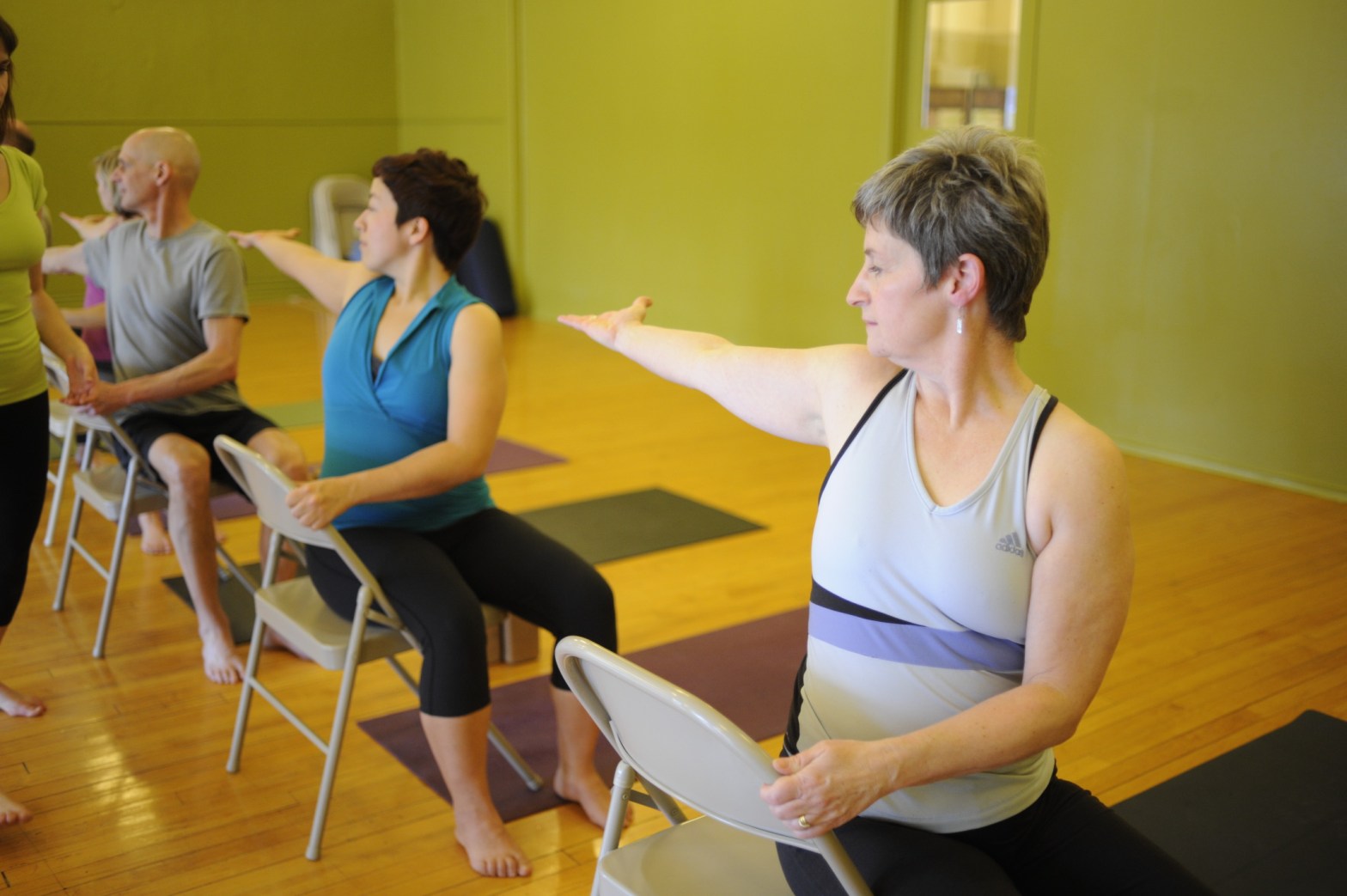
Or, on a more positive note, have you been in a yoga class where the teacher offers variations of a pose, often with different props? If the teacher gave different options, you have experienced accessible or adaptive yoga, which offers solutions that allow people of all abilities and body types to practice and benefit from yoga. At Queen Street Yoga you may have heard teachers refer to pose options as “bus stops,” and how far you ride down the bus route is up to you.

Continue reading “When the Poses Don’t Work – Adaptive & Accessible Yoga”

The Body’s Intelligence: How Craniosacral Therapy works

by Amanda Ingall

My first craniosacral treatment was a pivotal moment in my life. Somehow the appointment brought me into a deep place of connection with my mind and body. I left feeling completely relaxed, my movements felt fluid. I felt connected to my core. I wanted more.  

What I experienced that day is something I now call the wisdom of the body. I also think of it as the body’s ability to heal and restore itself.  This happens when a therapist is able to listen and respond to the body’s intelligence, rather than impose a treatment from the outside.  Craniosacral is a form of bodywork that works from the inside out, moving from your body, outwards into the hands of the therapist.

So, how does it work?

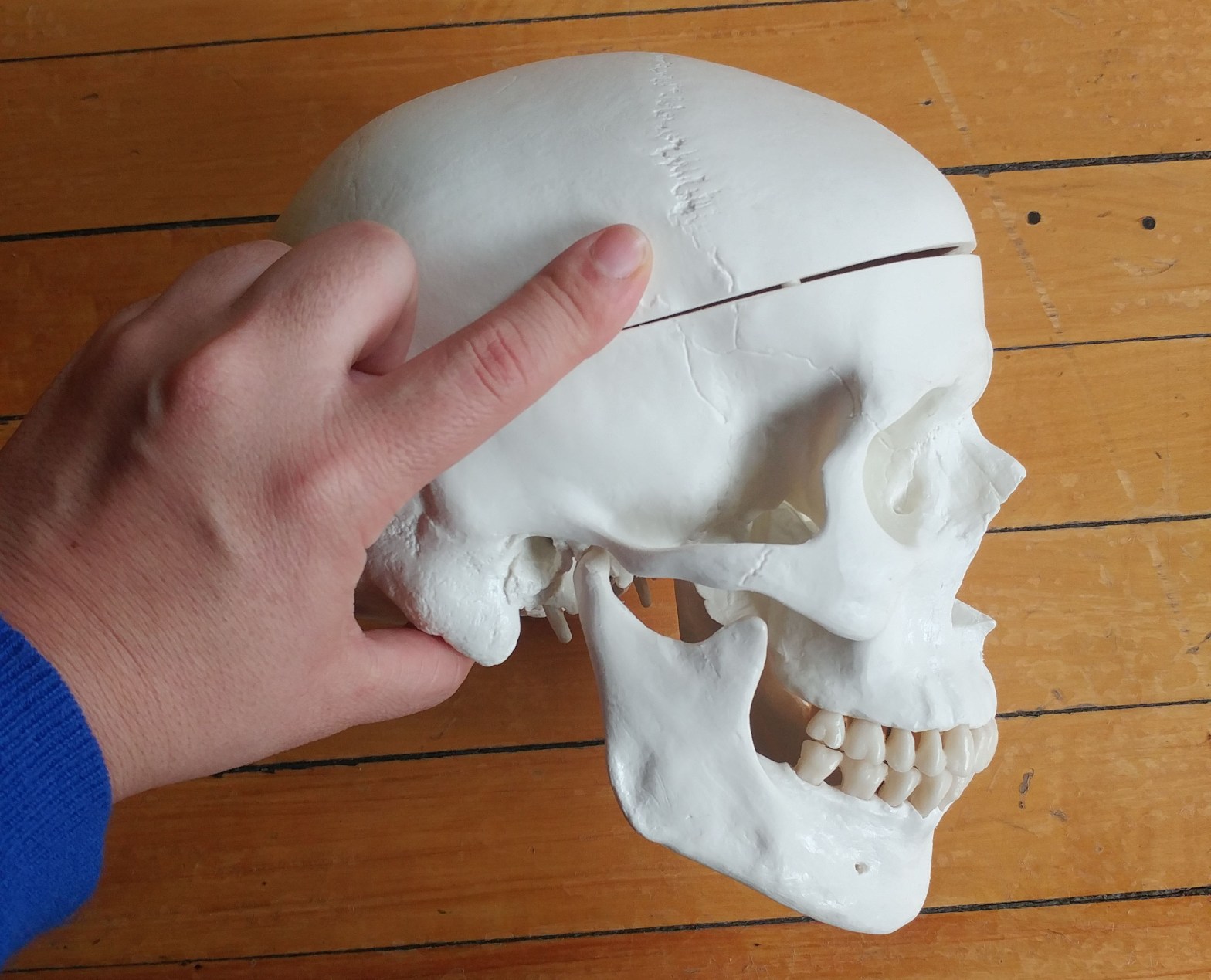
Craniosacral Therapy works with the cranium (your skull) and it’s connection to your sacrum (the back of your pelvis). Let’s start with the skull.

Your skull is miraculous. It is a moving, pulsing structure. You may tend to think of your skull as one piece, like a coconut, but it does in fact have seams or sutures that join the bones of the skull together.  These sutures have a zigzag pattern and the reason for that is that your skull actually moves, expanding and contracting with a rhythm; a pulse that is created as your cerebrospinal fluid circulates. Your whole body rolls within this rhythmic tide, causing not only movement within the skull, but also throughout your whole body.  It travels along the spine to the sacrum; shoulders and arms roll In and out, hips and legs roll in and out, organs rotate around their axis.

Continue reading “The Body’s Intelligence: How Craniosacral Therapy works”

Strong or Flexible – Why Not Both?

When you see the class title Strength & Flow, what feelings or images come up? Does it make you think of a bootcamp class at the gym: grunting and burpees and shouting? Or maybe it brings up an experience of tightness in your body. One of the most commonly cited reasons for coming to yoga that I hear is, “I want to become more flexible.” Those same people often wonder if going to a class focused on strength is going to make them feel more stiff, rather than more flexible. We’ve got news for you: strength is flexibility’s best friend.

First things first though; don’t be nervous to try this class! You should know that Strength & Flow is actually quite doable, and nothing like bootcamp or gym class. The great thing about it is that it’s just as customizable as our other classes. The depth of your squat, the amount you can hinge at your hip, the time you spend time in plank, or the number of push-ups (with knees down if you want!) is up to you. You can sense the balance between fatigue and energy in your body on that day, and act accordingly. (And that’s where it becomes yoga.)

So why not “Flexibility & Flow,” when we know that flexibility is a goal for most people? Flexibility gets singled out as the physical quality that folks most desire. I get that – I began yoga without being able to touch my toes, and I used to fume with frustration and envy in seated poses because there was no way that I could straighten my knees, or tilt my pelvis forward – my back was rounded, my hamstrings felt tight, and that was that.

But: is flexibility all that it’s cracked up to be? And is passive stretching even the best way to feel and move better? You can probably tell that I don’t necessarily think so.

Continue reading “Strong or Flexible – Why Not Both?”

Everybody has trauma & how yoga helped with mine

This post is by one of our core teachers, Leslie. 

If it weren’t for yoga, I would never have re-learned to enjoy my body.

As a child and teen, I was heavily involved in physical activity, but in my post-secondary years I succumbed to a sedentary lifestyle. The workload of university was overwhelming, but my total lack of movement or exercise occured, in large part, because of a string of traumas. These events left me feeling disconnected from my body, and more often than not, fearful and self-loathing.

Even though I knew it would help me, I resisted all physical activity. Sports were no longer any fun, and going the gym to “work out” seemed not only boring, but overly aspirational. Moving my body felt difficult, pointless, and unpleasant. Any movement or exertion which made me aware of my body, brought with it reminders of my trauma, and the pain that still lived within me.

In my final year of university, a friend convinced me to try a yoga class in the campus athletic centre. I was seduced by the mystery around yoga, and since it was the adventurous thing to do, I decided to join her. I still remember how the instructor led us through a soft and slow-paced class with careful instruction and plenty of room to be a beginner. I’ll admit it: I was hooked.

Continue reading “Everybody has trauma & how yoga helped with mine”

Re-Post: 3 Reasons our Restorative Immersion is for you

This post was originally published on our blog in January 2017.

My name is Emma and I am a Restorative yoga evangelist. 🙂

In our busy world, Restorative yoga is an effective way to learn how to slow down and deeply rest. Restorative yoga can help you to reduce stress and support your body’s innate responses toward balance and health. As a very gentle form of yoga, Restorative yoga integrates resting postures, breath techniques, and meditative relaxation. I want to share with you three reasons why our upcoming Restorative Yoga Immersion is for you.

After this immersion you will be able to:

CUSTOMIZE a restorative yoga sequence to meet your specific needs

MEDITATE in a restorative pose

GIFT this practice to friends and family

3 reasons.jpg

CUSTOMIZELearn to design a sequence that meets your specific (and changing) needs

Continue reading “Re-Post: 3 Reasons our Restorative Immersion is for you”

“If you can’t do crow pose, you’re not a good person.” Nah. We don’t think so.

Sometimes when I am teaching, I feel a bit like a stand-up comedian. Depending on the mood and tone of the class, I might crack a lot of jokes, and add silly sound effects. Like a stand-up comedian, I try to poke fun at assumptions in our culture, usually those particular to the context of a yoga class.

With a sense of irony, I say things like:

“And if you can’t do crow pose, just know that you’re not as good of a person as everyone else.”

or

“Come out of this pose whenever you want. But you might not. Because peer pressure is real.”

When people laugh, I know I have struck a chord. The laughter denotes recognition of some sliver of truth. The truth that we still might be holding ideas about our physical abilities being equated to our moral character. Or how we have been conditioned to go along with a group, instead of listening to our individual needs.

Continue reading ““If you can’t do crow pose, you’re not a good person.” Nah. We don’t think so.”

Introducing new offerings July-Aug 2018

Last week I experienced a huge win while teaching my Wednesday night Intro to Yoga class.

I have been teaching Intro to Yoga for 6 years. I have re-written the curriculum three times, trained numerous teachers to share it, and this spring it is undergoing it is fourth reincarnation.

The Intro includes all of the basic poses of yoga: downward dog, plank, lunges, Warrior poses, bridge, etc. Over the years I have learned how to integrate props into the class, making the poses more doable for more people. I have learned how to sequence the classes in a step-by-step way, introducing the poses and transitions slowly over time.

But something was still missing.

People who found certain poses challenging, for example a lunge, would come up into the lunge and wobble side to side. Their balance might improve a bit from week to week as they tried it again and again, but I noticed it would usually take the wobbliest students several months before they started to seem steadier in their lunge pose.

Continue reading “Introducing new offerings July-Aug 2018”

Where did all the Chatturungas go?

Emma here!

You might have noticed some gradual changes in classes at QSY. Leena and I and many of our teachers have been incorporating movements like squats and push-ups into our yoga flows. “Where did the Chatturungas go?” you might be wondering. “Why are we doing squats in a yoga class?” You’re not alone in wondering this! This post will let you in on how and why our yoga teaching is changing and evolving

Functional Movement

You might have heard this term, as it has been getting a lot of buzz in the last few years. Functional Movement refers to movements or exercises that prepare the body to do the things that you do in everyday life – like get in and out of your car or bed, stoop down to pick up your toddler, carry groceries or keep yourself from slipping and falling on the ice. A lot of yoga poses can help you feel stronger and more able to do these movements, but many yoga poses are not that functional – they don’t help you become stronger or more flexible in “useful” ways. There can be different kinds of benefits to some of these poses – maybe they invoke a quality of reflection or introspection, even if they don’t help you move better in your daily life. We think there is room for all different kinds of movements in a yoga practice, whether they are immediately useful to you, or useful in a less tangible way.Continue reading “Where did all the Chatturungas go?”