Yoga for Your Brain

This post is written by Branches teacher Alissa Firth-Eagland. She is passionate about spreading awareness around brain injury, and helping those who have suffered one continue to grow. Alissa can also be found teaching drop-in classes at the Branches, and in our new series, Be Nice to Your Neck & Noggin. You can learn more about her approach on her website.


Each time you step on the mat, slow down intentionally, or sit with mindfulness, you strengthen your brain to its best advantage. As a holistic set of practices, many aspects of yoga (such as mindfulness, gentle movement, and attention to the breath) lend themselves particularly well to supporting the healing and growth of your brain. No matter what is going on with it – whether you are hoping to bolster concussion recovery or calm agitated nerves – yoga is brain medicine.

More good news: any accessible movement, breath work, or meditation is adaptable to a range of brain health challenges and situations: concussion, stroke recovery, mental health challenges, dementia, and chronic pain management.

166, 455 Canadians are impacted by brain injury in Canada each year. That’s one person injured every 3 minutes. Among all types of Traumatic Brain Injuries, concussions are the most common, accounting for approximately 80% to 95% of such injuries.

Concussions are those quick jolts to the brain. People get concussions in all sorts of ways: getting hit in the face by a toddler, walking into a door, fainting, getting bonked on the back of the head by a server carrying drinks by their table. A good shake of the skull and neck can do it. So if you are dealing with a concussion, it doesn’t matter how it happened. It matters only how your body responds to it. For the 10 – 30% of people who develop Post Concussion Syndrome (PCS), the injury typically affects every area of their life. Symptoms may persist for days, weeks, months, or even years after the initial jolt. And to complicate matters, they fluctuate over time.

Concussions often result in widespread brain tissue tearing at the cellular level. After a concussion, sheared neurons never entirely reconnect. But your brain is plastic, and always changing in response to input. Your brain finds ways to make new connections and detours: this is the incredible power of brain plasticity. The more you ask of it, the stronger it gets.

Yoga asks your brain for more positive plasticity, and therefore, increased brain power. Here are just two quick examples of how yoga requests your brain’s plasticity – in movement and in stillness:

  1. learning new things – yoga is a vast, potentially lifelong practice with endless learning opportunities. 
  2. focusing your attention – meditation is scientifically proven to thicken the prefrontal cortex, which is our centre of attention, impulse inhibition, memory, and cognitive flexibility. 

Yoga is also an attainable way to access your breath, which can calm the fight or flight response and settle you into the calmer state of the parasympathetic nervous system. Plus, as a physical activity, yoga boosts neurochemicals that promote brain cell repair and increases blood flow to the brain, prompting growth of new blood vessels. It truly is incredible how many aspects of yoga support the brain. 

But, by far the most important aspect of yoga as it relates to brain health is how adaptable it is to your individual situation and intention. It is accessible to all kinds of people, bodies, environments, and lived experiences.

The best style of yoga for you depends on your unique response to your concussion. So if you decide to try yoga to support your brain health, consider your symptom severity, level of dizziness, and how challenging it might be to leave the house and travel to practice. Your symptoms may fluctuate over time, even from minute to minute. Self assessment is the foundation of all self care. 

Pro Tip #1: You can ride the wave of sensation and symptoms a little, but be aware of how your body responds to avoid triggering a flare up. As your pain shifts, increases, or decreases, take care to honour that and dial the practice up or down accordingly. 

Key aspects to consider as you decide what style of yoga for concussion that you want to try:

  1. Are you symptomatic right now? If it does not exacerbate your symptoms, sit quietly and breathe through your nose or try some chill moves where you flow slowly and gently from one pose to the next. 
  2. Do you get dizzy easily? If so, you will probably feel worse practicing traditional vinyasa which affects blood pressure. Vinyasa is a popular form of yoga where you flow from one pose to the next including transitions where the head is well below the heart, then quickly brought back up. Rapidly shifting the blood flow from and to the brain can be incredibly disorienting and can cause vertigo or fainting in some people. 
  3. Are you having trouble leaving the house (for any reason)? Try a gentle live class you can do virtually or find a pre-recorded video. This will help you practice without having to drive somewhere, face a group of people, or navigate a new environment while you are recovering. 

Pro Tip #2: If you are practicing with a video, choose one where the instruction is so clear and well-paced that you don’t even need to look at the computer screen and can simply rest your eyes and listen. If the audio is low quality or hard to listen to, it is probably not going to have the beneficial effects you hope for. 

Remember that whether you have had zero concussions or multiple brain injuries, anytime you practice yoga with presence and intention, you are giving your brain a boost. 


If you’re living with post-brain-injury or the fatigue and tension of overworked eyes and neck, we highly recommend our new series, Be Nice to Your Neck & Noggin featured in Branches On Demand.

Care Practices to Counteract the Effects of Hatred

Here is a post about cultivating resilience from Christi-an (a therapist and long-time friend of The Branches). 

Being queer while navigating the upsurge in hate has been a lot, to say the least. If you haven’t already, check in on your queer friends. Collectively, we’re feeling a lot of pain, grief, heartbreak, rage, and fear. Heavy stuff to live through while we continue to work, parent, study, and move through our days. For QTBIPOC folks, the impacts are compounded, adding to the burden of living in a culture that upholds white supremacy and racism as foundational parts of our society.

And to allies who don’t identify within the queer community but love us and are also fighting for a kinder and more inclusive world, it can bring up a lot of painful emotions to witness and feel the hate. 

It’s not uncommon for exposure to hate to bring up or amplify some of the following:

– Increased stress or anxiety

– Overwhelming grief

– Physical pain or health issues

– Sleep Disruption

– Mental Health Struggles

– Reaching for harmful coping mechanisms

– Energy drain or fatigue

– Hypervigilance

– Impact on relationships

If you check one or more of these boxes, let it be a gentle reminder to carve out some time and space to offer yourself care. As a starting place, I wanted to share some of the practices I’m using both personally and professionally (as a therapist and mindful movement coach). I propose them not in place of collective care, systemic change or activism, but as things we can do to grow in resiliency as we build a brighter future. I hope they might be helpful in these tender times.

Acknowledgment:

Notice the impacts of the words, images, and experiences you have taken in. A common coping strategy is to minimize the impacts or numb ourselves to our feelings. Take a moment to recognize the feelings that have come up for you and honour how difficult it is to be exposed to hatred. Building awareness around what is coming up for us is the first step in identifying what we need to take care of ourselves.

Compassion:

Continually having to fight for our rights, dignity, and well-being is exhausting and depleting on many levels. Try the following compassion practice as if it were a way of giving yourself the biggest hug. Find a comfortable place to sit or lie down and place your hands over your heart. Breathe into your hands. Feel the weight and temperature of your hands. Offer yourself kindness, understanding, and love. Invite yourself to fully receive this offering to self. Repeat often.

Scan Your Body:

No doubt your body will respond to these intense moments. Personally, I’ve noticed a lot of uneasiness as I go about my day, whether it be picking up my kiddo from daycare, at the park or at my local coffee shop. The persistent question looms in my mind: Could the person beside me be someone opposing my very existence, someone who stood on the opposing side during recent protests? I observe my body physically contracting—my jaw tightening, shoulders hunching, and my head instinctively lowering, a primal response to shield myself from potential harm or expose myself to more hostility.

What do you notice? Pay attention to any tension, discomfort, or changes in your body. This self-awareness is helpful in interrupting the physical impacts of stress.

Move and Breathe:

Engage in physical movement practices and intentional breathing exercises to release the tension and stress in your body. Movement and breathwork can help in shifting and loosening any physical patterns of stress or discomfort, promoting relaxation and release. Yoga is great because it focuses on both movement and breath, allowing you to mindfully address the stress in your body. But it could also look like going for a walk, being in nature, running, climbing, or playing sports with your friends. Ask your body what it needs and give it a try.

Be with Community:

There is deep relief that comes from sharing space with folks who understand what it’s like to carry both the stress and gratitude of your identity. Engage with your community (whether it’s online or offline) to find solace and understanding among like-minded individuals. Being in a community that shares similar experiences and concerns can offer comfort, validation, and a sense of unity. This is why I feel passionate about the need for nourishing affinity spaces like the Rainbow Restorative (2SLGBTQIA+ exclusive space) and Restorative Yoga: Rest for Racialized Folks (BIR exclusive space) offered here at The Branches. Allies: talk to each other. These challenges are big, and no one is meant to figure them out on their own.

Seek Support:

Reach out to mental health professionals, therapists, or support groups that can help you unpack and process what’s come up for you*. Seeking professional help allows for a deeper exploration of your trauma, emotions, mental state and coping mechanisms in a supportive and constructive environment. We weren’t meant to heal on our own; we are communal beings.

*If this type of support feels cost-prohibitive for you, check out Camino Wellbeing + Mental Health for subsidized, sliding-scale (including no-cost) counselling and group programs.

Reach Out and Offer Support:

If you are feeling okay, offer your extra energy, time, and resources to someone who might need it. Cook them dinner, offer to take a task off their to-do list, do a self-care practice like meditating in solidarity with them, or go for a walk with them. Ask them what they need. Someone who can affirm what you went through was crappy? A hug? Someone to laugh with and get their mind off things? Everyone is different, so it’s okay to ask. If they’re not sure, you can provide a few options.

Offer Yourself Affirmations:

Counter the hate with lots of self-love. Here’s an affirmation to try (but feel free to tweak it to honour your unique fabulousness).

May I be free to be me.

May I feel my inherent worthiness.

May I feel loved.

May I feel safe and protected.

May I shine.

May I thrive.

Then share it with the world.

May we all be free to be ourselves.

May we all feel our inherent worthiness.

May we all feel loved.

May we all feel safe and protected.

May we all shine.

May we all thrive.

I encourage you to try one of the suggestions that resonate with you. Start there and see where it leads you. Let’s take care of ourselves and each other.

You can learn more about Christi-an and her work here.

generosity during a cost-of-living crisis?

The most surprising and joyful moment of my first Burning Man was this: I was biking past some tents when someone held out an icy pink snow cone to me. It was so quick that I couldn’t even stop cycling; they simply put it in my hand. I whooped my thanks and saw them hand another snow cone to the cyclist behind me. I was overjoyed to have been given a cold treat and delighted by the silliness of how it happened. 

Everyone loves to sh*t on Burning Man, but the ethos of gift-giving at this yearly festival changed my life. Along with Leave No Trace and Radical Inclusion, Gifting is one of the ten principles that shape community and culture at Burning Man. People bring gifts of massive art sculptures and experiences, gifts of food and drink, gifts of music and dancing, gifts of giant shaded spaces with hammocks to swing in. There is no money exchange in the entire festival (well, you can buy ice for your coolers) and everyone is welcome everywhere.

This is me at Burning Man in 2019, greeting people arriving at the event.

When I returned from my first Burning Man in 2014, I was bursting with gratitude. I was so inspired by what I had been given – dance workshops, incredible music, sculptures that I could climb and play on, and a warmth from strangers I hadn’t expected. And my way of bringing the culture of Burning Man to my everyday life was to give little felt heart pins to everyone that I met.

For several years, I surprised everyone from grocery store clerks to bus drivers with my hearts. Queen Street Yoga (our name before we became The Branches) was a hub of heart-giving activity. Most folks had them on their yoga mat bags, or sweatshirts. I always had a stash of hearts in my pockets, ready to give.

The hearts took a pause during the pandemic, but for several years they were my everyday invitation to look at people and offer a gift. It was a small thing – a piece of felt, and a pin – but more often than not, people responded with huge appreciation. It was a tiny gift, but reaching past our cultural norms and offering a touchpoint of connection was truly meaningful to people. Their responses were a gift to me, and kept me cutting hearts late into the evening. 

Burning Man taught me to lead with generosity, to seed the culture that I want to live in by giving to others. The hearts taught me that generosity doesn’t have to be flashy or expensive – it was the simple act of giving something that created connection and sparked gratitude both ways. 

In our current cost-of-living crisis it can feel challenging to feel generous or grateful. We might feel like we need to hold on to everything we have, and that even that isn’t enough. I don’t deny that we are at a crux in our country right now, and that change is badly needed. And, I also want to remind myself of that old lesson of leading with generosity, of sharing something simple, and finding my way back to gratitude and connection.

In October we’re going to be focusing on growing our gratitude, and to lead the way, we’ve created a number of special gifts for you. We hope you make it into the studio in October to participate and see what we have in store for you.

Thank you for all the ways you show up in our community.

With heartfelt appreciation,
Emma

I’ll cry if I want to

A thoughtful post from our meditation teacher, Danette.

Home to moist cobwebs and well-fed centipedes, the cement basement is not a welcoming space for beings with fewer legs. In one room, the washer and dryer stand shoulder to shoulder, stoically among the arachnids and arthropods waiting in the dark to be useful. In two others, repurposed shipping pallets have been turned into shelves that keep boxes of forgotten mementos and seasonal items off the floor and free from their fear of spring flooding.

Looking under the lids of dust-covered boxes, I rediscover tokens of a life that seems to have happened a lifetime ago. Each thing I find, I hold, reflect and remember. Then I decide if I will hold onto it, share, donate, sell or discard. Each emptied box creates space on the shelves for new possibilities and ultimately less sorting work for future generations to do after my demise.

What if I used a similar sorting process for my emotions? Holding onto and storing them in my body without much reflection has been my default for as long as I can remember but a recent dental appointment had me wondering about the wisdom of that automatic response.

At the onset of a tooth extraction procedure, as the anaesthetic was taking a long time to kick in, I felt a familiar fluttering in my chest and twinge in my jaw that signalled tears looking for a way out. My emotional auto-pilot kicked in. I held the tears back with a freeze response that included clenching my fists and holding my breath. This contracted bodily response felt like necessary protection for me in a room that was too bright, noises that were too loud, along with the urge to flee the impending discomfort and then having to make small talk with a dental surgeon I had just met was too much.

In my frozen emotional state in that dentist chair, my basement-clearing episode came to mind. I experimented with a new response. I cried. Slow, quiet tears rolled down my cheeks to my ears in my reclined position. My fists relaxed and I felt my breath in the gentle rise and fall of my belly.

The young dentist asked me to keep my anaesthetized tongue out of the way while he wrenched out a fractured molar and inserted an implant with what felt like considerable force. I could tell he was uncomfortable with the moist trickles running down my cheeks and the inner voice telling me to close up my tear ducts was intrusive.

Letting those tears out in light of the sensation overload was more refreshing than I could have ever expected, especially in light of my perceived, socialized expectation to keep my tears to myself or else. I felt a lightness walking out of the office and realized that I would not need to hold onto any elements of that specific uncomfortable event any longer. One and done.

On a recent flight to the east coast, the sensations of the take-off and landing along with the non-stop noise in the cabin, the tears knocked on the door again. I answered. Like bookends, tears flowed for a few minutes at the beginning and end of the flight and, in between, my body mellowed in response. When I respected my nervous system’s need to process my overwhelm with tears, I didn’t experience any post-event exhaustion, intolerance or meltdowns that were frequently a result of my extended freeze response to stress.

Pausing long enough to notice my learned automatic response has given me the gift of hearing what my body wants and needs. And noticing my resistance to resourcing myself even if it makes someone uncomfortable has shown me how entrenched the learned responses are.

But, I’ve decided that it’s my nervous system (and the nervous system of the young child version of me who had to rely on the freeze response to survive) so I’ll cry if I want to.

When greater grief comes calling, I’m hoping my tear ducts will be in good working order and that my nervous system will be the grateful recipient of the spaciousness, the softness that comes from a thoughtful, self-resourcing clear out.

Like Danette’s vibe? She’s teaching two courses this fall – Mindful Movement & Meditation starting Mon Sept 18, and Meditation for Resilient Living starting Mon Nov 6.

On Perfection: Finding A Lineage That Isn’t Tainted

Spoiler alert – I can’t.

Leslie here.

Despite personally experiencing direct and life-changing benefits of meditation, I struggle to maintain a solo home practice. To help myself out, I have been seeking a local meditation group to keep me accountable. This process has been… complicated.

In my search for local organizations, I’ve found lots of valuable offerings that aren’t for me: kirtan-singing groups, groups who chant mantras, monasteries that offer culturally-grounded ritual celebrations, and centres that focus on trademarked pranayama and kriya methods. All worthwhile, just not what I was looking for.

Then, excitingly, I found a local group that aligned with my goals, was affordable, was connected to an established tradition, and worked with my schedule! Finally, I wanted to know: who are the teachers, and what’s the state of the lineage?

Well, it turned out that the lineage was problematic at best. I did my due diligence and dug into the history of the separation of this particular sect from a more well-established Buddhist lineage. I found leaders whose actions appeared to be driven by religious ego and a desire for power, and teachers who were trained to completely reject all other Buddhist wisdom and authority outside of their sect.

Unfortunately, controversy in spiritual communities is nothing new, and I keep discovering more of it. Last year, seeking inspiration for my own practice and teaching, I picked up a book of contemplative reflections on yoga philosophy by a popular teacher, only to find out about their blurry boundaries and cult-of-personality style of teaching – making me seriously question the legitimacy of their thoughts on spirituality and shelf the book. I’ve lost count of the number of times I’ve seen that underneath the popularity of a method is a leader whose spiritual, political, interpersonal or sometimes criminal conduct puts the whole operation into question. 

Our own history at the Branches is not untouched by this unfortunate trend. Years ago, some of our more experienced teachers (Leena, Emma and Carin) were trained in a school called Anusara Yoga led by John Friend. He turned out to have sloppy boundaries, and engaged in ethically murky sexual and financial relations with some of his students. As an organization, the school moved on without the leader, but none of the Branches folks stuck around to find out how it went. Too messy.

When I think about my own commitment to yoga, I question whether I should expect ethical perfection from a lineage or tradition? That’s unreasonable – lineages are made of people and people clearly aren’t perfect. Of course a teacher’s poor behaviour undermines and can even negate their authority to teach. But does someone’s behaviour negate the teachings themselves? And if the teachings still have value, how can the rest of us care for, preserve and perpetuate them during gaps in guidance from elders or teachers we respect?

The team here at the Branches has had more than a few conversations about the lack of trustworthy elders in our own yoga community, particularly in the aftermath of leaving our most influential yoga school behind. We don’t follow a guru, and some of us look to teachers we admire and learn from online rather than within a face-to-face relationship, or to teachers who aren’t necessarily connected to a lineage either. Scholars deem this “post-lineage yoga,” but traditionalists decry the lack of respect for tradition and authenticity. It’s not perfectly clear how to proceed. 

That said, I will keep looking for a good meditation teacher. 

And as an organization, we will keep trying to become the elders we wish we had. One way we try to do this is by creating the community that our senior teachers originally sought in the Anusara world. Teaching movement, sharing yoga, and stewarding a community shouldn’t be a popularity contest, an ego-boost, or a power-play. We aim to be teachers who work alongside our students on the path, rather than performing like pop-stars on a stage. We aim to teach from a place of humility and genuine commitment to study and practice, rather than forefronting charisma. It’s hugely important to us, then, to offer the teacher training that our senior teachers, Leena & Emma, wish they could have had and to platform guest faculty who embody these values.

To those who love to practice yoga, but are struggling with how to engage beyond the damage done to various communities, I extend compassion and a wish for perseverance. Yoga is bigger than all of us. May we all find a way to relate to it and each other in a good way.

With care,

Leslie

Let’s talk about fascism!?

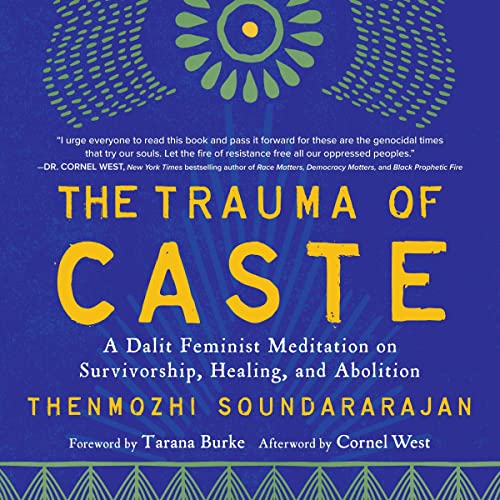
Last fall, I bought a book called The Trauma of Caste and intended to read it in preparation for this year’s yoga teacher training. This book sat on my bookshelf all winter. I looked at it from time to time but I didn’t pick it up.

Earlier this spring I was having some major climate anxiety, really stressing about the state of our planet. For some reason, I picked up The Trauma of Caste and started reading it. And once I started, I couldn’t stop. I would put my baby in the carrier, go for long walks and read this book. 

For some reason, though reading this book was devastating and complicated, it put my climate anxiety into perspective. This book spoke of an impending genocide, yet it was inspiring. It reminded me of how resilient and beautiful people are, even in the absolute worst of circumstances. It reminded me that we can still act out of and embody love, for ourselves and for the world.

I am sharing this because yesterday was International Day of Yoga, and while yoga is very much worth celebrating as a cultural and spiritual gift to the world, there is a dark side to this day, linked to caste apartheid. In India, yoga is being used as a tool by the current BJP government to push a larger agenda of Hindu-exclusive nationalism that tries to justify violence and imprisonment. It is too complex for me to summarize in this newsletter, so here is one anti-oppressive action you can take on this day: read this article, “Why I Don’t Celebrate International Day of Yoga,” to inform yourself about the dark side of International Yoga Day.

The author of “The Trauma of Caste”, Thenmozhi Soundararajan, writes with such a sense of love. Though the subject matter is beyond dark, she brings light to it. She writes, “I am a daughter of a people who have been oppressed for thousands of years, I am also the artifact of centuries of their love and resilience. In that there is a hope for everything. May a thousand flowers bloom in your heart and in mine for our liberation.”

The world is so much, but grappling with it all with a sense of love is my spiritual practice. On some days I call that yoga, on other days I’m not sure what to call it. But I’m grateful to be part of a community taking steps every day towards equity, love and justice.

With gratitude,
Emma

P.S. I’m thinking of restarting our anti-racist book club to discuss The Trauma of Caste. Get in touch with me at emma (at) thebranchesyoga (dot) com if you’re in.

If you’d like space to process and discuss issues like these in community, consider our Yoga Teacher Training Program, starting in October. The Trauma of Caste will be on our reading list this year.

Learn more at our next Info Session, happening on Monday, July 10 at 8:00-9:00pm (virtually). Sign up here to attend.

I’m DONE with anti-aging

Leena here. A few months back I heard a great segment on The Current interviewing some local university researchers about their work on ageism. I’ve been mulling over some of their findings ever since. 

In the dominant North American cultural context, most people consider it a high compliment to gasp when someone shares that they are 70, and to say “wow, you seem so youthful, I thought you were a decade younger!” Celebrities often gloat, “I just turned 60, but I feel better than I did in my 40s”. On the CBC, the researchers discussed the concept of subjective age, which is the age you feel inside. In their research in North America, having your subjective age be younger than your actual age – for example being 65, but mentally feeling like you’re 45 – has measurable positive health outcomes. This mindset is adaptive in an ageist society that undervalues or even neglects our elders. And conversely, negative attitudes of aging have been shown to cause adverse health outcomes for North Americans.

But, here’s what I really found fascinating: The researchers described that, “It’s not necessarily a bad thing, in terms of your physical health and psychological wellbeing, to feel older. It’s when it’s coupled with negative aging attitudes, that’s when it has the negative consequences” for a person’s health. They described that in societies where there is stronger valuing of elders – as is the case in many Indigenous cultures, Eastern cultures and more collectivist societies – there are not the same positive health outcomes for having your subjective age be younger. In those social systems it can be advantageous to be older, and so maintaining a mindset of “feeling younger” isn’t necessary. 

How does this all relate to the yoga industry? In so many ways yoga gets co-opted by capitalism and by our mainstream culture that reveres youthful and thin bodies above harder-won life experience and the wisdom that may come with aging. We see this in studios advertising “yoga for weight loss” and in marketing that promises yoga will help you look and feel younger. As a studio director and someone who believes strongly in physical, mental, emotional and spiritual gifts that yoga and asana can bring to our lives, it’s a fine line to tread. 

I cringe whenever I see lofty promises, or when youthfulness is put on a pedestal. But, I do believe that yoga can have tremendous benefits to help us maintain mobility, physical independence, coordination, and mental stability as we go through various seasons of life and age. 

As a budding yoga teacher in my 20s, I had a number of students in their 60s. (And it’s an honour that a few of these students still practice with me today!). I learned so much from these folks as together we figured out how to make yoga asana practice useful and relevant to their lives. After a few months of classes, one of them shared how getting down on the floor to play with her young grandkids was feeling less painful and more comfortable since starting yoga. Hearing this brought me so much joy, and since then I’ve always been passionate about sharing yoga with folks in their golden years. Through our YTT programs, I love mentoring older teachers who want to work with their peers. It’s why we’ve developed courses for all ages from Parent & Peanut all the way to Yoga for Dynamic Aging. 

Maybe you’ve noticed the mission statement that we share on our home page: We’re here to create a better world with Yoga as our common ground. We lead down-to-earth classes, expert teacher training, and an engaged intergenerational community.

When Emma, Leslie and I were writing it, I was adamant that I wanted the word intergenerational to be included. I want to intentionally and publicly cultivate an anti-ageist community. The “better world” that I’m hoping for is one that deeply values all ages, and that recognizes the special gifts and wisdom that elders bring to our communities. Maybe we can help to shift our culture so that it’s no longer adaptive to have our subjective age be younger than our actual age. Maybe someday I’ll be lucky enough to say, “I’m 75, and I feel and look like I’m 75”, and feel great about that. And, just like it’s been there for me for the past 22 years, I know my yoga practice will be my companion as I journey through that stage of life. 

Here’s a link to the CBC segment I mentioned. 

With care

Leena

Unpopular opinion?

Leena here. It’s Victoria Day, which has got me thinking about colonization (and decolonization). It’s something I think about often in relation to my work, as discussions of decolonizing yoga have become more mainstream in the past few years.

A few weeks ago The Branches hosted a historian and yoga teacher named Indu Vashist for a workshop entitled “Yoga History & Cultural Appropriation: Building Conversation Stamina”. There was a moment in the workshop that stood out to me, because it was a slightly shocking moment for most participants. Someone asked about how something Indu was presenting related to cultural appropriation, and Indu replied,

“Well, this might be controversial, but I don’t really believe in cultural appropriation.”

The room went quiet. Um, wasn’t that term in the title of the workshop? …

Indu clarified, “I think to believe in cultural appropriation, we’d have to define culture. And I have a really hard time doing that, drawing boundaries around culture. So it might be an unpopular opinion, but I don’t really navigate by thinking about cultural appropriation.”

The workshop continued, but that declaration seemed to loosen things up for the participants. People spoke up a bit more, wondered aloud a bit more often, and asked more questions. It seemed that turning assumptions about cultural appropriation on its head freed people up to think in new ways. 


What I was freed up to think about was this; Is the conversation about cultural appropriation actually distracting us from addressing racism and inequity? If our focus moved to taking action around racism and inequity, and things shifted there, would the conversation around cultural appropriation look different?

And…has cultural appropriation in yoga has become a mainstream discussion because it’s less scary to talk about than racism? Are “we” (white yoga practitioners and teachers) stuck on trying to get cultural appropriation “right” rather than getting into the crucial work of actually transforming a racist culture? Is discussing whether we should or should not say Namaste actually part of dismantling white supremacy?

It could be. But Indu certainly had me thinking about yoga, history and authenticity in new and different ways. 

I’m sharing this to invite you into the discussion. Indu is returning for a second opportunity to engage in community learning: She’ll be teaching a 4-week virtual course starting May 30.

Learn more about Yoga History & Cultural Appropriation: Building Conversational Stamina here.

I am so glad that I crossed paths with Indu, and that she’s joined our faculty during our upcoming 250-hr Yoga Teacher Training, which kicks off in October. Learning with Indu has been invaluable for me to question and clarify my thinking around how I relate to yoga as a practitioner and a teacher. 

With commitment,
Leena 

What do burlesque and The Branches have in common?

Emma here. I want to tell you about two stand-out experiences of body positivity that I’ve had in the past year. 

The first was a sold out Lizzo concert at the Scotiabank arena in Toronto.

That was no surprise – Lizzo’s songs are anthems of body positivity, and her concert was a crush of virtuosic big-bodied dancers hyping up the crowd. It was a delight to see an arena of people worshiping Lizzo; a fat, black female artist who won Record of the Year at this year’s Grammys. I had some transcendent moments of feeling that perhaps culture was shifting, that the hierarchy of people and bodies might be crumbling, that maybe we could love and celebrate each other rather than trolling or controlling one another. 

The second experience of body positivity was at a very unassuming venue; the foyer of a curling club in Guelph. A friend had invited me to see her perform there in her first ever burlesque show. I was pumped; this friend had been on a tumultuous journey of body acceptance, and performing burlesque was a triumphant step in the direction of self love. 

There were probably 200 people in the audience, so compared to 15 thousand people at the Lizzo concert it was humble. But once the show got started, the vibe was similarly ecstatic – we were encouraged by the drag queen host to hoot, holler, snap, clap and cheer for the burlesque performers, showing our appreciation through sound. There were professional burlesque dancers as well as newbies; people who had signed up for their first or second burlesque class and performing this show was their “graduation” of sorts. 

It was a joy to see so many different bodies being celebrated in that space. Fat, thin, big boobs, small boobs, bellies of all kinds, trans bodies, elderly bodies. There were comedic performances and sexy performances, silly numbers and sacred ones. It was a privilege to witness people doing this incredibly vulnerable thing; a few were clearly nervous, but they wrangled their nerves and did it anyway. And in the intermissions (of which there were several, included, I think to encourage mingling and chatting) there were such big hugs and congratulations and celebrations happening between the performers and the audience. I looked around and felt again that perhaps culture was shifting. 

I promise this relates to yoga. 

When I first came to the practice of yoga, two of the main reasons for practice were taught to me as chit and ananda. Chit has many translations; one is consciousness, another could be remembrance. Ananda is often translated as eternal bliss, happiness or celebration. Many of the teachers I studied with linked the two; we practice to remember ourselves as part of a divine whole, and once we’ve reconnected with that, we can celebrate that wholeness. We go back and forth between remembrance and celebration.

The Lizzo concert and the burlesque show felt like outward expressions of jubilant celebration, and oddly enough, they reminded me of my yoga practice. They reminded me that celebration comes after the slow and steady work of reconnection. That getting on my mat, showing up for myself and my body however I am, with kindness, appreciation and acceptance, is a building block to celebration. 

And it’s not a one and done deal. We don’t just remember our wholeness and launch forever into a state of celebration. It is a practice to remember our innate worth, beauty, belonging and yeah, I’m gonna say it, because I believe it; divinity. Especially in a world that privileges some bodies and oppresses others. 

So while my practice is nothing as exciting as a sold out concert or a sexy striptease show, it is also a part of shifting our culture. Me showing up to the quiet, subtle work of reconnecting with myself is part of the revolution. Every time I show myself kindness in my practice, every time I soften and allow myself to reinhabit my body is part of the shift to loving and eventually celebrating myself. 

I feel so lucky and privileged that a great deal of my job is facilitating spaces for you to do that too. And I’m so glad to be slowly returning to work and practice at The Branches. I missed you. 

With love,
Emma

P.S. Here’s my favourite Lizzo song. Put it on loud. This song makes me both dance and cry HARD. 

P.S. #2 If you are curious about the Guelph burlesque scene, you can learn more here.  

What I didn’t understand about pain

It’s Nicole writing today on the “other side” of a complex shoulder condition, which coincided with a perfect storm of involuntary change, including the recurrence of my autoimmune disease, the gateway into perimenopause, and a tumultuous personal time. It’s been tough!

That’s me on the far left in the photo below. Check out that shoulder action! If you look closely, you can see that my right shoulder doesn’t go as far into the overhead range as my left does – by no means is it “perfect”, but it’s so much better than it was. Progress!

In addition to physiotherapy and surgery, my shoulder recovery journey ended up including a 300-hour training program with Mindful Strength. Unrelated to my personal experiences, I wanted to learn more about pain and strength training as a teacher, so I enthusiastically signed up while unaware of how personally relevant these topics would become.


During the course, I learned that I was in fact dealing with a frozen shoulder and an anatomical joint impingement, both pretty painful experiences. This made the learning feel particularly timely and personally relevant. We examined the typical beliefs about pain that don’t actually stand up to scientific scrutiny, including these two potentially harmful ones:

  • Misconception No. 1: “Pain is well-correlated to tissue damage.” Contrary to this widespread belief, the science says that not only can you have tissue degeneration without any experience of pain (it’s actually very common, especially in active adults), but you can also have pain in the absence of injury or tissue degeneration.
  • Misconception No.2: “Any instance of pain has a single cause.” In fact, the science shows that pain is multifactorial — a fancy way of saying that it’s caused by a complex interplay of factors

The Bio-Psycho-Social Model

Central to my expanded understanding of persistent pain — defined as lasting for 6 months or longer — was the bio-psycho-social model. This framework situates pain in the context of one’s entire life, including factors both inside and outside your realm of control. Through this lens, pain has multiple influences beyond biology, with thoughts, behaviours, and social experiences holding equal weight.

It turns out that social connections and support (or lack thereof), along with your own beliefs about pain — and in addition to your biology — can directly impact your experience of it! 

Read that one more time to let that sink in!

This isn’t to say that pain is all in your head (it’s so real). Instead, when considering what influences our pain, we should also acknowledge our whole human experience and the rich stew of possible contributors.

From Frustration to Hope

As a yoga teacher, a participant in a 300-hour training, and a moderately active person, I was often gritting my teeth in frustration and discomfort. Outside of my professional identity, I was emotionally and physically drained by daily chores, errands, and activities — that were equal parts painful and fatiguing. I realized that I had to apply my expanded view of pain to my choices for treatment and recovery, including which activities to continue or restart. 

As I progressed through the formal diagnostics and treatment avenues, I identified an important truth that changed everything: strength training, done conscientiously, didn’t exacerbate my overall condition — in fact, I felt better mentally, physically, and emotionally following a workout, plus I got a sense of connection to my training group. Of course, my pain didn’t magically go away, but my perception of my capacity to cope with it shifted enormously, which led me to feel more hopeful.

Creating Confidence by Checking In

One of the most practical tools gained from my combined pain and strength training education is a collection of self-assessment techniques. When paired with the knowledge that pain acts as an alarm system, I’ve become empowered to assess my pain and rationally curb over-sensitized fear responses.

Checking in with myself during strength training and daily movements was sometimes as simple as noticing whether I was feeling capable, or whether doubt was creeping in. By self-monitoring, I regained confidence in my judgement, and in my ability to determine what activities were safe and beneficial.

Strength Is A Feeling – Beyond Lifting Dumbbells

The confidence I built through increased physical and emotional capacity spilled over into my interactions with healthcare providers. I trusted myself as my most-informed advocate, gathered multiple opinions, and I stayed committed despite inevitable wait-times and other systemic challenges.

If you can relate to the struggle of enduring persistent pain, know that you’re not alone! If you’re in this persistent pain boat or are simply interested in learning more from the standpoint of a movement teacher, check out an upcoming event this month from the primary trainer from my 300-hour course, Kathryn Bruni Young.

As a facilitator, Kathryn thinks deeply and then opens the floor for others to do the same. I really value her ability to clarify complexities, and her willingness to engage with differing perspectives within the learning environment.

Learn more about Kathryn’s upcoming session, Mindful Strength: Understanding Pain & Making Gains on Saturday, April 29th, 1:00-5:00pm.

Wishing you well on your pain and recovery journey,

Nicole