On Perfection: Finding A Lineage That Isn’t Tainted

Spoiler alert – I can’t.

Leslie here.

Despite personally experiencing direct and life-changing benefits of meditation, I struggle to maintain a solo home practice. To help myself out, I have been seeking a local meditation group to keep me accountable. This process has been… complicated.

In my search for local organizations, I’ve found lots of valuable offerings that aren’t for me: kirtan-singing groups, groups who chant mantras, monasteries that offer culturally-grounded ritual celebrations, and centres that focus on trademarked pranayama and kriya methods. All worthwhile, just not what I was looking for.

Then, excitingly, I found a local group that aligned with my goals, was affordable, was connected to an established tradition, and worked with my schedule! Finally, I wanted to know: who are the teachers, and what’s the state of the lineage?

Well, it turned out that the lineage was problematic at best. I did my due diligence and dug into the history of the separation of this particular sect from a more well-established Buddhist lineage. I found leaders whose actions appeared to be driven by religious ego and a desire for power, and teachers who were trained to completely reject all other Buddhist wisdom and authority outside of their sect.

Unfortunately, controversy in spiritual communities is nothing new, and I keep discovering more of it. Last year, seeking inspiration for my own practice and teaching, I picked up a book of contemplative reflections on yoga philosophy by a popular teacher, only to find out about their blurry boundaries and cult-of-personality style of teaching – making me seriously question the legitimacy of their thoughts on spirituality and shelf the book. I’ve lost count of the number of times I’ve seen that underneath the popularity of a method is a leader whose spiritual, political, interpersonal or sometimes criminal conduct puts the whole operation into question. 

Our own history at the Branches is not untouched by this unfortunate trend. Years ago, some of our more experienced teachers (Leena, Emma and Carin) were trained in a school called Anusara Yoga led by John Friend. He turned out to have sloppy boundaries, and engaged in ethically murky sexual and financial relations with some of his students. As an organization, the school moved on without the leader, but none of the Branches folks stuck around to find out how it went. Too messy.

When I think about my own commitment to yoga, I question whether I should expect ethical perfection from a lineage or tradition? That’s unreasonable – lineages are made of people and people clearly aren’t perfect. Of course a teacher’s poor behaviour undermines and can even negate their authority to teach. But does someone’s behaviour negate the teachings themselves? And if the teachings still have value, how can the rest of us care for, preserve and perpetuate them during gaps in guidance from elders or teachers we respect?

The team here at the Branches has had more than a few conversations about the lack of trustworthy elders in our own yoga community, particularly in the aftermath of leaving our most influential yoga school behind. We don’t follow a guru, and some of us look to teachers we admire and learn from online rather than within a face-to-face relationship, or to teachers who aren’t necessarily connected to a lineage either. Scholars deem this “post-lineage yoga,” but traditionalists decry the lack of respect for tradition and authenticity. It’s not perfectly clear how to proceed. 

That said, I will keep looking for a good meditation teacher. 

And as an organization, we will keep trying to become the elders we wish we had. One way we try to do this is by creating the community that our senior teachers originally sought in the Anusara world. Teaching movement, sharing yoga, and stewarding a community shouldn’t be a popularity contest, an ego-boost, or a power-play. We aim to be teachers who work alongside our students on the path, rather than performing like pop-stars on a stage. We aim to teach from a place of humility and genuine commitment to study and practice, rather than forefronting charisma. It’s hugely important to us, then, to offer the teacher training that our senior teachers, Leena & Emma, wish they could have had and to platform guest faculty who embody these values.

To those who love to practice yoga, but are struggling with how to engage beyond the damage done to various communities, I extend compassion and a wish for perseverance. Yoga is bigger than all of us. May we all find a way to relate to it and each other in a good way.

With care,

Leslie

Let’s talk about fascism!?

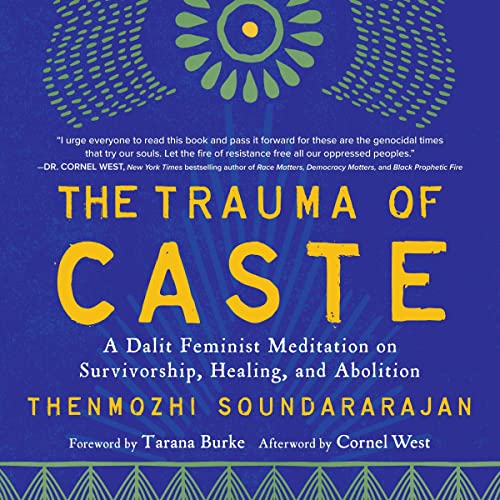
Last fall, I bought a book called The Trauma of Caste and intended to read it in preparation for this year’s yoga teacher training. This book sat on my bookshelf all winter. I looked at it from time to time but I didn’t pick it up.

Earlier this spring I was having some major climate anxiety, really stressing about the state of our planet. For some reason, I picked up The Trauma of Caste and started reading it. And once I started, I couldn’t stop. I would put my baby in the carrier, go for long walks and read this book. 

For some reason, though reading this book was devastating and complicated, it put my climate anxiety into perspective. This book spoke of an impending genocide, yet it was inspiring. It reminded me of how resilient and beautiful people are, even in the absolute worst of circumstances. It reminded me that we can still act out of and embody love, for ourselves and for the world.

I am sharing this because yesterday was International Day of Yoga, and while yoga is very much worth celebrating as a cultural and spiritual gift to the world, there is a dark side to this day, linked to caste apartheid. In India, yoga is being used as a tool by the current BJP government to push a larger agenda of Hindu-exclusive nationalism that tries to justify violence and imprisonment. It is too complex for me to summarize in this newsletter, so here is one anti-oppressive action you can take on this day: read this article, “Why I Don’t Celebrate International Day of Yoga,” to inform yourself about the dark side of International Yoga Day.

The author of “The Trauma of Caste”, Thenmozhi Soundararajan, writes with such a sense of love. Though the subject matter is beyond dark, she brings light to it. She writes, “I am a daughter of a people who have been oppressed for thousands of years, I am also the artifact of centuries of their love and resilience. In that there is a hope for everything. May a thousand flowers bloom in your heart and in mine for our liberation.”

The world is so much, but grappling with it all with a sense of love is my spiritual practice. On some days I call that yoga, on other days I’m not sure what to call it. But I’m grateful to be part of a community taking steps every day towards equity, love and justice.

With gratitude,
Emma

P.S. I’m thinking of restarting our anti-racist book club to discuss The Trauma of Caste. Get in touch with me at emma (at) thebranchesyoga (dot) com if you’re in.

If you’d like space to process and discuss issues like these in community, consider our Yoga Teacher Training Program, starting in October. The Trauma of Caste will be on our reading list this year.

Learn more at our next Info Session, happening on Monday, July 10 at 8:00-9:00pm (virtually). Sign up here to attend.

I’m DONE with anti-aging

Leena here. A few months back I heard a great segment on The Current interviewing some local university researchers about their work on ageism. I’ve been mulling over some of their findings ever since. 

In the dominant North American cultural context, most people consider it a high compliment to gasp when someone shares that they are 70, and to say “wow, you seem so youthful, I thought you were a decade younger!” Celebrities often gloat, “I just turned 60, but I feel better than I did in my 40s”. On the CBC, the researchers discussed the concept of subjective age, which is the age you feel inside. In their research in North America, having your subjective age be younger than your actual age – for example being 65, but mentally feeling like you’re 45 – has measurable positive health outcomes. This mindset is adaptive in an ageist society that undervalues or even neglects our elders. And conversely, negative attitudes of aging have been shown to cause adverse health outcomes for North Americans.

But, here’s what I really found fascinating: The researchers described that, “It’s not necessarily a bad thing, in terms of your physical health and psychological wellbeing, to feel older. It’s when it’s coupled with negative aging attitudes, that’s when it has the negative consequences” for a person’s health. They described that in societies where there is stronger valuing of elders – as is the case in many Indigenous cultures, Eastern cultures and more collectivist societies – there are not the same positive health outcomes for having your subjective age be younger. In those social systems it can be advantageous to be older, and so maintaining a mindset of “feeling younger” isn’t necessary. 

How does this all relate to the yoga industry? In so many ways yoga gets co-opted by capitalism and by our mainstream culture that reveres youthful and thin bodies above harder-won life experience and the wisdom that may come with aging. We see this in studios advertising “yoga for weight loss” and in marketing that promises yoga will help you look and feel younger. As a studio director and someone who believes strongly in physical, mental, emotional and spiritual gifts that yoga and asana can bring to our lives, it’s a fine line to tread. 

I cringe whenever I see lofty promises, or when youthfulness is put on a pedestal. But, I do believe that yoga can have tremendous benefits to help us maintain mobility, physical independence, coordination, and mental stability as we go through various seasons of life and age. 

As a budding yoga teacher in my 20s, I had a number of students in their 60s. (And it’s an honour that a few of these students still practice with me today!). I learned so much from these folks as together we figured out how to make yoga asana practice useful and relevant to their lives. After a few months of classes, one of them shared how getting down on the floor to play with her young grandkids was feeling less painful and more comfortable since starting yoga. Hearing this brought me so much joy, and since then I’ve always been passionate about sharing yoga with folks in their golden years. Through our YTT programs, I love mentoring older teachers who want to work with their peers. It’s why we’ve developed courses for all ages from Parent & Peanut all the way to Yoga for Dynamic Aging. 

Maybe you’ve noticed the mission statement that we share on our home page: We’re here to create a better world with Yoga as our common ground. We lead down-to-earth classes, expert teacher training, and an engaged intergenerational community.

When Emma, Leslie and I were writing it, I was adamant that I wanted the word intergenerational to be included. I want to intentionally and publicly cultivate an anti-ageist community. The “better world” that I’m hoping for is one that deeply values all ages, and that recognizes the special gifts and wisdom that elders bring to our communities. Maybe we can help to shift our culture so that it’s no longer adaptive to have our subjective age be younger than our actual age. Maybe someday I’ll be lucky enough to say, “I’m 75, and I feel and look like I’m 75”, and feel great about that. And, just like it’s been there for me for the past 22 years, I know my yoga practice will be my companion as I journey through that stage of life. 

Here’s a link to the CBC segment I mentioned. 

With care

Leena

Unpopular opinion?

Leena here. It’s Victoria Day, which has got me thinking about colonization (and decolonization). It’s something I think about often in relation to my work, as discussions of decolonizing yoga have become more mainstream in the past few years.

A few weeks ago The Branches hosted a historian and yoga teacher named Indu Vashist for a workshop entitled “Yoga History & Cultural Appropriation: Building Conversation Stamina”. There was a moment in the workshop that stood out to me, because it was a slightly shocking moment for most participants. Someone asked about how something Indu was presenting related to cultural appropriation, and Indu replied,

“Well, this might be controversial, but I don’t really believe in cultural appropriation.”

The room went quiet. Um, wasn’t that term in the title of the workshop? …

Indu clarified, “I think to believe in cultural appropriation, we’d have to define culture. And I have a really hard time doing that, drawing boundaries around culture. So it might be an unpopular opinion, but I don’t really navigate by thinking about cultural appropriation.”

The workshop continued, but that declaration seemed to loosen things up for the participants. People spoke up a bit more, wondered aloud a bit more often, and asked more questions. It seemed that turning assumptions about cultural appropriation on its head freed people up to think in new ways. 


What I was freed up to think about was this; Is the conversation about cultural appropriation actually distracting us from addressing racism and inequity? If our focus moved to taking action around racism and inequity, and things shifted there, would the conversation around cultural appropriation look different?

And…has cultural appropriation in yoga has become a mainstream discussion because it’s less scary to talk about than racism? Are “we” (white yoga practitioners and teachers) stuck on trying to get cultural appropriation “right” rather than getting into the crucial work of actually transforming a racist culture? Is discussing whether we should or should not say Namaste actually part of dismantling white supremacy?

It could be. But Indu certainly had me thinking about yoga, history and authenticity in new and different ways. 

I’m sharing this to invite you into the discussion. Indu is returning for a second opportunity to engage in community learning: She’ll be teaching a 4-week virtual course starting May 30.

Learn more about Yoga History & Cultural Appropriation: Building Conversational Stamina here.

I am so glad that I crossed paths with Indu, and that she’s joined our faculty during our upcoming 250-hr Yoga Teacher Training, which kicks off in October. Learning with Indu has been invaluable for me to question and clarify my thinking around how I relate to yoga as a practitioner and a teacher. 

With commitment,
Leena 

What do burlesque and The Branches have in common?

Emma here. I want to tell you about two stand-out experiences of body positivity that I’ve had in the past year. 

The first was a sold out Lizzo concert at the Scotiabank arena in Toronto.

That was no surprise – Lizzo’s songs are anthems of body positivity, and her concert was a crush of virtuosic big-bodied dancers hyping up the crowd. It was a delight to see an arena of people worshiping Lizzo; a fat, black female artist who won Record of the Year at this year’s Grammys. I had some transcendent moments of feeling that perhaps culture was shifting, that the hierarchy of people and bodies might be crumbling, that maybe we could love and celebrate each other rather than trolling or controlling one another. 

The second experience of body positivity was at a very unassuming venue; the foyer of a curling club in Guelph. A friend had invited me to see her perform there in her first ever burlesque show. I was pumped; this friend had been on a tumultuous journey of body acceptance, and performing burlesque was a triumphant step in the direction of self love. 

There were probably 200 people in the audience, so compared to 15 thousand people at the Lizzo concert it was humble. But once the show got started, the vibe was similarly ecstatic – we were encouraged by the drag queen host to hoot, holler, snap, clap and cheer for the burlesque performers, showing our appreciation through sound. There were professional burlesque dancers as well as newbies; people who had signed up for their first or second burlesque class and performing this show was their “graduation” of sorts. 

It was a joy to see so many different bodies being celebrated in that space. Fat, thin, big boobs, small boobs, bellies of all kinds, trans bodies, elderly bodies. There were comedic performances and sexy performances, silly numbers and sacred ones. It was a privilege to witness people doing this incredibly vulnerable thing; a few were clearly nervous, but they wrangled their nerves and did it anyway. And in the intermissions (of which there were several, included, I think to encourage mingling and chatting) there were such big hugs and congratulations and celebrations happening between the performers and the audience. I looked around and felt again that perhaps culture was shifting. 

I promise this relates to yoga. 

When I first came to the practice of yoga, two of the main reasons for practice were taught to me as chit and ananda. Chit has many translations; one is consciousness, another could be remembrance. Ananda is often translated as eternal bliss, happiness or celebration. Many of the teachers I studied with linked the two; we practice to remember ourselves as part of a divine whole, and once we’ve reconnected with that, we can celebrate that wholeness. We go back and forth between remembrance and celebration.

The Lizzo concert and the burlesque show felt like outward expressions of jubilant celebration, and oddly enough, they reminded me of my yoga practice. They reminded me that celebration comes after the slow and steady work of reconnection. That getting on my mat, showing up for myself and my body however I am, with kindness, appreciation and acceptance, is a building block to celebration. 

And it’s not a one and done deal. We don’t just remember our wholeness and launch forever into a state of celebration. It is a practice to remember our innate worth, beauty, belonging and yeah, I’m gonna say it, because I believe it; divinity. Especially in a world that privileges some bodies and oppresses others. 

So while my practice is nothing as exciting as a sold out concert or a sexy striptease show, it is also a part of shifting our culture. Me showing up to the quiet, subtle work of reconnecting with myself is part of the revolution. Every time I show myself kindness in my practice, every time I soften and allow myself to reinhabit my body is part of the shift to loving and eventually celebrating myself. 

I feel so lucky and privileged that a great deal of my job is facilitating spaces for you to do that too. And I’m so glad to be slowly returning to work and practice at The Branches. I missed you. 

With love,
Emma

P.S. Here’s my favourite Lizzo song. Put it on loud. This song makes me both dance and cry HARD. 

P.S. #2 If you are curious about the Guelph burlesque scene, you can learn more here.  

What I didn’t understand about pain

It’s Nicole writing today on the “other side” of a complex shoulder condition, which coincided with a perfect storm of involuntary change, including the recurrence of my autoimmune disease, the gateway into perimenopause, and a tumultuous personal time. It’s been tough!

That’s me on the far left in the photo below. Check out that shoulder action! If you look closely, you can see that my right shoulder doesn’t go as far into the overhead range as my left does – by no means is it “perfect”, but it’s so much better than it was. Progress!

In addition to physiotherapy and surgery, my shoulder recovery journey ended up including a 300-hour training program with Mindful Strength. Unrelated to my personal experiences, I wanted to learn more about pain and strength training as a teacher, so I enthusiastically signed up while unaware of how personally relevant these topics would become.


During the course, I learned that I was in fact dealing with a frozen shoulder and an anatomical joint impingement, both pretty painful experiences. This made the learning feel particularly timely and personally relevant. We examined the typical beliefs about pain that don’t actually stand up to scientific scrutiny, including these two potentially harmful ones:

  • Misconception No. 1: “Pain is well-correlated to tissue damage.” Contrary to this widespread belief, the science says that not only can you have tissue degeneration without any experience of pain (it’s actually very common, especially in active adults), but you can also have pain in the absence of injury or tissue degeneration.
  • Misconception No.2: “Any instance of pain has a single cause.” In fact, the science shows that pain is multifactorial — a fancy way of saying that it’s caused by a complex interplay of factors

The Bio-Psycho-Social Model

Central to my expanded understanding of persistent pain — defined as lasting for 6 months or longer — was the bio-psycho-social model. This framework situates pain in the context of one’s entire life, including factors both inside and outside your realm of control. Through this lens, pain has multiple influences beyond biology, with thoughts, behaviours, and social experiences holding equal weight.

It turns out that social connections and support (or lack thereof), along with your own beliefs about pain — and in addition to your biology — can directly impact your experience of it! 

Read that one more time to let that sink in!

This isn’t to say that pain is all in your head (it’s so real). Instead, when considering what influences our pain, we should also acknowledge our whole human experience and the rich stew of possible contributors.

From Frustration to Hope

As a yoga teacher, a participant in a 300-hour training, and a moderately active person, I was often gritting my teeth in frustration and discomfort. Outside of my professional identity, I was emotionally and physically drained by daily chores, errands, and activities — that were equal parts painful and fatiguing. I realized that I had to apply my expanded view of pain to my choices for treatment and recovery, including which activities to continue or restart. 

As I progressed through the formal diagnostics and treatment avenues, I identified an important truth that changed everything: strength training, done conscientiously, didn’t exacerbate my overall condition — in fact, I felt better mentally, physically, and emotionally following a workout, plus I got a sense of connection to my training group. Of course, my pain didn’t magically go away, but my perception of my capacity to cope with it shifted enormously, which led me to feel more hopeful.

Creating Confidence by Checking In

One of the most practical tools gained from my combined pain and strength training education is a collection of self-assessment techniques. When paired with the knowledge that pain acts as an alarm system, I’ve become empowered to assess my pain and rationally curb over-sensitized fear responses.

Checking in with myself during strength training and daily movements was sometimes as simple as noticing whether I was feeling capable, or whether doubt was creeping in. By self-monitoring, I regained confidence in my judgement, and in my ability to determine what activities were safe and beneficial.

Strength Is A Feeling – Beyond Lifting Dumbbells

The confidence I built through increased physical and emotional capacity spilled over into my interactions with healthcare providers. I trusted myself as my most-informed advocate, gathered multiple opinions, and I stayed committed despite inevitable wait-times and other systemic challenges.

If you can relate to the struggle of enduring persistent pain, know that you’re not alone! If you’re in this persistent pain boat or are simply interested in learning more from the standpoint of a movement teacher, check out an upcoming event this month from the primary trainer from my 300-hour course, Kathryn Bruni Young.

As a facilitator, Kathryn thinks deeply and then opens the floor for others to do the same. I really value her ability to clarify complexities, and her willingness to engage with differing perspectives within the learning environment.

Learn more about Kathryn’s upcoming session, Mindful Strength: Understanding Pain & Making Gains on Saturday, April 29th, 1:00-5:00pm.

Wishing you well on your pain and recovery journey,

Nicole

Getting Stuck in Ethical Binds

When it comes to engaging respectfully with yoga – a practice that originates in a culture other than our own – it doesn’t take long to get coiled into an ethical conundrum.

Leslie & Leena, Branches Co-Directors

For example, a question we’re currently mulling over is about language. Perhaps it’s best to use Sanskrit terminology and chanting in class out of respect and reverence for the main original language used in codifying and passing on yogic philosophy and practice. But maybe we should actually set Sanskrit aside until we can get the pronunciation right. Or, thinking further, it might be best to abandon Sanskrit completely for its association with the history of caste-based oppression, where some caste-oppressed people were barred from hearing or speaking it (alongside other forms of oppression and continued discrimination).

Hmm.

You already know there isn’t going to be a correct answer here, and that approaches to the above question (and questions like it) will impact various individuals and groups in different ways, both positively and negatively. While we care deeply about our impact and reducing harm, short of closing up shop and never sharing yoga again, we’re aware that our actions will never be perfect and acceptable to all.

The temptation to give up

When faced with the reality that there is no right answer, it can be tempting to throw up your hands and say, “I’m damned if I do, and damned if I don’t, so I might as well just do what I want.” That mentality is an excuse, and we think it indicates a lack of mental and emotional stamina.

If you identify with that attitude and feel a little hurt by what we just said, we get it, because we’ve been there. Conversations around cultural appropriation can be overwhelming and tiring. We know that underneath defensiveness, there is difficulty in sitting with the fact that cultural appropriation is harmful, and there may also be shame or guilt for things you’ve done, or anxiety about what you might do or fail to do in the future. It is hard (though not as hard as having your culture looted). 

Working out our learning muscles

But (of course there’s a but!) like anything else that requires stamina, we can train to maintain our mental and emotional strength for the endless and endlessly complex learning process.

Over the last nine years, we’ve noticed a gradual improvement in how this conversation goes within our yoga teacher training. If this life-long learning process (undoing the harms of cultural appropriation and relearning respectful engagement with yoga) were a marathon, many of those in our first cohort needed to be cheered on to take even just a few jogging steps. Cultural appropriation was a brand new topic, and we didn’t get too much further than reading an article and having a discussion to debrief it.

In our most recent cohort, many participants had already begun to think about how cultural appropriation might be harmful. They had their metaphorical running shoes laced up, and some had even run a 5k or 10k race before. The learning our program offers has also deepened and broadened, incorporating Susanna Barkataki’s book Embrace Yoga’s Roots, and inviting four different guest faculty of diverse South Asian heritage to explore history, philosophy, Sanskrit, and more.

Respecting the process

We keep calling it a conversation – this is on purpose. You can’t just read an article about the Dos and Don’ts of cultural appropriation, and close that book forever. Real conversations, the type that go back and forth, never really end, and include multiple perspectives, allow for more nuance and complexity. A conversation isn’t a test or an exam – there is no final answer. In fact, it’s the not-knowing part that can feel the hardest and be most worthwhile. It’s vital to rest in your humility and really listen before jumping into action just to prove you know what to do so that you won’t offend anyone (which is impossible anyway).

This isn’t the first and won’t be the last time we talk with you about cultural appropriation. Here’s a letter from Emma we sent in August, 2022, as a recent example. We consider it part of our job to perpetually refuel, trade in our worn-out runners for new ones, and stay hydrated so that we can keep going. If and when overwhelm shows up, we take it as a cue to slow the pace down, walk for a bit, or take a water break before continuing.


We welcome your responses and thoughts on this topic as an ongoing venue for conversation.

Yours in life-long learning,

Leslie, Leena, and the whole TBY Team

Can Joy and Grief Co-exist?

A personal reflection from Branches Co-Director, Leena Miller-Cressman

It’s my most sincere hope that you can find our classes or events to be a soft place to land, whether it’s back in community or back in your body, and that you can re-realize the joy of practicing together.

Leena Miller-Cressman

You may have noticed that the studio has been busy this past month! We’ve added some classes, and the schedule is feeling more full after such lean times in the thick of the pandemic. Hooray!

None of this is to pretend that our healthcare system is okay or that COVID is gone, but we sure are glad that many people are feeling up for in-person classes. The contrast between this January and the one from 2022 has me feeling reflective…

The Marathon We Didn’t Know We Were Starting

Looking back, even though our classes weren’t busy, the pandemic was the busiest time of my life. For example, I started making sourdough bread years ago (before having kids) and I just made it again for the first time the other week. Unlike some folks who got into it during the pandemic, I had absolutely no time for a cozy and nourishing habit like baking my own bread. Like so many parents, I was juggling work and childcare while schools and daycares closed and opened, and closed again. And I was also hustling more than ever to keep the studio afloat through pivot after pivot.

Over this period, there wasn’t time to slow down, reflect, feel or to grieve what was happening. I just kept moving forward. These days I don’t think too hard about whether I would have gone ahead with everything had I known how long it would all take. But thanks to so much hard work from our whole dream-team, a deeply supportive community, and vital government small business supports, here we are – finally.

When Joy Shines A Light On Grief

The other weekend, a lovely group of 14 people gathered at the Branches for the first of two Deeply Chill Restorative Immersions. In the closing circle, a number of participants remarked on how healing it was for them to be in a group again. One participant shared afterwards, “My heart is overflowing from the wonderful group of humans who shared practice, space and stories. The way TBY co-creates community is unlike anything I’ve ever experienced.”

Hearing this, it’s impossible to put my gratitude into words – having folks come together in our new studio home ignites my sense of purpose. But the joy I felt from hosting a group of people moving and breathing together was also tinted with melancholy. It felt a little more complex because it was in such high contrast with what it was like during the times we were isolated from one another.

One year ago, we were grappling with a stark sense of emptiness (literal and figurative) during the shut-downs associated with the Omicron wave. Re-encountering vibrant togetherness one year later has revealed the hidden grief that I didn’t have time to process when I was too busy moving forward. It all became quite clear when this song popped up in a playlist and I started crying!

Anyone Else Still Feeling the Effects?

Realizing how much we missed something only after glimpsing it again is such a bittersweet gift. For me, finally giving those emotions some airtime is helping me let go of tension, land in my body more fully, and move forward in a more wholehearted way. Are any of you still working through the changes of these past few years?

It’s my most sincere hope that you can find our classes or events to be a soft place to land, whether it’s back in community or back in your body, and that you can re-realize the joy of practicing together.


Next week we’ll be sharing all the details of our annual Community Week, so stay tuned for info on how you can join in!

With care,
Leena

Noticing Our Confinement

A Story About Outdoor Cats & The Enneagram

This is a guest post by Tamara Shantz, Spiritual Director and Enneagram Teacher. Tamara’s work centres on “practicing incarnation,” with the Enneagram as a key piece of the puzzle.

Our cat Izzy is NOT an indoor cat. 

When we first took Izzy and her brother Alex in six years ago, they had been living as outdoor cats for at least a year. We hoped to transition them to being fully indoors, but after months of constant crying and complaining, we caved, and allowed Izzy and Alex to move freely between inside and outside.

Alex died really unexpectedly the other summer, and we were so devastated. As we grieved Alex, we were also trying to figure out what to do about Izzy. There was a possibility that Alex had died from exposure to rat poison, so until we got the results from an autopsy, we decided to keep Izzy inside. 

One day of her confinement, she spent about 8 hours loudly petitioning to be let outside. There was nothing pleasant about Izzy’s confinement for anyone in the household. Thankfully, in the end, rat poison was not the cause of Alex’s death and we decided to return to Izzy’s usual state of roaming freely between our indoor and outdoor spaces. 

Protection or Imprisonment?

This experience with Izzy got me thinking about the idea of protection. I’m sure any parents (of human or fur babies) can relate to the choice-making we do for the protection of our vulnerable charges, even when they conflict with the desires of the one we seek to protect.

I have no doubt that Izzy did not feel protected. She felt imprisoned. Like many protective acts or barriers in the world, it really depends on perspective.

What one person sees as an act of protection, for another, is an act of confinement.

We can find this dynamic within ourselves as well. 

The Wisdom of Enneagram

The Enneagram is a tool for self awareness that describes 9 basic personality structures. It sees your personality as a collection of coping strategies – defence mechanisms that develop in order to keep yourself safe. Especially when we are children, at our most vulnerable, we need to learn how to protect ourselves in the world. We begin to create a tough outer layer to defend the tender parts of our truest selves. 

And so Ones begin to perfect themselves, Twos start to shower others with care and kindness, Threes get busy, and so on. Each one of us believing that these strategies will keep us safe; will bring us love.

Nothing Is Inherently Wrong

What I have found to be so beautiful about working with the Enneagram is that this development process isn’t seen as something that has gone wrong, or that these protective layers are to be judged in any way. 

It has been incredibly liberating to be introduced to the Enneagram’s perspective on human development where there is nothing inherently wrong. The structures of our Enneagram type, the ways that we have tried to protect ourselves are necessary, natural, and good.

There is beauty, love, and power at work in the formation of our personalities.

From Protection to Protest

Just as our choice to confine Izzy was rooted in love, it was still confining!

Even as our personality formation is essential and marked by love, these same traits and structures that have protected us can also begin to chafe. They begin to feel confining. 

Like Izzy, I have found myself at the closed windows of my being, loudly protesting my confinement. 

This is where meaningful work with the Enneagram really begins. 

One of the purposes of learning about your Enneagram type is to begin to see these various coping strategies clearly, to notice when they become activated, and to develop the freedom to let these habitual patterns go. 

I find my home at point Nine on the Enneagram. One of my primary coping strategies has been to numb out, dissociating from physical sensation and retreat into my daydreams.

For many years this was a necessary habit to keep me safe. But as I moved into adulthood, I began to realize how this numbness also was its own prison, and work with this limitation. My confinement is much clearer and more temporary than it used to be.

Letting Ourselves Be Outdoor Cats

We were a bit anxious when we ended Izzy’s confinement, but we do have some tools we use to keep her (and the birds) safe: a bright, rainbow clown collar and bell, neighbours who keep an eye out for her, and an early ‘bedtime’. 

The Enneagram can provide these tools for each of our own processes by helping us to become acquainted with our unique confinement, and offering practices to help us feel supported as we risk venturing outside of our protective walls.

Curious? It won’t kill ya! Join us for a workshop to dive in: The Enneagram: Nine Journeys of the Soul on February 10 and 11. Registration here.

You can learn more about Tamara and her work on her website.

Fear and dumbbells at The Branches

Branches Co-directors Leslie and Leena break down why a strength training practice can be so complementary to yoga and share some options of how you might get started with us!

Eyes wide, an unsuspecting new student walks into a class at the Branches, and to their horror, sees a line up of dumbbells and kettlebells in the middle of the room.

‘I thought this was supposed to be a yoga class?’ they think, alarmed at the prospect of lifting something too heavy and hurting themselves, or of being in over their head at a class that’s too hard.


TL;DR: Start lifting weights. It’s good for you. We can help.

We know that a lot of people are drawn to try yoga because they heard it’s a good way to add a movement practice to their lives. Yoga encompasses a lot more than asana (the poses), but nonetheless, we appreciate that folks want to get moving in a way that feels approachable.

So why the weights?

If your primary interest in yoga is to improve the way your body works on the level of muscles and bones (flexibility, strength, mobility, balance, bone density) – adding a strength practice is going to benefit you big time.

The cells of your musculoskeletal system speak in the language of load. Those cells are just waiting to be given a challenge so that they can respond, and grow in their capacity to bear weight. This will make your body more robust. Everyone was born to be strong.

Don’t be scared. You’re already strong!

Some of the fear about weights is actually about familiarity. Think about the lifting you might already be doing in your life without realizing it: 

  • picking up kids, grandbabies, and pets
  • hauling groceries
  • pushing your couch to the side to vacuum
  • going up and down stairs
  • lowering your slow cooker down from the top shelf
  • hoisting a bag of flour up from the bottom one

Our daily lives are already full of managing load. It just doesn’t look like a kettlebell.

Actually, strength training serves asana.

In an active yoga practice, you do move your body around. In a lot of cases, your own body weight is something you are already or can easily become conditioned to manage. So if you’ve chosen yoga as your movement practice, we don’t want you to be surprised if your bones don’t end up all that dense from doing standing poses and going for walks. Adding strength training can fill the gap of providing your body with the input it needs for longevity, especially bone density.

In other instances, certain asana require a lot of strength to move your body weight around, meaning that you can barely do one repetition, which is not enough to actually get stronger (chatturanga is a common one – the lowering down from plank to the floor). Adding strength training with weights would actually be a wise regression, building towards more challenging asana with techniques that use less than your body weight.

Hard truth: you won’t get stronger doing what you can already do.

Even for folks who are purposely coming to class with weights, we often see them choosing the lightest weights possible. But if your chosen load weighs the same as your purse or laptop bag, you won’t be getting any stronger. It needs to feel challenging. If you can bang out 12 or 15 good reps, you’re maintaining your existing capacity, not expanding it.

Squatting with 5 or 10 lbs is easier than carrying your groceries up your front steps. The idea is to train heavier so that daily life feels light!


Why we personally love strength training – anecdotal benefits.

Many of us at the Branches maintain dedicated strength routines. We love practicing yoga, and we also want to have dense bones, strong bodies, and be able to help our friends move, pick up big kids, and maintain our independence well into our golden years. These things are not at odds. In fact, they complement each other.

Pairing strength and yoga has offered Leena greater resilience and comfort in response to chronic pain. She has noticed that when she is deconditioned (that is, when she’s not lifting), she is much more likely to struggle with pain. This makes restorative yoga and meditation much harder.

Leslie finds that her flexibility and enjoyment of basic poses increases with her strength. When she’s lifting regularly, her body is much more willing to give her a greater range of motion, which she can apply to yoga asana. Freed up in this way, she can pay attention to the subtler sensations of practice rather than struggling with the shapes.


Ready to pick up something heavy with us?

One important FYI is that some of our classes are not intended to only be yoga classes. We made our tagline “Yoga & Movement. Rooted in Community,” on purpose! If you want to explore, you might try the following classes that incorporate body weight strength, free weights, and resistance bands:

  • Strength Essentials on Mondays at 10:00am and Mondays at 5:45 pm – all about starting to build strength, focusing on the fundamentals, very friendly to beginners
  • Strength & Flow on Wednesdays at 5:30pm and Saturdays at 10:00am – a mixed experience of strength and asana, much more adventurous

Going beyond the musculoskeletal system.

If your reason for exploring yoga doesn’t include a huge focus on your body mechanics, rest assured we are committed to self-inquiry, presence, gentleness of the breath, generosity of the spirit, and classic yoga poses and transitions.

Who knows, maybe kettlebells can lead to spiritual growth. We invite you to come find out.

With enthusiasm and confidence that you can do it,
Leslie & Leena