
Hi there, Emma here today.
I have read many essays and articles by climate activists with the message that to address the climate crisis, we must choose things that both have impact, and bring us joy. Because without joy, we will not be able to sustain our commitment to the crisis.
We need joy as an anchor for our commitment.
Gardens are a source of great joy for me. My own garden is a site of solace, a place to connect with the earth and notice the pace of growth. It is a place to practice nurturance and attention. When I step outside my door to colourful new blooms, or the graceful twining of a bean plant up a pole, I am infused with joy. It fulfills so many of the values that I hold; to live in more connection with the land, to contribute to a healthier ecosystem by feeding bird and bee populations, and to share beauty with others. I’m so grateful to greet the garden outside The Branches on my way to work, seeing the bulbs pop up in the spring, and the berry bushes and trees begin to bear fruit.
Leena worked hard on planting the front garden of The Branches with native plants and shrubs a few summers ago. I vaguely knew that native plants were “good for the environment” but I didn’t have a good grasp on the importance and impact of native plants until I attended an info night on native plants in my neighbourhood. And what I learned that night drastically changed my thinking (and my garden).
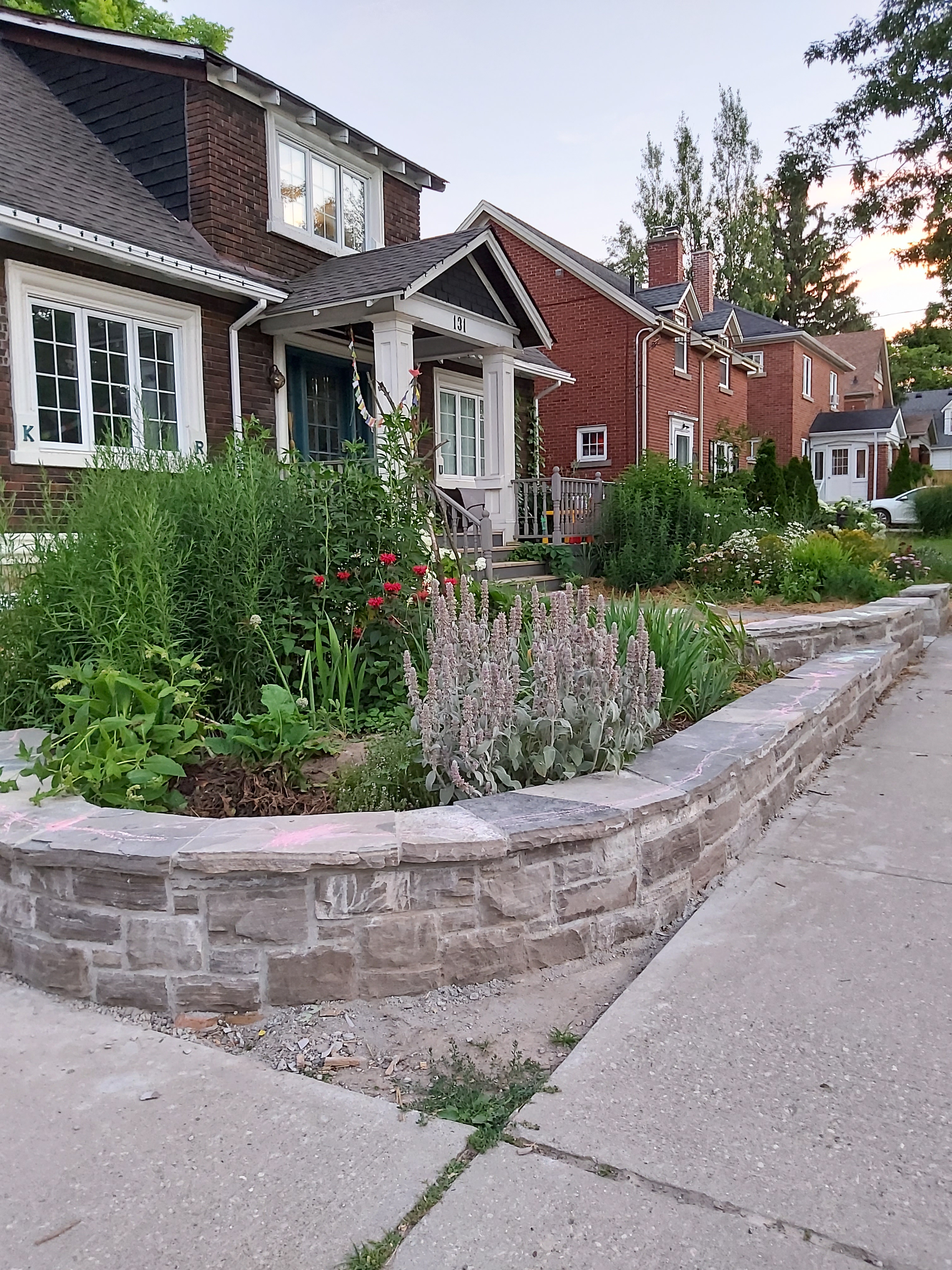
I had always thought that any sort of garden with flowers and trees could feed birds and butterflies and contribute to a healthier ecosystem. What I learned was that most of the ornamental flowers and trees that we commonly see in gardens are not nutritionally appropriate for this region’s animal and insect populations. Plants native to our bio-region (meaning that they co-evolved with the birds and insects in this area) have the best and in some cases only nutrition able to sustain certain species. There are certain butterflies and birds that are dying out because the plants they need to survive have been replaced either by grass lawns or by non-nutritive but popular flowers and shrubs.
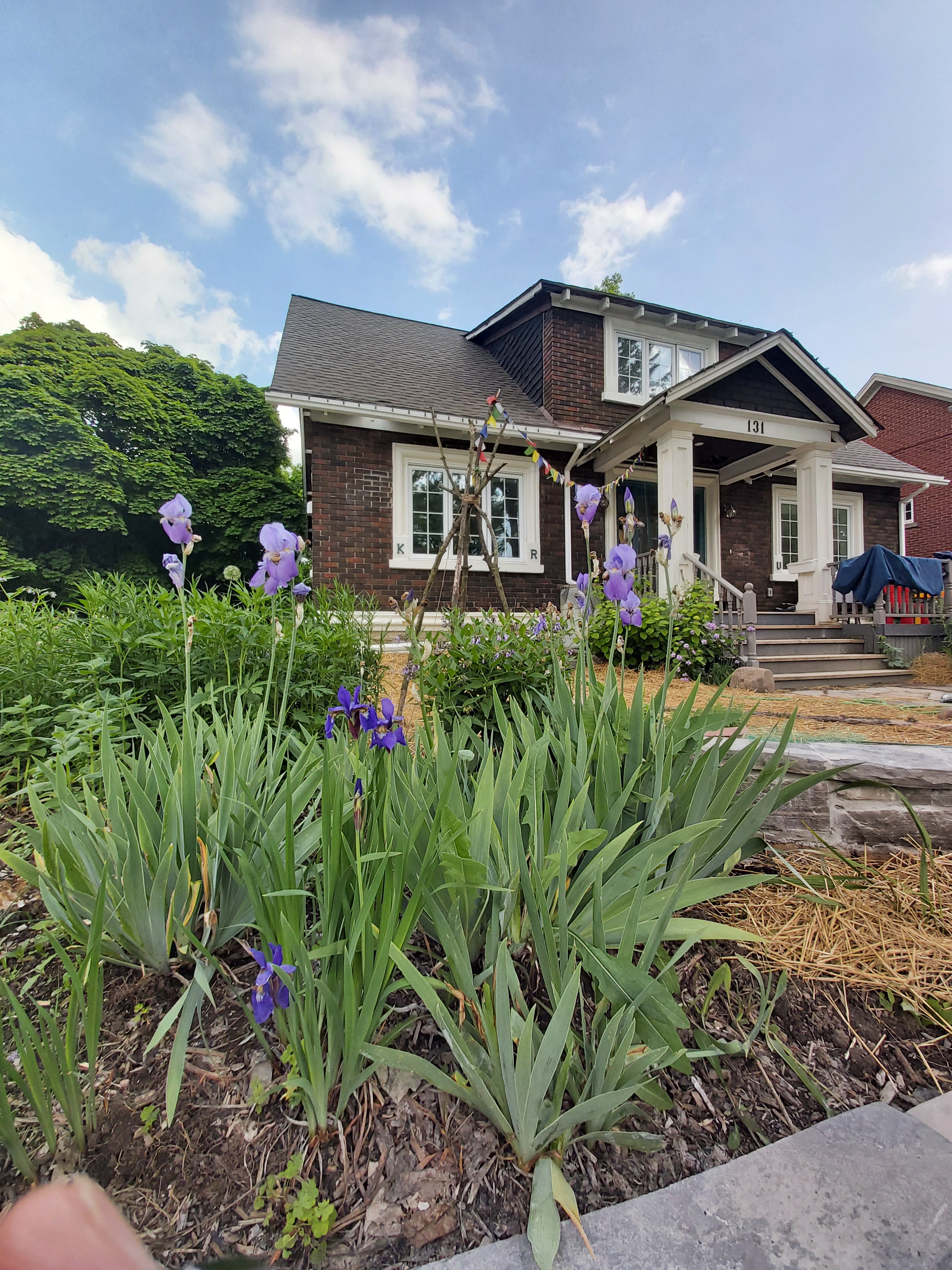
I thought of the flowers in my garden and realized that while they were beautiful they were also nutritionally empty for the wider ecosystem.
The other important piece I learned that night was about how much land in the city of Kitchener-Waterloo is privately owned, and how much of that privately owned land has the potential to host native species. So much of the land (that is not paved by roads and driveways or occupied by buildings) is covered by grass, which gives zero nutrition to the wider ecosystem, and is also incredibly taxing on the ecosystem as it requires water to stay green. If even a small amount of that privately owned land was converted to native plants, shrubs and trees, it could greatly contribute to the resurgence of local fragile insect populations.
After the event, I marched home and looked at my garden. I looked at the grass on the boulevard, and the non-native perennials I had planted. I saw how much potential this small bit of land had, and I committed myself to converting as much of it as possible to native plants and shrubs.
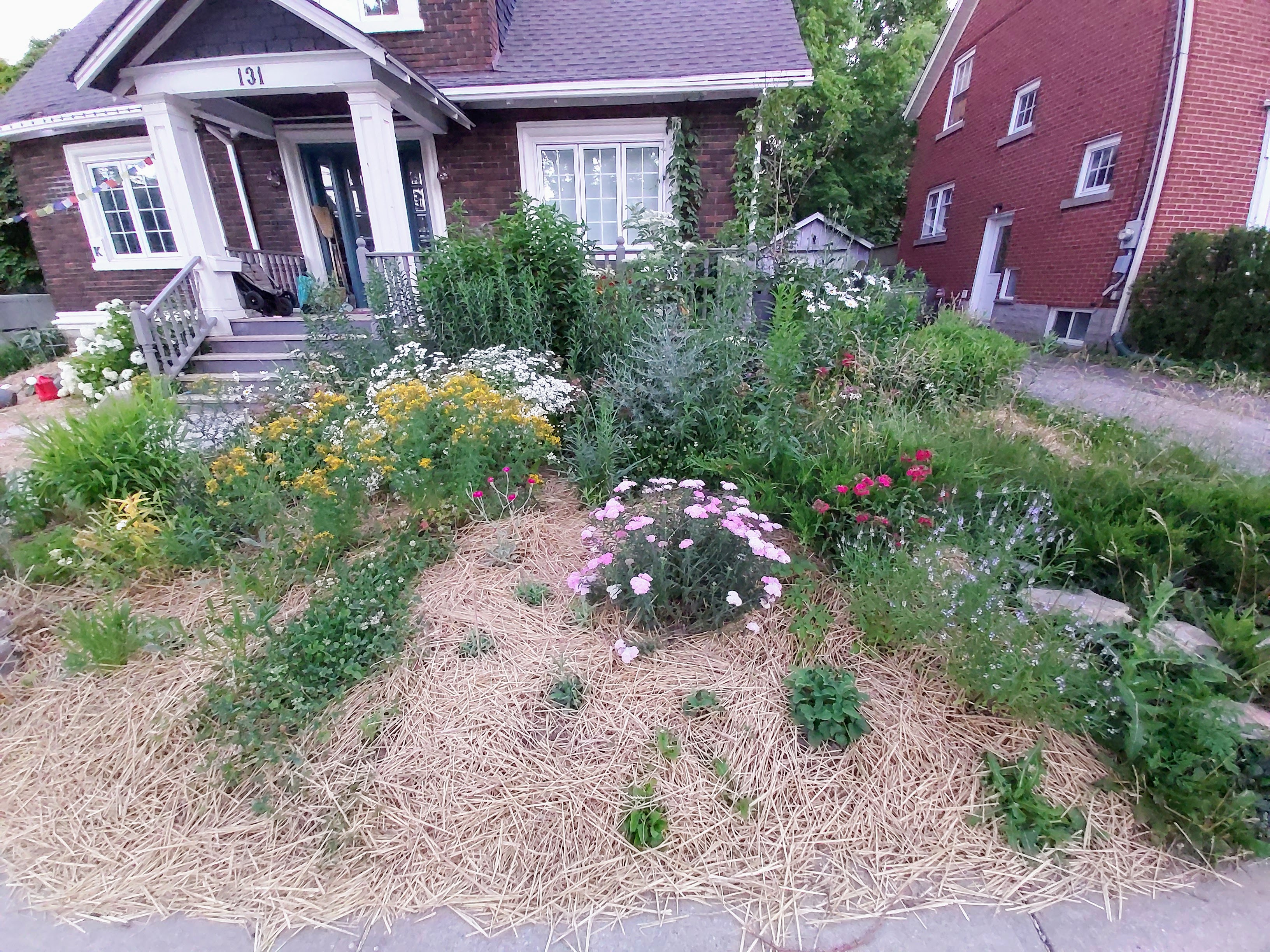
Tending to and enlarging the native plant population in my home garden is one small way that I am attending to the climate crisis. When I feel overwhelmed by the scale of the challenge, I am heartened to remember that nurturing gardens on privately owned land is actually a huge point of leverage in the ecosystem of a city. I also hold alongside that, an awareness of the privilege I have in owning land and the complicated and problematic nature of land ownership.
I am not satisfied with confining this commitment to my own garden. I am dreaming and scheming about how I might re-naturalize parts of the school yard where my son will start JK in September, or how I might get a grant to install native plants outside the Kitchener Public Library.
At The Branches, we are also dreaming about how we might spread more awareness about native plants to our community (this newsletter is one step), and get more native plants into the gardens of our members. Stay tuned for ways you can get involved in that next spring.
With joy,
Emma
Want to learn more about or order some native plants?
My fave resources are:
https://onplants.ca/
https://www.nativeplants.ca/
https://reepgreen.ca/bloom-in-box/ (Closed for 2024, but a good program to know about)
 The Branches