make bodies neutral again

(This post comes to you from the brain of Emma Dines, studio co-director and teacher)
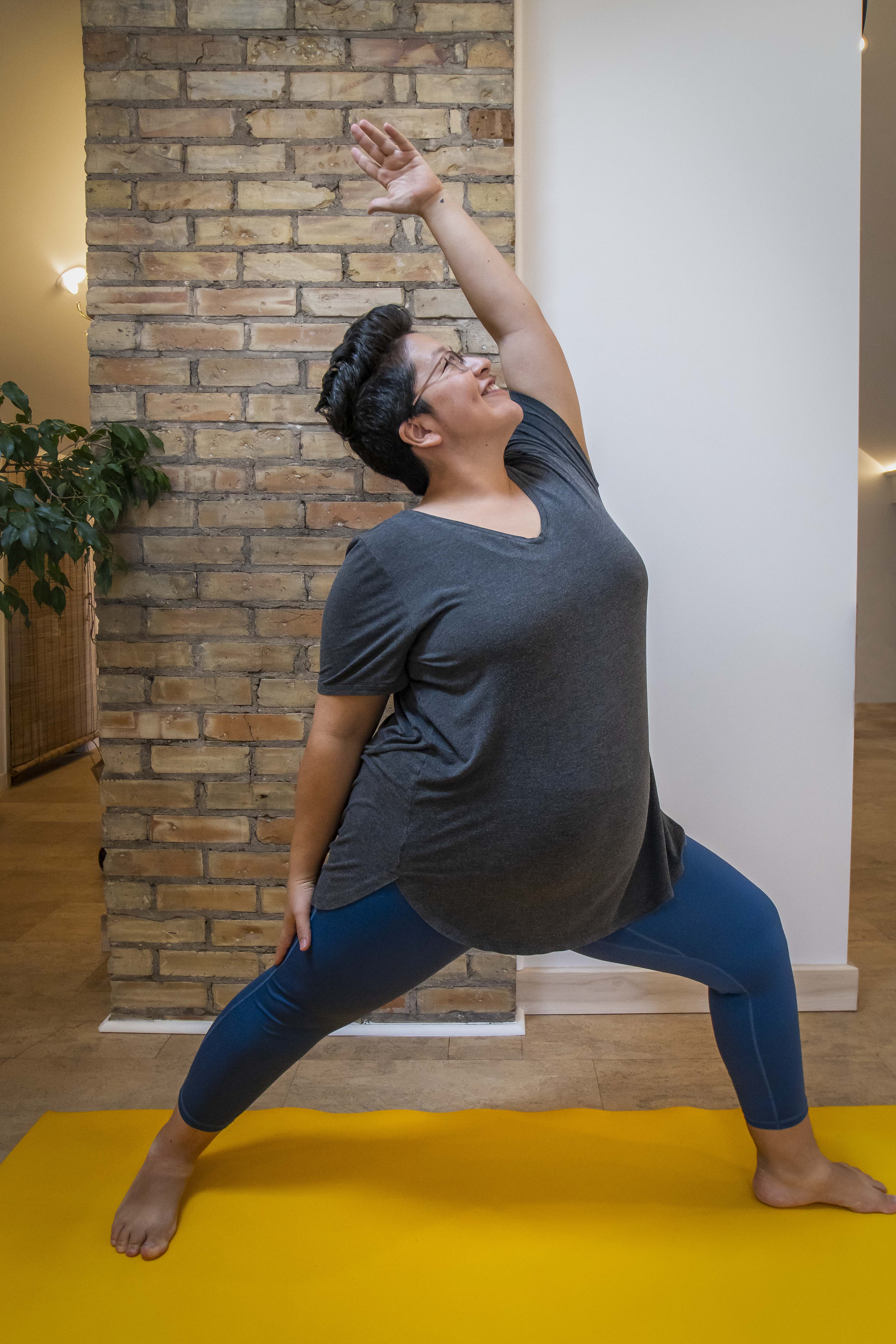

I have been thinking a lot recently about how I came to have a fairly positive relationship with my body as a kid and teenager, and how that led to my work at The Branches. 

I think a lot of it had to do with my mom. 

My mom grew up on a farm with two older brothers who called her “fat”, which affected her sense of self for a long time. When she had me, my mom was determined that me and my siblings would feel differently about our bodies. She was vigilant (and my dad was too) about never commenting on or talking about our bodies in a negative way. I still got the fatphobic messaging of mainstream culture from TV and school, but my childhood home was my first experience of Body Neutrality. 

I am so proud that Body Neutrality (and Body Positivity) are core values of The Branches, and that they shape how we teach our classes. Our teachers are careful not to use language that privilege some bodies over others — that insinuates that being stronger or more flexible is “better”, more desirable or even the goal of yoga. Our teachers use language that attempts to acknowledge, inform, respect and celebrate a range of different bodies and needs. We are careful about our language because most of the world is not, and we want to be a safe space for people to feel into, experience and learn from and in their bodies. 

My body has gone through a lot of changes in the last few years. I had two kids, I turned forty, the hormonal changes of perimenopause are coming for me and the body I taught yoga with for 10 years has changed. I’ve done a lot of work to reconnect with my changing body, and to replace my internalized fatphobia with Body Neutrality. One thing I am grateful for, and that I think comes from so many years of integrating Body Neutrality into my teaching, is that when I am teaching, I am so rarely self conscious about my body shape or size. My body becomes a tool to explain spinal movement or joint centration. Any fixation on what I look like evaporates. I really hope that is a shared experience in my classes. I hope that when people are moving and breathing in my class, they have an experience of their bodies that is so much more vast and varied than just what they look like. 

I’m so grateful to my mom for cutting out the noise in my childhood and giving me space to hear myself. And now, with kiddos of my own, I am intent on sharing Body Neutrality and Body Positivity with them. 

Some amazing resources I’ve found that are inspiring and radicalizing me on these topics are the Maintenance Phase podcast and the book Fat Talk: Parenting in the Age of Diet Culture by Virginia Sole-Smith. I also continue to love The Body is not an Apology by Sonya Renee Taylor.

I honestly cannot shut up about all of them (ask me about the BMI! Ask me!!) and would love to chat further about all of this, so don’t be a stranger. Catch me after class or shoot me a note anytime. 

I also re-vamped a printable journaling prompt on Growing Body Neutrality/Positivity. If you want to spend a little time reflecting on this, print it out and give some of this a think. 

Sending you warmth on this cold January day,
Emma
Shame About Shame: A Reflection from Emma

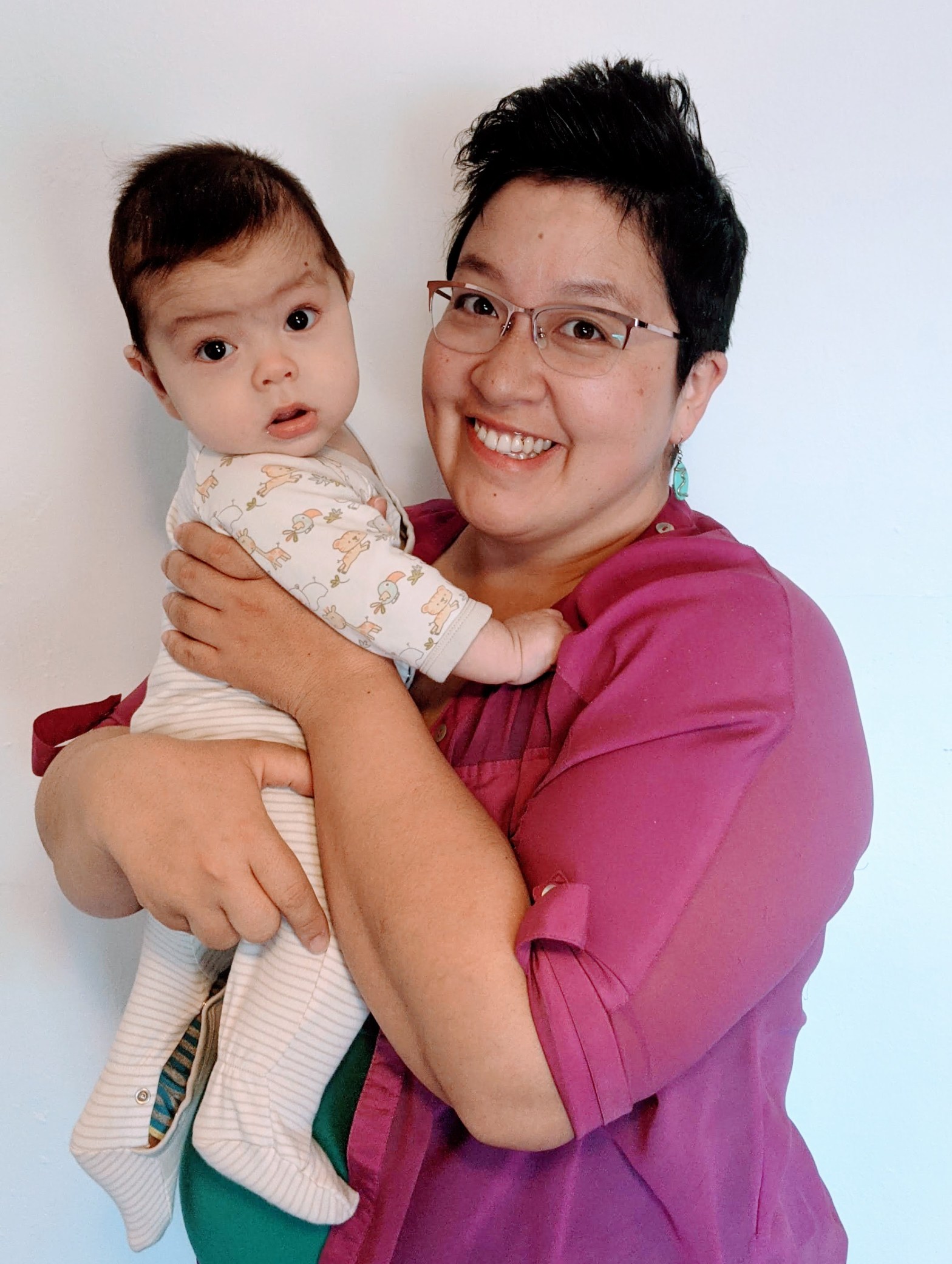
This post is written by QSY co-director and lead teacher, Emma. This month, she is starting a gentle return from her maternity leave, and is excited to rejoin the QSY community.


Shame about shame. Would we call that Meta-shame?

I officially come back from my maternity leave later this spring, but I’ve got some thoughts to share with the community as I start to think about yoga and teaching again. 

One thing I’ve been mulling over during my maternity leave is body shame. And not just shame about my body, but shame ABOUT the shame about my body. Because I shouldn’t be feeling body shame, right? I’ve been teaching Yoga for Round Bodies for 8 years, talking up themes of body neutrality, self-acceptance and self-love in my classes and our teacher training. I’m YOUR cheerleader for taking things at your own pace, for focusing on how it feels to be in your body or yoga poses, rather than thinking about what you look like. I’m supposed to be a role model for self-acceptance, right?

The Sting of the Second Arrow

This shame I’m feeling is what many Buddhists call “the second arrow”, which I first heard about from Tara Brach. Simply put, when we experience something painful, there is often reactivity and blame (of someone else or ourselves). We experience more suffering than the initial pain, a suffering on top of suffering. Tara talks about cultivating the ability to “pause, recognize and open” in order to step out of that cycle of suffering. 

Pause. Okay, deep breath. 

Pause and recognize. I guess where I need to start then, is recognizing that I still have body shame. Actually, let me re-write that. I recognize that my culture taught me to have body shame, and I’m still recovering from that. My culture taught me that the best bodies were thin, fit, able and beautiful. My culture taught me that if I gained weight, I was lazy, ugly and unlovable. Oof. That’s quite a cultural idea to recover from. 

It’s a tangled thing, unravelling these cultural stories and seeing how they show up in my mind. That’s where the shame about the shame comes in. I feel embarrassed that I haven’t completely transformed the way I feel about my body. I want to hide that, and only show the part of myself that is okay with how my body looks and moves. I can’t tell my yoga students or community that I don’t completely accept my body, can I?

Pause, recognize and open. Sure I can. Something I’ve discovered about shame is that it changes when I speak it out loud. When I share the vulnerability of it, and ask others to hold it with me. 

Do we have to already love ourselves to practice Yoga?

When I really sit with this and mull it over, it points me to the importance of having spaces and communities like ours, where we can show up in our realness, where we can pause, recognize and open on our own terms. Where we can be our half-realized dreams of who we are and want to be, and live the unravelling and reconstructing process that it is to learn about and (eventually, maybe, sometimes) love ourselves.  It’s not REQUIRED that you already accept and love yourself to practice yoga. That can be what a yoga practice nudges, nurtures and slowly allows.

A community like ours doesn’t make self-acceptance the next “perfect” to measure ourselves against. We can be careful not to make shame about shame the “new shame in town”. We can recognize that there is always more to learn, practice and discover about ourselves, and there is always more kindness we can extend. 

Reflecting on this also reaffirms my dedication to this work. This work of facilitating movement spaces where our bodies and attitudes can be welcomed with love. This work of making sure these themes are present and active in our teacher training program. We can work together to create a culture around bodies that tells new and different stories. Because the old narratives are harmful and untrue and they rob us of joy. They keep us separated from one another in little boxes of shame.

Have you experienced something like meta-shame? Or other concoctions of feelings about your body? Did it come after a big body change (like for me, pregnancy)? Or a gradual body change? What kinds of thoughts did you notice coming up? Did you feel like you could share them?

Don’t Tell Me to Relax: Body Positivity & Mindfulness

The other day, someone told me to relax.

I was feeling worked up, and they were feeling impatient with me. So their shortcut to harmony was to tell me to “relax!”

You can imagine how that went.

I didn’t lash out at them, but I did feel hurt. I wasn’t trying to be dramatic, but I had real feelings about the situation. And being told to relax was a quick dismissal of my feelings, rather than an acknowledgement of them.

I have this same thought about the phrase “Love your body,” which is a phrase I don’t really use, especially not when I am teaching yoga. I don’t think it’s bad, I just think it’s on the same end of the spectrum as “relax.” It is an instruction that, while well-intentioned, might miss the point. Telling someone (even yourself) to “love your body” may not acknowledge the real and complex experience that you have with your body. That it might be hard to love your body when you feel that the world has been telling you it’s ugly, dysfunctional, or bad your whole life. It might be hard to love your body if your body is the site of trauma. It might be hard to love your body if your body is in pain a lot of the time, or experiences anxiety or depression.

What I wish my friend had asked me (instead of telling me to relax) was simply “What’s going on?” Taking a moment to acknowledge my feelings might have made a huge difference in how I was able to be present.

Continue reading “Don’t Tell Me to Relax: Body Positivity & Mindfulness”

Wishing You a Body Positive New Year!

This blog post was written by Emma, Lead Teacher and Creative Director of Queen Street Yoga.

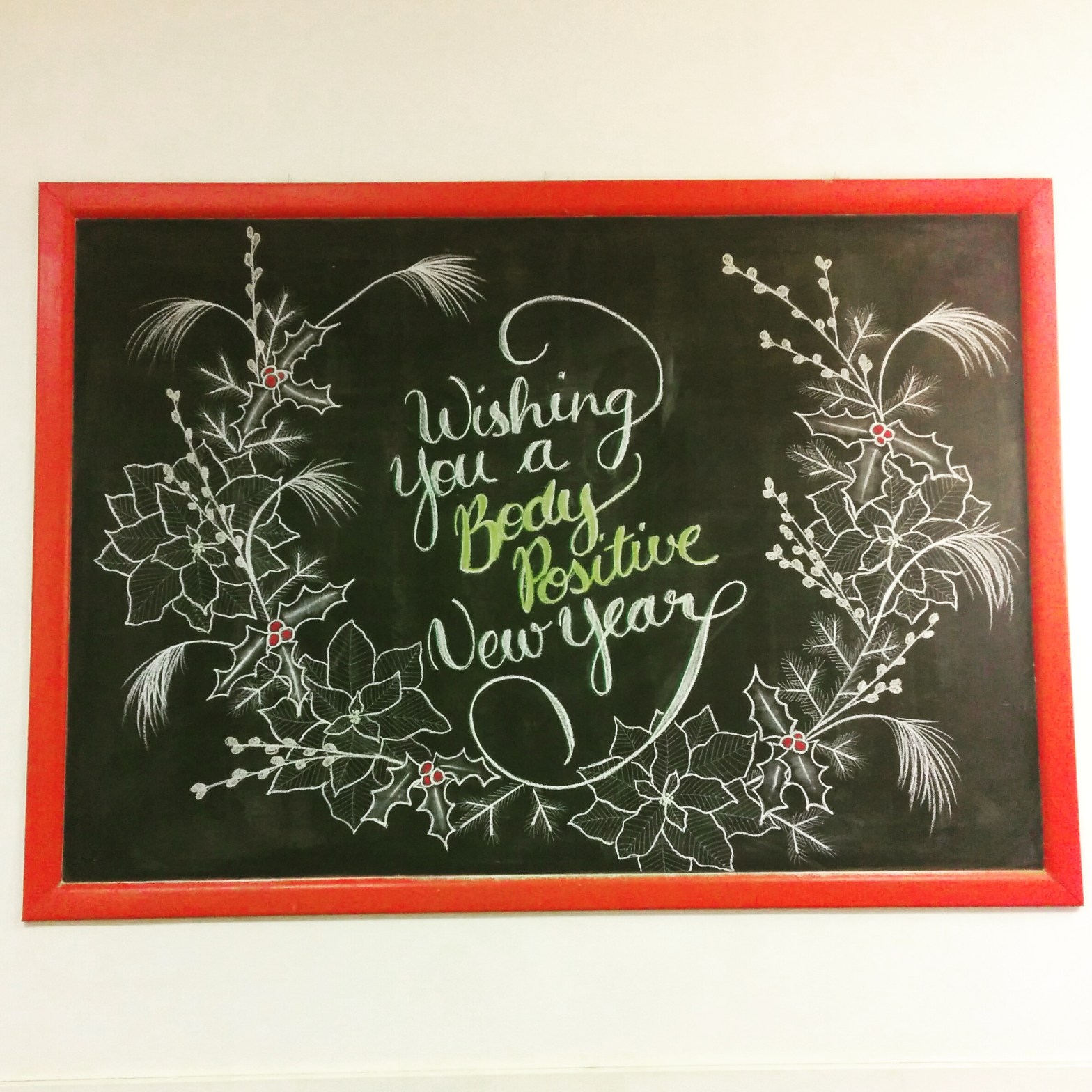
We chose the holiday wish this year–“Wishing You a Body Positive New Year”–with a lot of care. We hope people will participate in yoga as a way to celebrate and enjoy their bodies, rather than fix or change their appearance.

img_20161130_145047

All the time, but particularly at this time of year (New Year’s Resolution time!) there can be many subtle (and not so subtle) messages from our culture about bodies. About what we should be eating, and not be eating. About what we should be wearing. About how we should look and present ourselves. So much of these messages (coming from advertising, the people around us and even the voices in our own heads!) are focused on appearances, on what our bodies look like, or what they “should” look like. Continue reading “Wishing You a Body Positive New Year!”