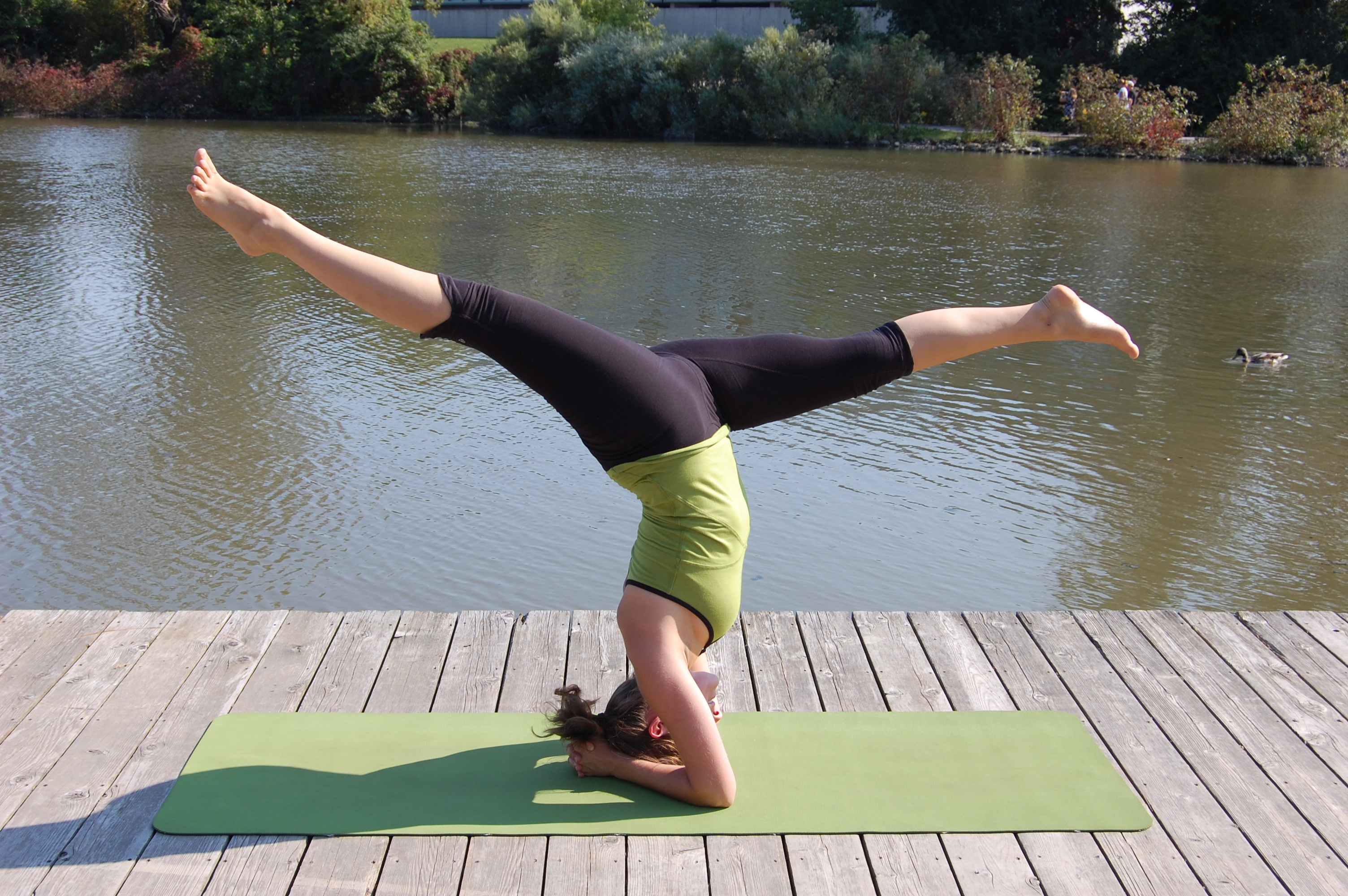
This is a guest post from anatomy teacher, dancer and chiropractor Madeleine Shen-Lopez. Maddy has been teaching anatomy for The Branches’ Teacher Training Program for over a decade, and this year we are offering her special brand of magic as a longer course + weekend immersion starting in October. In this post Maddy talks about discovering the possibilities of her spine, and the intersections of learning about anatomy from the inside (as a curious mover) and from the outside (as a chiropractor).
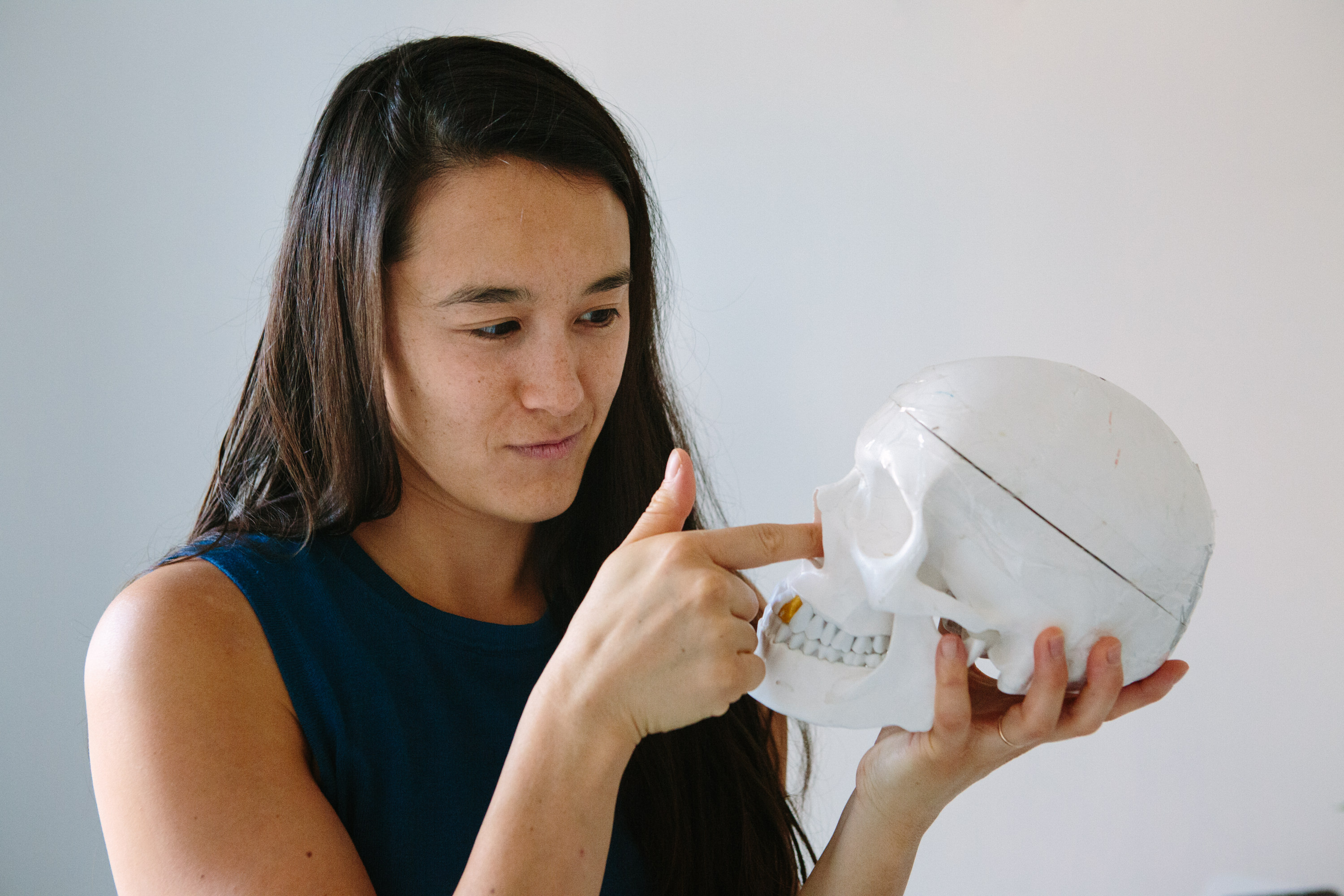
When I first started studying anatomy it was far from academic. It was in a dance studio, with a group of enthusiastic nerds crowding around an anatomy book. We mimicked the skeleton model with our own bodies. We got to know our tissues by palpating them from the outside. We didn’t learn Latin words or anatomical terminology. We learned about our anatomy by moving it.
I remember learning about the bones of the spine and how they can undulate (move in a smooth, wave-like motion) because of the way their many joints are shaped. I remember feeling the tissues on the front and back of my body. Searching to find the coordination of movement as a symphony. Finding textures in my movement like gooey, elastic and fluid. I used to practice all the time! Waiting at the bus stop in Toronto, I’d close my eyes and move my spine in waves.
I’m sure I looked bizarre to the people around me but I discovered something while I was undulating at the bus stop. I began to understand that knowing with my mind is just one part of knowing with my body. That understanding how the spine’s anatomy enables undulation was just one part, and a far cry from actually undulating my own spine!
And once I could undulate my spine, I realized there were still more layers of knowledge that I could explore – deepening the precision and flow with which I undulate my spine, learning how the undulating spine can move my limbs, and how moving my limbs can undulate my spine!
I learned that the human spine has 27 segments, and each segment has 3-5 joints with which to articulate. That’s over 80 joints in the spine! This offers an incredible and infinite possibility of combinations of movements, a continuum of options for how we move. Playing with wave-like motions in the spine, you can explore lots of different pathways, not just one way of bending or curving. This motion can then travel throughout my body, influencing my limbs, like the wave traveling through a whip, or the resonance of a guitar string vibrating the whole structure.
There is even a wave-like motion in the human gait pattern – a fancy way of saying the way humans walk. The wave of the spine helps propel the body through space, with arms pendulating along with it, and our legs catching us as we fall through space.
After spending several years studying anatomy with my brain and body, outside of institutions, I went back to the academic world to study to be a chiropractor. There we studied anatomy in very different ways.
We did dissection study of cadavers. We got to see tissues from lots of different bodies and how they connect and intertwine and how different they are from one body to the next. We sat in a lecture hall looking at and studying slides of 2D pictures. We memorized big fancy words and complicated terminology. We held real bones and felt all their facets and bumps and textures – and memorized the specific names of every part. But during exams I would still come back to my body which already knew so much.
When asked a multiple choice question like…
“Pectoralis Major moves the humerus in which way? A: Abduction B: Adduction C: Flexion or D: Extension”
…I didn’t rely on memorized tables like many of my colleagues did. My strategy was to close my eyes and feel. I’d move my arm around slowly sensing and Bing! The answer was right there in my body.
To this day when I’m working with chiropractic patients or movement-curious students, my body and theirs are our best teachers. The Latin names and movement terminology can be useful in some contexts, and fun to throw around! But the most important learning happens in the body.
Learning anatomy doesn’t have to be purely academic, reserved for medical practitioners. It can be an experience of tuning into your own felt experience, and letting the knowledge of how bones are shaped and how muscles move enhance what you can sense and feel. If you’re curious to explore movement and the human body in this way, I’d love to explore it with you. Teaching anatomy has been a huge gift for me, as I get to share this simple truth: Your body knows.
Learn more about Maddy’s upcoming Anatomy of Movement Immersion.