[Repost] Self-Care is not a Transaction

Jessica McQuistin is a Branches community member and one of our regular front desk work trades, and she is also an avid blogger. We loved her recent reflections on self-care and wanted to shout it from the rooftops by sharing it over here on our blog. Read more of Jessica’s posts about mindfulness, motherhood and sustainability on her blog.

Sometimes I need to remind myself that self-care is not a transaction. I am not a machine that produces a specific output based on a specific input. Or a car that consistently runs smoother after an oil change. Or a recipe turns out the same every time as long as you use the right ingredients. No…Being human is much more complex and unpredictable.

When I forget this, I say things to myself like,

  • You just took an hour for yourself. Why aren’t you feeling refreshed?
  • You yelled at the kids again. All that meditation is obviously not working!
  • You got a good sleep last night; so why are you so tired?
  • You’ve decided to do some baking. And you love baking. Why aren’t you enjoying yourself right now?
  • I took you out for lunch as a special treat. Why aren’t you happy and grateful? What a waste of money.

When I go down this path, I can easily conclude that self-care is not worth the time, energy, money, or effort so maybe I just shouldn’t bother. But I know this isn’t true. Yet, I often find myself expecting to be magically transformed into a calm, happy, generous, grateful, energetic being after spending any ounce of time on self-care.

I’d really like to change these expectations. As an exercise in self-compassion, I’m going to replace these statements with kinder, more empathetic responses.

Old StatementNew Statement
You just took an hour for yourself. Why aren’t you feeling refreshed?You just took an hour for yourself despite feeling some “mom guilt” and yet, you’re not feeling refreshed. That’s disappointing. Maybe you’re a little burnt out right now and an hour wasn’t quite long enough for you to feel better.
You yelled at the kids again. All that meditation is obviously not working!You’ve been trying not to yell at the kids lately, and you’ve been meditating as a way of becoming less reactive. (Way to go!) Yet, despite all these efforts, you lost it and yelled. Making mistakes and noticing them is part of changing any behaviour. Keep at it and remember that you’re human. Apologize for yelling and move on.
You got a good sleep last night; so why are you so tired?You prioritized getting a good sleep last night and that’s great! Unfortunately, you don’t feel as well-rested as you expected today. Maybe you need a few more good sleeps to catch up or maybe it’s just a low-energy day and that’s okay.
You’ve decided to do some baking. And you love baking. Why aren’t you enjoying yourself right now?You usually enjoy baking but your heart’s just not in it today. Maybe you don’t have the energy for it or maybe you’d rather be out of the house than in the kitchen. Oh well! Finish what you’ve started, then move on to something you feel like doing.
I took you out for lunch as a special treat. Why aren’t you happy and grateful? What a waste of money.Hmmm…Going out for lunch usually feels like a really special treat but today it didn’t boost your mood at all. It’s still okay that you went out for lunch though.

Noticing some themes, I’ve also come up with some general reminders about self-care that I’d like to keep in mind:

  • What works sometimes doesn’t work other times.
  • I don’t always know exactly what I need. It’s okay to try something even if it doesn’t have the result I was expecting. It’s still worth trying.
  • Sometimes I need to do a lot to feel good, other times I need very little. These fluctuations are normal for me.
  • I am worthy of self-care even when I don’t emerge “better” afterward.

What attitudes or beliefs do you carry around self-care? Are there any that you’d like to challenge? This week, I invite you to listen to how you talk to yourself about self-care and just notice what comes up.

Stop using body shame to sell Yoga


It’s a hustle to be a yoga teacher or studio, but using body shame to sell yoga is harmful on an individual and societal level.⁠

Slogans we’ve heard from yoga teachers like, “Sweat is just your fat crying,” send harmful messages about the worth of bodies, particularly fat bodies. It says that fat bodies, or fat itself, deserve to be punished – that to be fat is undesirable, and deserves no compassion.⁠


When we place bodies in a hierarchy of worth, we are ripping our world apart. When we say some bodies (thin ones) deserve attention and respect and other bodies (fat ones) do not, we are enacting the kind of worldview that leaves Black or Indigenous bodies dead at the hands of police.⁠

Is that too big of a jump? We don’t think so.⁠

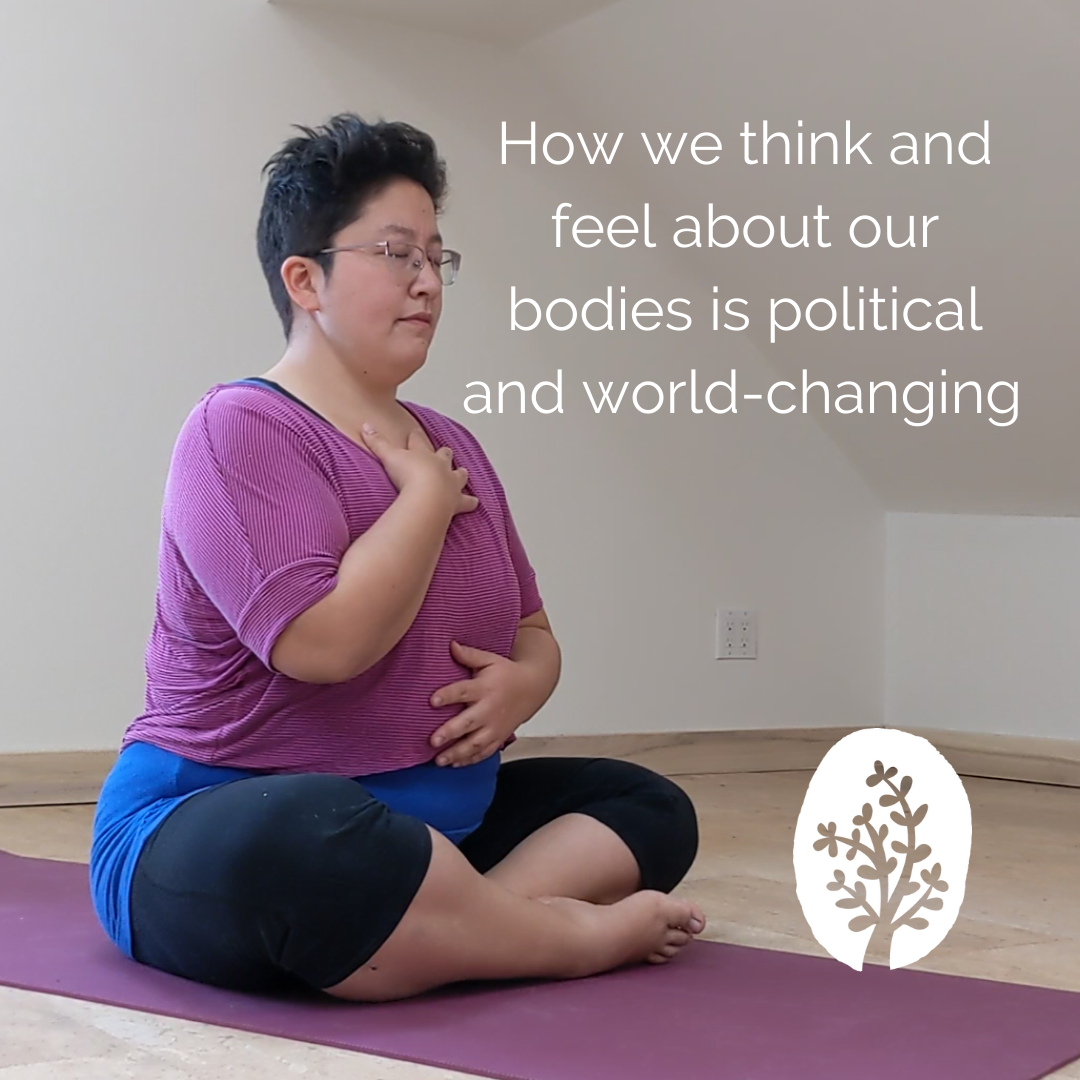
How we think, feel and talk about bodies IS political and world-changing. It determines which bodies we believe deserve respect, and this can unravel into who deserves to live. It affects how we vote, what we buy, who we listen to, and how we bring up our children.⁠

Body Shame about size or weight is a slippery slope to all the other shames that come with it. Our world is full of shame, and it keeps us locked up, disconnected and miserable. It keeps us focused on it, which takes energy or bandwidth away from our capacity to notice and take action on the deep injustices in our world, or to find deeper meaning and beauty in that world.⁠

Yoga teachers and studios, find another angle. Find a way to uplift people, rather than pit them against each other, or themselves.⁠

Adaptive VS Accessible Yoga?

You may have noticed a new phrase we’ve been using in our newsletters and on social media lately – Adaptive Yoga – and wondered, what does that mean, and why are we using it?

Accessibility is a hugely broad term, and can point to the myriad ways that a space or a service intentionally includes individuals who would otherwise experience barriers to access, from financial to cultural to physical. When it comes to ability, a few examples of accessibility are things like wheelchair-accessible ramps, sign-language communication for the deaf and hard-of-hearing, low lighting and softened noise for folks recovering from traumatic brain injuries, and so much more.

At The Branches, we’re choosing to use the word adaptive to set a more distinct focus for physical capacity with regard to mobility. In sum, the intention of Adaptive Yoga is to meet you where you’re at. This is an ethos we’ve aimed to manifest at the studio overall, but we’re choosing to create even more intentional and dedicated spaces for folks who might need or want them.

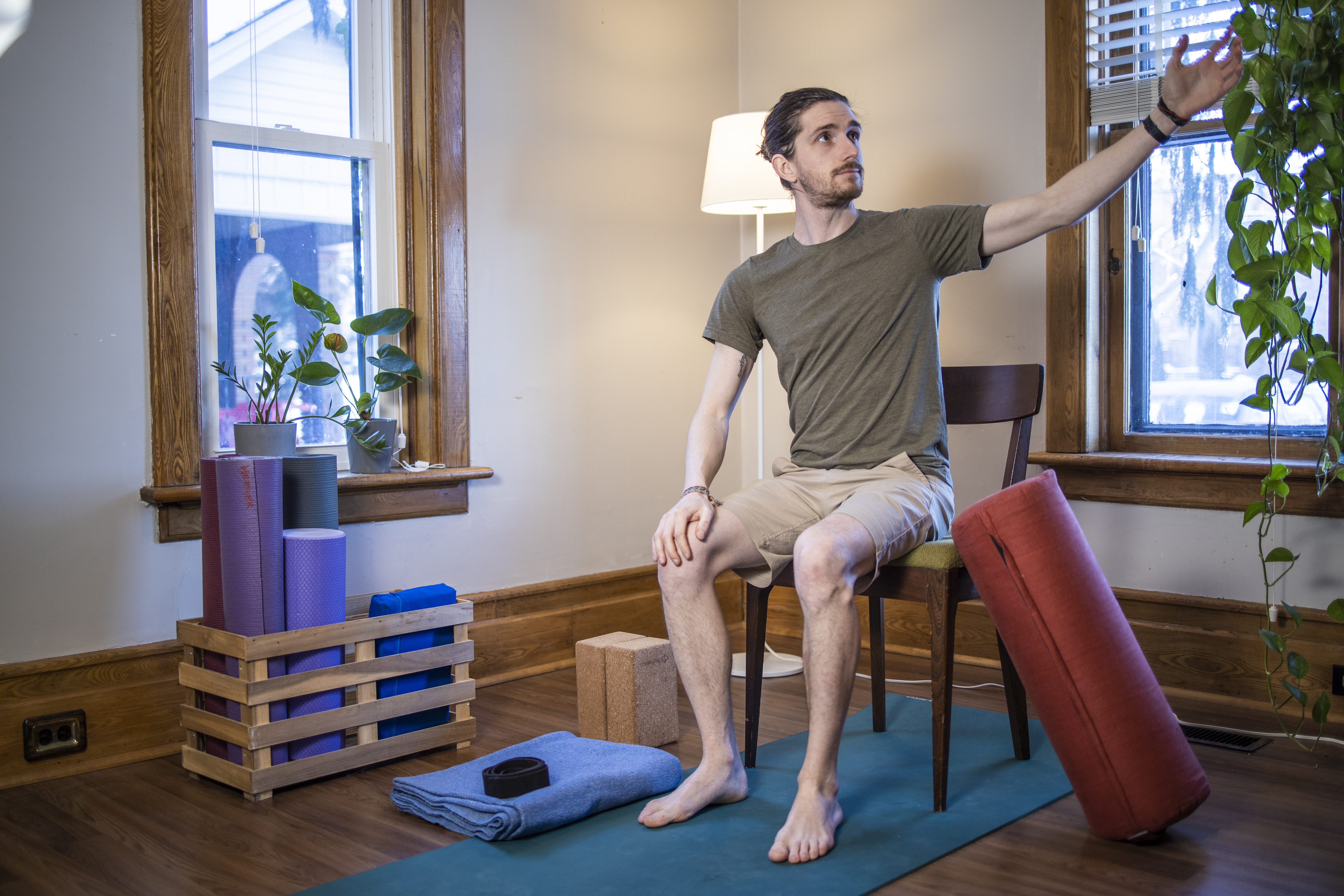
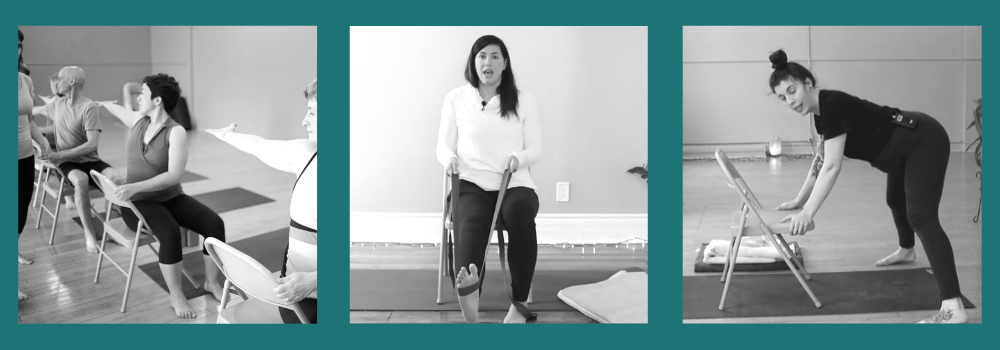
So, rather than teaching one-size-fits all poses and expecting all students to keep up with an intense pace, an Adaptive Yoga class empowers students with a multitude of strategies to adapt yoga poses and pacing to what works for their bodies. This often means using a chair as a key prop, and taking more time for teacher-student interaction than what typically happens in a flow class.

While students at The Branches may already have begun to learn adaptive strategies in some of our drop-in classes, especially Essentials and Slow Flow, we aim to offer more clearly dedicated opportunities for folks to engage with Yoga. One upcoming course, Adaptive Yoga With A Chair, might be a great place for you to practice if you…

  • use a mobility aid
  • have been sedentary for a long time
  • have lost some mobility over the years
  • experienced pain and difficulty moving in yoga classes in the past

The poses and sequences in our Adaptive Yoga courses are designed to adapt a conventional yogasana practice in (at least, but not limited to) the following specific ways:

  1. reducing or eliminating weight-bearing on your knees or wrists/hands
  2. minimizing the number of times you go down to and get up from the floor to once or none
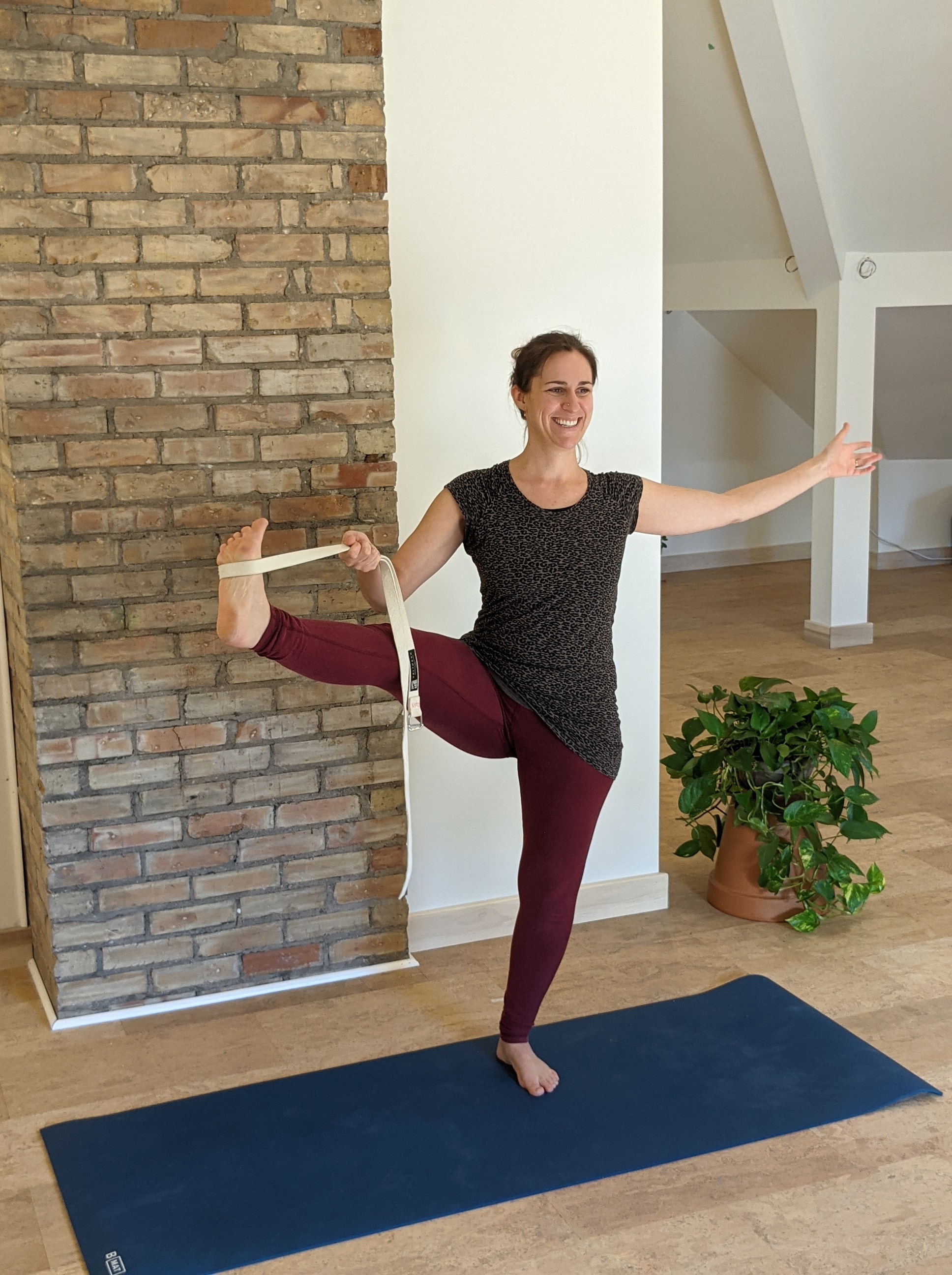
  3. using external support for balance poses and explorations 
  4. relating to yoga props as a tool for growth and empowerment

If you’ve ever felt like flow yoga classes just don’t work for your wrists, knees, body size, or ability, but you do want to challenge your capacity beyond the borders of a gentle-only yoga practice, Adaptive Yoga is a great place to connect your mind and body, empower yourself, and build capacity progressively. Our Adaptive Yoga sessions are taught by an experienced teacher who can skillfully share options with a wide range of body sizes and abilities and help you grow within your own limitations.

You might see yourself or a friend or family member in the above descriptions. We encourage you to take a closer look at the options for Adaptive Yoga at The Branches, to take a leap of faith and sign up for a course, or to pass this blog post on to someone who might benefit from a yoga practice that meets them exactly where they’re at.

Ways to explore Adaptive Yoga at The Branches:

  • Sept 2021: Adaptive Yoga With A Chair – Virtual Course
  • Oct 2021: Adaptive Yoga – In-Studio Course (Please note: our ground floor studio requires 5 steps to entry. We apologize for this lack of accessibility, and continue to work towards our new ramp project.)
  • On-going: Branches On-Demand subscription has a broad selection of practices with an adaptive lens
  • Coming in 2022: Adaptive Yoga 30-Day Challenge!

The Why & How of Sliding Scale Prices

A reflection on the personal and collective responsibilities of sharing privilege.

What is sliding scale pricing? And how should you interact with the price levels at The Branches? Let’s dive in.

Should Only Wealthy Individuals Access Wellness?

Sliding scale pricing means that the same service or product can be purchased at different price points. We choose to make sliding scale pricing available for several of our offerings because we believe in creating more equitable access to wellness services and spaces in a general sense. In this specific instance, we’re aiming to address financial inaccessibility.

When we offer sliding scale, we usually use three levels. They’re called:

  • The Standard Rate: this is the going rate, based on comparable offerings throughout the market, and it enables us to pay our teachers fairly and our staff a living wage
  • The Subsidized Rate: this rate is for folks experiencing financial hardship & inaccessibility
  • The Community Supporter Rate: this rate is for those with the means to help us offer the subsidized rate

When you select a pricing level at The Branches, you are free to choose from the three rates at your own discretion. This means that you are not required to prove or explain your financial need to us.

Some small business owners hesitate to offer sliding scale pricing because they fear that customers will take advantage of the lower rates, even if it’s not actually necessary. Or, they feel that the lower rates don’t do justice to the energy, time, and value of their service or product. We get it, and we recognize that it can feel like a vulnerable position to put yourself in, especially in an uncertain economic climate.

By offering the freedom to choose, we’re both empowering our community to meet their own needs, and counting on individuals to make choices about sliding scale pricing with integrity. We know that our students come from a wide spectrum of financial standings, whose financial position is influenced by their ability/disability status, career income, household or generational familial wealth, etc. Our desire is that folks from all financial positions access yoga classes side by side.

Understanding Your Position – A Starter Guide

The question of who should pay what amount can bring up a lot of feelings. Class and financial privilege are loaded topics, especially in a society where wealth inequality is widening, and the cost of living is rising.

Here’s a graphic that can help you start to think about your current level of financial privilege. Alexis of Worts & Cunning Apothecary cunning created and shared this resource on their blog. The entire post is well worth a read, but for now, take a good look at this:

Through self-awareness, we hope to enter into a trusting and cooperative relationship with our community. When our larger student base practices generosity, this enables us to achieve the goal of financial accessibility. When individuals with some or plenty of financial privilege choose to pay the standard and supporter rates, we then have the sustainability to continue offering subsidized rates to individuals who are struggling.

Sliding Scale Offerings at The Branches

We currently have a sliding scale for the following services, listed here with Standard/ Subsidized/ Supporter prices:

You can read more about about each offering by clicking the links.

Let us know – how does it feel to participate in alternative pay structures like this? What comes up for you with regard to class, financial privilege, and sliding scale pricing choices?

Metamorphosis & Active Hope

Musings on climate chaos and caring action from Branches co-director Leena Miller Cressman.

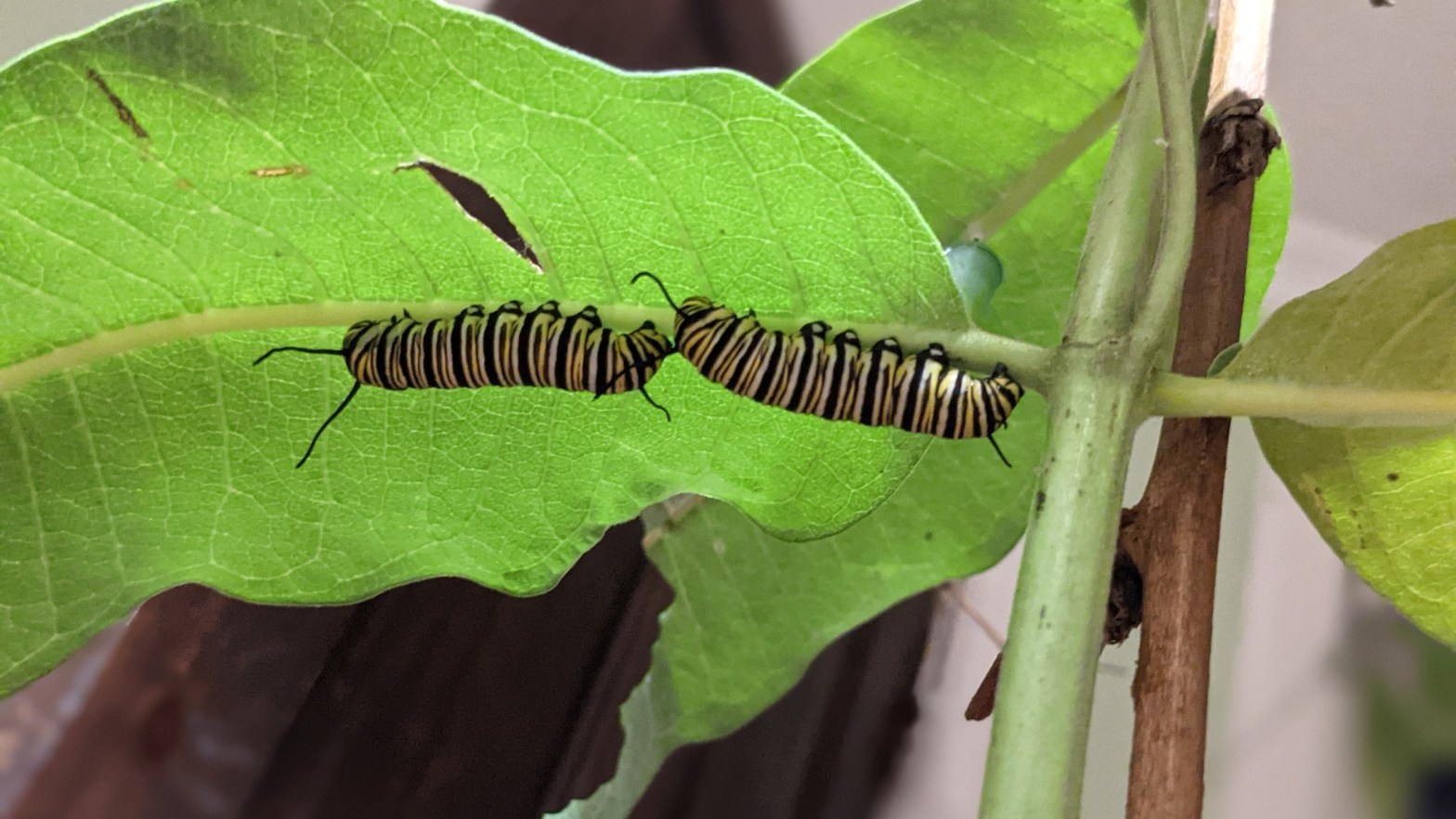
This summer, as I take in the horrifying stories of fruit baking on trees in BC, and mass dying of wildlife along the west coast, fifteen monarch caterpillars have hatched in my care. It’s a tiny act of hope for a natural world in peril.

In the wild, only 10% of monarch caterpillars normally survive to reproduce, and those rates are decreasing due to pesticide use and climate change. Inside, all but one has survived so far. Once the butterflies emerge, I’ll release them to my garden.

In two weeks a caterpillar’s weight increases 2,700 times as they devour only milkweed leaves. Then they search for the perfect spot, and hang in a J shape, waiting, and over 6-12 hours they slowly change form under the surface. Then in a sudden final burst, (as seen in this 10 minute time lapse), they wriggle out of their caterpillar skin and become a chrysalis.

one of four monarch chrysalides in Leena’s dining room

Ecologist and Buddhist teacher Joanna Macy describes hope as a verb. It is something you do, actively, not something you have. In my little monarch sanctuary, I’m practicing these acts of hope for the world, and observing, with awe, the processes of nature. These processes are not linear – the reveal of a butterfly is just one step in the cycle. Equally significant are laying the eggs, days of devouring milkweed, waiting in a hanging J-shape, and the surrender into the chrysalis. 

The showy transformation of a butterfly hatching from the chrysalis is so often in photographs or videos, but this stage of metamorphosis – from caterpillar to pupa – is stunning in its own right. These creatures are so full of rich metaphors and timely teachings. 

Metamorphosis, for the caterpillar, requires a full stop and wait. It pauses, and it literally softens until it can easily wiggle out of its skin into a new form. Can you think of a time in your life when you felt or seemed stuck, but under the surface something new was emerging for you? 

As we remerge from our COVID cocoons, we might ask ourselves how we want to re-engage with the world. What hopes do we want to live into for our own wellbeing, and that of the planet? Do we really need to go back to so much jet setting? Could we continue to do more local travel and exploring? Will we keep up our new vegetable gardens or our breadmaking?

During the pandemic, we’ve seen governments and communities make monumental changes, fast. We’ve spent billions to help keep vulnerable businesses and workers afloat. We can no longer say that huge changes are impossible or just too hard. I’m living into hope for climate justice. 

To me this is about acting with care, but without attachment to the results. This is a key teaching in yogic philosophy and in the Bhagavad Gita. Will my small number of monarchs make a difference? Will the letter I send to my MP calling for action on climate change do anything? Who knows, but it’s still a good action. For more exploration on applying the teachings of the Bhagavad Gita to our climate emergency, you might check out these two posts by my friend and colleague Matthew Remski: one, two.

Let’s bolster and inspire each other with active hope – share in the comments what actions you’re taking.

Community Care Package for our Muslim and Indigenous Neighbours

The Branches would like to offer a care package of yoga resources to our neighbours who may be experiencing grief and pain connected to harms to their communities. After the ongoing discoveries of unmarked children’s graves at residential school sites across the country (215 in Kamloops, 751 in Saskatchewan and more being reported on every day) and the murder of the Afzaal family in London, we want to offer both solidarity and support to Muslim and Indigenous community members who are hurting.

At The Branches, we approach Yoga from the perspective that everyone is dealing with or healing from stresses and trauma of some kind. We believe that trauma can occur for individuals and communities even if the violence in question does not extend directly to them; the impact of hearing news stories can bring up all kinds of feelings and experiences, from numbness and shock, to fear, confusion, anxiety or guilt. All of our teachers instruct with a trauma-aware lens, acknowledging that everyone has unique experiences and different needs. In our practice videos you will be encouraged to choose what makes sense for your own physical and emotional needs as you move. 

Our Community Care Package includes 20 practice videos: our Yoga Foundations series for getting started with the practice of yoga postures, our Yoga for Stress Relief series, an introduction to Yoga for Trauma Recovery, and a variety of gentle self-care practice videos.

This offering is not linked to any promotions – your email will not be added to any of our newsletter lists, and you will not be marketed to in any way. Our aim is to practice Community Care by sharing our resources. However, we do want to extend the warm invitation that you are very welcome to join us at The Branches for yoga and community events if the way that we teach and hold space feels healing for you. We have sliding-scale priced daily live classes, both online and in-person. We would love to share community space with you. 

If you are a member of a Muslim or Indigenous community, click this link to get access to the Care Package. You will need the ability to stream videos to access this package, and you will have access to the videos forever (or as long as we’re around). 

Meet Our Grads: Min Min

Min Min Tong graduated from our Yoga Teacher Training program in 2018 and has stayed connected to the studio community through teaching and taking classes. We appreciate Min Min’s commitment to social justice and continue to learn from her commitment to anti-oppression work. Here’s what she had to say about her experience.


What is happening in your yoga teaching life?

In my first year, I taught $5 classes (aimed at making yoga more financially accessible) at QSY. It was a wonderful experience. I also subbed several 7:30am classes, which really got my blood pumping in the morning! In the spring of 2020, QSY gave me the opportunity to teach my first 8-week course. I was grateful for having dipped my toes in, but the pandemic put a pause on the program. Since then, I’ve taught classes online via Zoom to office! As a school teacher, I’ve also been able to incorporate yoga and meditation into some of my classes.

What was your biggest takeaway from our program?

The sense of community at Queen Street Yoga has kept me going. It’s no secret that it can be really hard to find paid work the first few years as a yoga teacher. Having support from my fellow graduates, as well as my former teachers, Leena, Emma, Nicole and Monica, was very encouraging, through the periods where I wasn’t teaching or unable to find work. They reached out to me when I had questions and even kept me in the loop when new opportunities arose. I could not have asked to be supported by a better group of people.

“I had so many questions to ask. My curiosity was driving me to learn more and I was looking for a space to grow and be challenged. QSY was such a safe and supportive space. I was able to bring in thoughts and ideas from a personal lens, as a person of colour.”

Did you have any hesitations about doing the program that you had to address? Or obstacles you had to overcome?

I knew that this YTT program was for me because I had so many questions to ask. My curiosity was driving me to learn more and I was looking for a space to grow and be challenged. QSY was such a safe and supportive space. I was able to bring in thoughts and ideas from a personal lens, as a person of colour. I also greatly appreciated that the curriculum covered topics such as maintaining boundaries and explored what consensual touch means. As a victim of sexual assault, I have noticed that too many yoga studios don’t address it in their training. The program at YTT has done a thorough job of addressing some truly important and imperative issues in their training.

What would you say to someone who is trying to decide whether or not to do our training? What could you say to help them decide?

Queen Street Yoga is a place to grow, learn and be challenged. If you are a person who thinks deeply about anti-oppression or systemic disparities, this is a place where you will be engaged. Your voice will be heard and respected.


Choosing a Yoga Teacher Training program is a big decision. Learn more about our dynamic and empowering program on our website, and register for a Virtual Info Session to connect with Emma, Leslie and Leena, YTT Directors.

Meet Our Grads: Kayla

Kayla Haas graduated from our Yoga Teacher Training program in 2020 and has begun her teaching journey online during the pandemic. We look forward to seeing where she goes. You can connect with Kayla on Instagram at @kay.jay.h. Here’s what she had to say about her experience.


What is happening in your yoga teaching life?

After graduating from QSY’s 200hr YTT in 2020, I started teaching family and friends 1-2 times a week online. This year, I taught virtual kids yoga classes through a community centre and completed QSY’s 40hr Restorative YTT. I currently teach a private student through QSY and have subbed a few classes there.

What was your biggest takeaway from our program?

Yoga is so much more than physical postures. I credit the knowledgeable YTT faculty and guest speakers for helping me understand how to integrate yoga philosophy into all areas of my life. This foundational learning encouraged me to seek more information about the roots and evolution of yoga in order to better understand styles taught today.

“The learning that takes place within this training will spill into other areas of your life. You will be challenged to expand your self-awareness and critically examine your worldview.”

Did you have any hesitations about doing the program that you had to address? Or obstacles you had to overcome?

I worried about taking up space in a YTT program, and within yoga spaces in general, as a white woman. I had to reconcile feelings of guilt and uncertainty with my desire to deepen my practice and learn to teach. I knew I didn’t want to treat a YTT as just something to fill my time with, so I made sure I had the capacity to fully engage with the material in this program.

What would you say to someone who is trying to decide whether or not to do our training? What could you say to help them decide?

This program demands an investment of your time and energy for 10 months. The learning that takes place within this training will spill into other areas of your life. You will be challenged to expand your self-awareness and critically examine your worldview. This training was enriching, difficult, comprehensive, exhausting, and nourishing all at once.


Choosing a Yoga Teacher Training program is a big decision. Learn more about our dynamic and empowering program on our website, and register for a Virtual Info Session to connect with Emma, Leslie and Leena, YTT Directors.

Here’s our new name, you can take it or leaf it

A Post from Leena Miller Cressman, Queen Street Yoga Owner/Director 

We needed a new name. But how to choose?

After the weighty decision to move from our home of 15 years, 44 Queen Street South, the decision to find a new name was obvious. However, what to rename ourselves ended up feeling like a monumental task. It took several months of brainstorming, testing, and soul-searching before we finally reached a decision. I felt a huge responsibility to rename this studio, since Queen Street Yoga has been a special place for many people for a long time – including me. This task felt akin to renaming a teenager. 

I wanted a name that felt true to who we already are, and would lead us into what we can become. This has been an opportunity to think carefully about why our studio exists. And now, I am proud to introduce you to our new name: The Branches.

We wanted this new name to connect to our values. The branches of Yoga include so much more than just asana (postures). It is meditation, community service, and a spiritual pathway to wholeness. In addition to being a way to care for our bodies, we believe Yoga and movement practices can be a catalyst for social and environmental justice. Yoga practice can help us recognize our interconnectedness. Yoga can give us sustenance to care for ourselves and others. With Yoga as our common ground, we can learn to engage with the world more wholeheartedly. 

Our studio has been around for 16 years and we hope “The Branches” conjures the image of a huge, mature tree. We’re not a young sapling. We’ve got deep roots, a sturdy trunk, a big canopy, and we’re home to lots of life. The Branches represent the diverse people who have gathered in our community for the past decade and a half, and the many new people we are connecting with in online classes. Our new name speaks to the many people who have graduated from our Yoga Teacher Training to seed their own classes in schools, prisons, community centres, backyards, and seniors’ homes. Our strong branches reach far beyond a physical location.

We’re not a young sapling. We’ve got deep roots, a sturdy trunk, a big canopy, and we’re home to lots of life.

The Branches is a place of growth and nourishment. In our new location, no longer beholden to landlords and threatened by ever-increasing rent prices, we have more freedom to put down roots and create inclusive community space. We are working to build a ramp to make our ground-floor studio accessible. To remove financial barriers, we’re now offering sliding-scale prices for all our classes. We hope that our space can become a hub for community action by offering low-cost meeting rooms. Our new location is easily accessible by public transit, walking and biking. We’re in the middle of major renovations and have invested in a small environmental footprint by eliminating natural gas and retrofitting our building with energy-efficient heating, cooling and insulation. 

Come practice yoga with us outside under the branches of the maple, linden, and spruce trees

So welcome to The Branches. We’re so excited to practice together with you in our brand-new yoga space, whether in person or online. It’s going to be beautiful! This summer, as we await the hopeful resolution of the pandemic and our renovations, come practice yoga with us outside under the branches of the maple, linden, and spruce trees on our spacious back deck. 

P.S. We have a brand new website to match our name launching soon!

Meet Our Grads: Nadine

Nadine Quehl graduated from our Yoga Teacher Training program in 2018 and is dedicated to sharing yoga as a form of community care. We admire her work as an advocate for the incarcerated women she teaches, and are so glad she is sharing her warmth and knowledge in the community. Here’s what she had to say about her experience.


What is happening in your yoga teaching life?

Before the pandemic I was teaching yoga to women at Grand Valley Institution (GVI). Since the pandemic started, I have led free Community Care classes for QSY with my friend Sara. I’m grateful that we were able to share those yoga class recordings with the women at GVI, since it hasn’t been possible to teach in-person there since the pandemic began.

I have been leading mindful movement sessions for my choir Inshallah once or twice on Zoom to keep us connected. I have also shifted teaching yoga for my colleagues at the University of Waterloo to an online format. This year I started the Mindfulness Based Cognitive Therapy Practicum at the Centre for Mindfulness Studies, which I love incorporating into my classes.

“I have had a shift in my personal practice of gratitude, self-kindness and community care – a journey that has deepened significantly as a result of YTT.”

What was your biggest takeaway from our program?

QSY teacher training enabled me to witness and embody the power of connection and compassion, as well as confidence. I started the program thinking that I would deepen my practice only, and not teach afterwards, but I have been teaching consistently since I graduated (and in a prison, which I never would have envisioned). I have had a shift in my personal practice of gratitude, self-kindness and community care – a journey that has deepened significantly as a result of YTT. QSY also gave me a whole new understanding of what ‘yoga’ is and the importance of making it accessible and inclusive and taking it ‘off the mat’ to address issues that need transforming in our world.

Did you have any hesitations about doing the program that you had to address? Or obstacles you had to overcome?

After spending way too many years in graduate school and getting burned out, I was hesitant to enter an intensive program of study, but QSY’s encouraging and caring community made a huge difference in my ability to learn and thrive. I also wondered if I would have enough time to commit to the practice and homework. I was concerned that an academic study of yoga might sap the joy from the practice but, happily, it made me love and appreciate yoga even more. I was terrified of teaching, but going in with an open attitude and intention to do the training to enhance my own practice helped.

What would you say to someone who is trying to decide whether or not to do our training? What could you say to help them decide?

I would suggest considering your availability, as it is a big time commitment and you will get the most out of the program if you can make time not only for the readings and classes, but also for the home practice of yoga. Talking to grads is a great start, and I am happy to chat with you if you want to reach out. Connecting with the faculty, be curious and ask lots of questions about the program.


Choosing a Yoga Teacher Training program is a big decision. Learn more about our dynamic and empowering program on our website, and register for a Virtual Info Session to connect with Emma, Leslie and Leena, YTT Directors.