Why we stopped trying so hard (to get all the likes on Instagram)

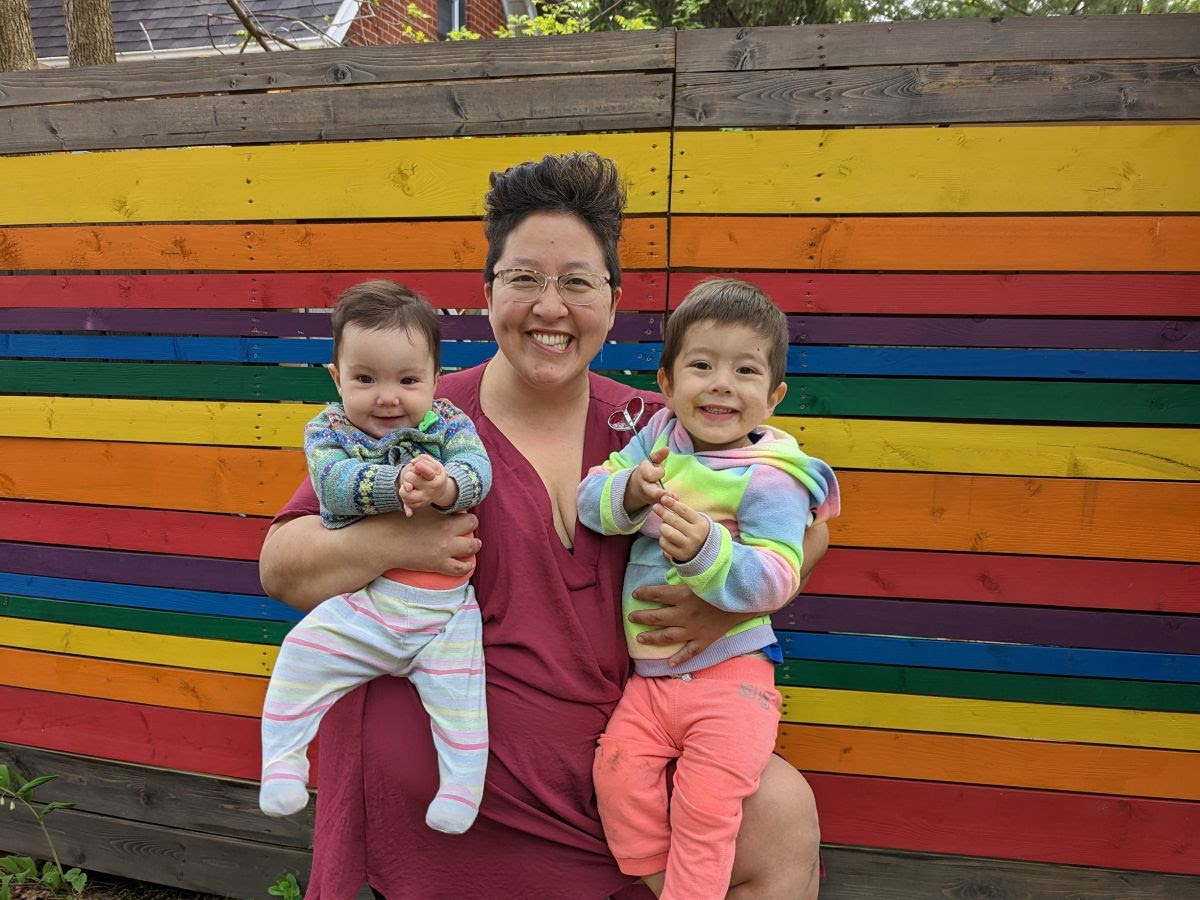
Emma and Leslie here!

Depending on your personal relationship to social media, you might have noticed that for a while there, The Branches was on an absolute blitz of creating original, silly, opinionated, and informative content, especially on Instagram.

People would sometimes approach us in public spaces to say stuff like, “Oh my goodness, you guys are so funny on Instagram!” or, “I love your posts! I’m going to come to class one day!” 

Despite the fun of making silly videos or the adrenaline of sharing hot takes, we’ve always had a rather ambivalent relationship with Instagram. As a business, we felt compelled to use it in order to compete for people’s attention and maybe someday their studentship. As community leaders, we felt conflicted about using it, since social media has become increasingly addictive, and degrades our own presence and attention – the exact thing we hope to strengthen through the practices we teach.

As our content production increased at QSY/The Branches, we were increasingly taking personal breaks from social media for our own mental health. Each of us found that being on Instagram caused us to overconsume content, leading to feelings of comparison and competition, or simply wasted time. For work, it led to constantly thinking about the algorithm, about how any and everything could be turned into a post or a reel. It caused us to question how we should be showing up on the platform – do we engage in the “performative wellbeing” in the form of positive affirmations, fancy poses, or colourful meals that prove how “deep,” our practices are or “healthy” we are in the eyes of potential students? Or do we overshare intimate facts and experiences from our healing journeys to appear “authentic” and “relatable” (and to do better with an algorithm that rewards drama?)

This focus on creating and maintaining a particular kind of online business persona took time away from going deeper into the embodiment practices that we love to share. It pulled our attention into performing on and for a tiny screen, and away from the rich experience of moving through the world with presence, relating to others with mindful awareness, and taking meaningful action towards the world we want to live in.

If you’ve been reading our newsletter long enough, you’ll know we’re not ignorant to the other side of the coin. Of course social media has its benefits, like the democratization of news, space to organize for social justice, some potential for useful learning, and perhaps obviously, more accessible social connection with communities near and far.

Anyway, you might also have noticed that at some point, we just… stopped trying so hard. And we more or less stopped posting on our individual accounts, too. We’ve wondered from a curious perspective, but we’ve also lamented from an exasperated perspective: does sustainable success really require studios and/or teachers to self-promote on social media?

In the end, we don’t really want to play the game of Instagram. We don’t like what it does to our brains or to our creativity, confining it to a tiny box, and consumed in an endless scroll. We want to be thinking about how we show up in community with others, not how we can articulate that in a post. We want to practice presence as we teach, not make reels about our teaching.

We’d love to hear back from you – how do you relate to your own use of social media? Are you using it to follow yoga teachers, or your favourite local businesses? Are you on there as a teacher or creator, hoping to find success? How do you protect your mental wellbeing while engaging?

In community,

Emma and Leslie
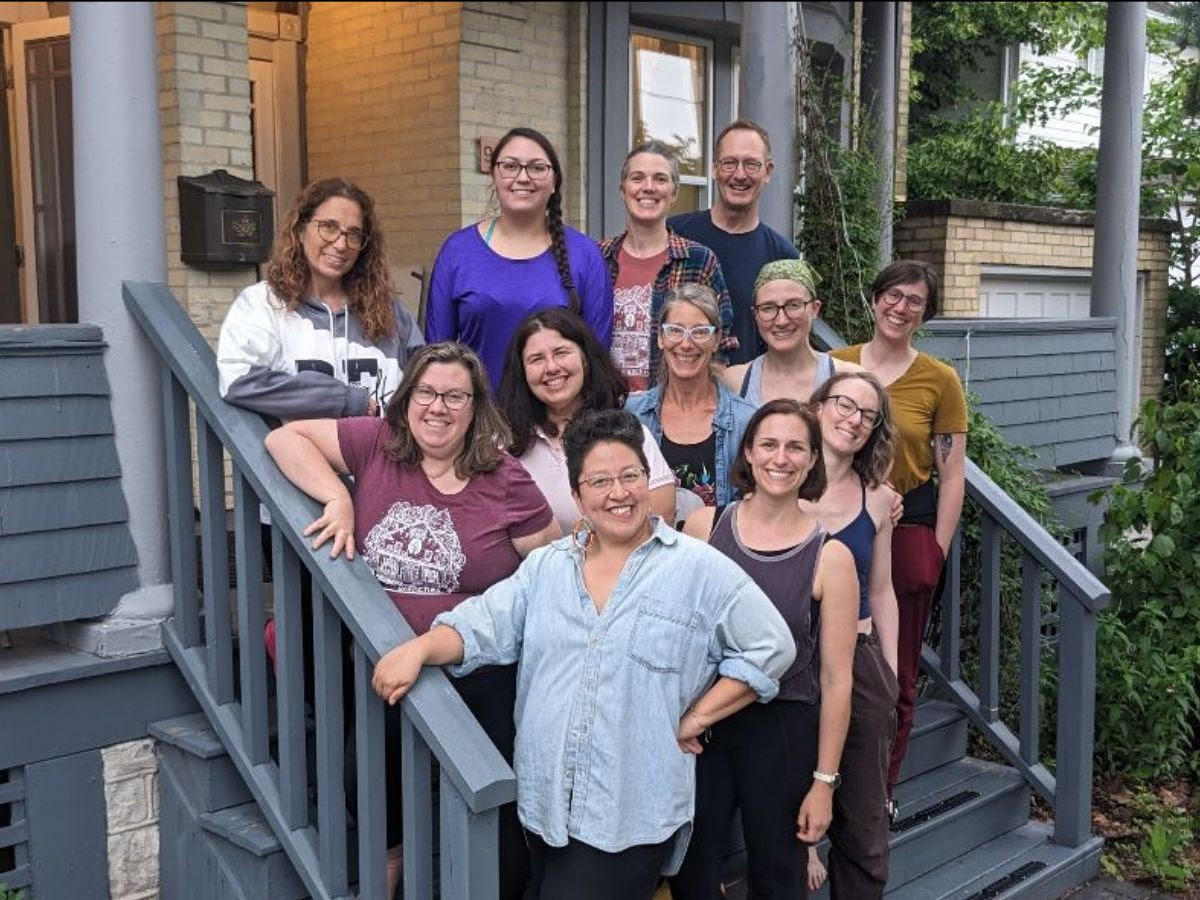
Introducing our 2024 graduates!

Congratulations to our 2023-2024 Yoga Teacher Training graduates!

The end of the Yoga Teacher Training program is invariably bittersweet. It’s a relief to complete such a big journey, but it’s also a big bummer to say goodbye.

Pictured here are a handful of the newly-initiated teachers: a mix of people who were already sharing yoga in movement and wellness spaces, or who have new-found passion for teaching, and some who’ll continue to prioritize their own evolutionary relationship with yoga. Program directors Leena and Emma were continuously impressed by the maturity and thoughtfulness of this group.

Photo Highlights from Final YTT Weekend

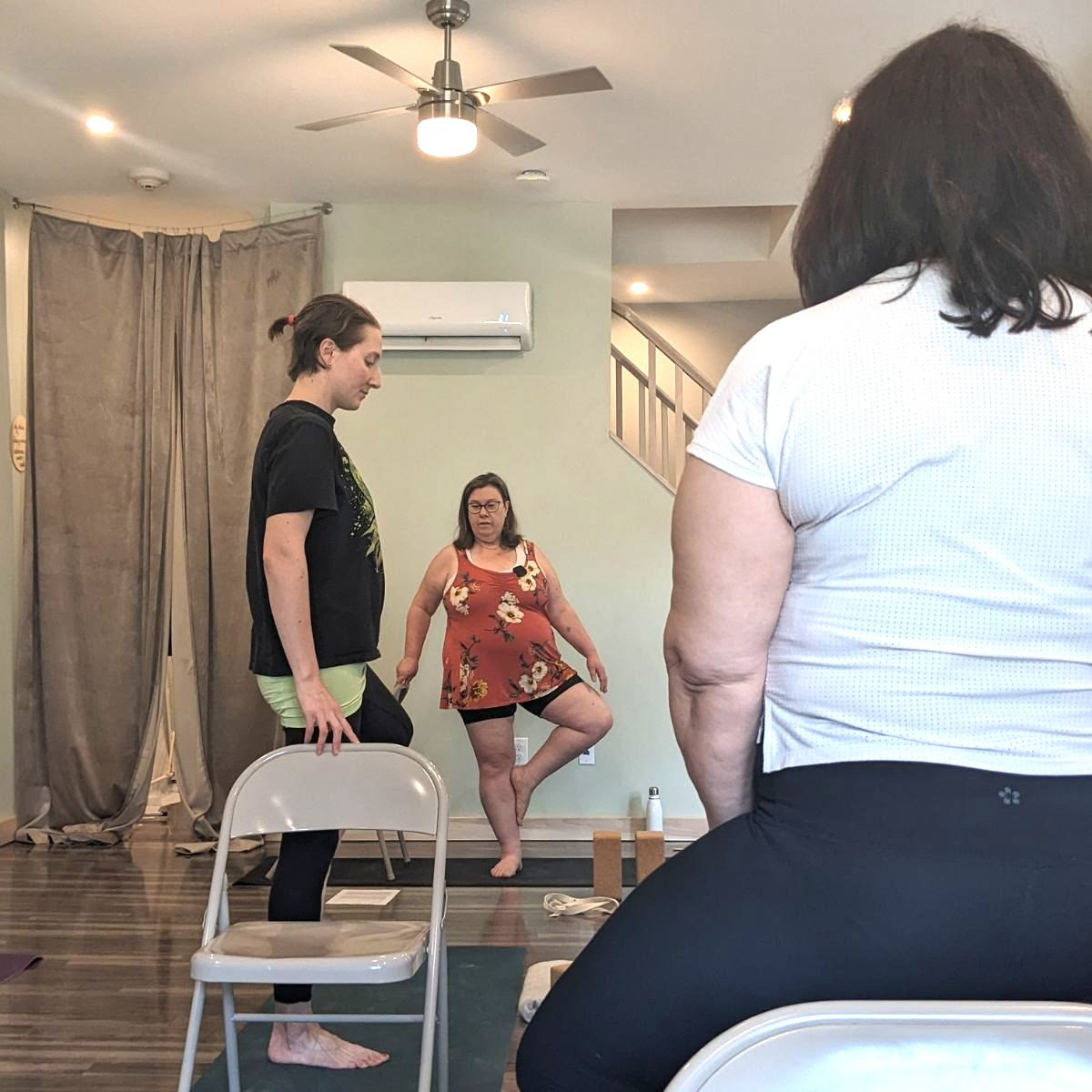
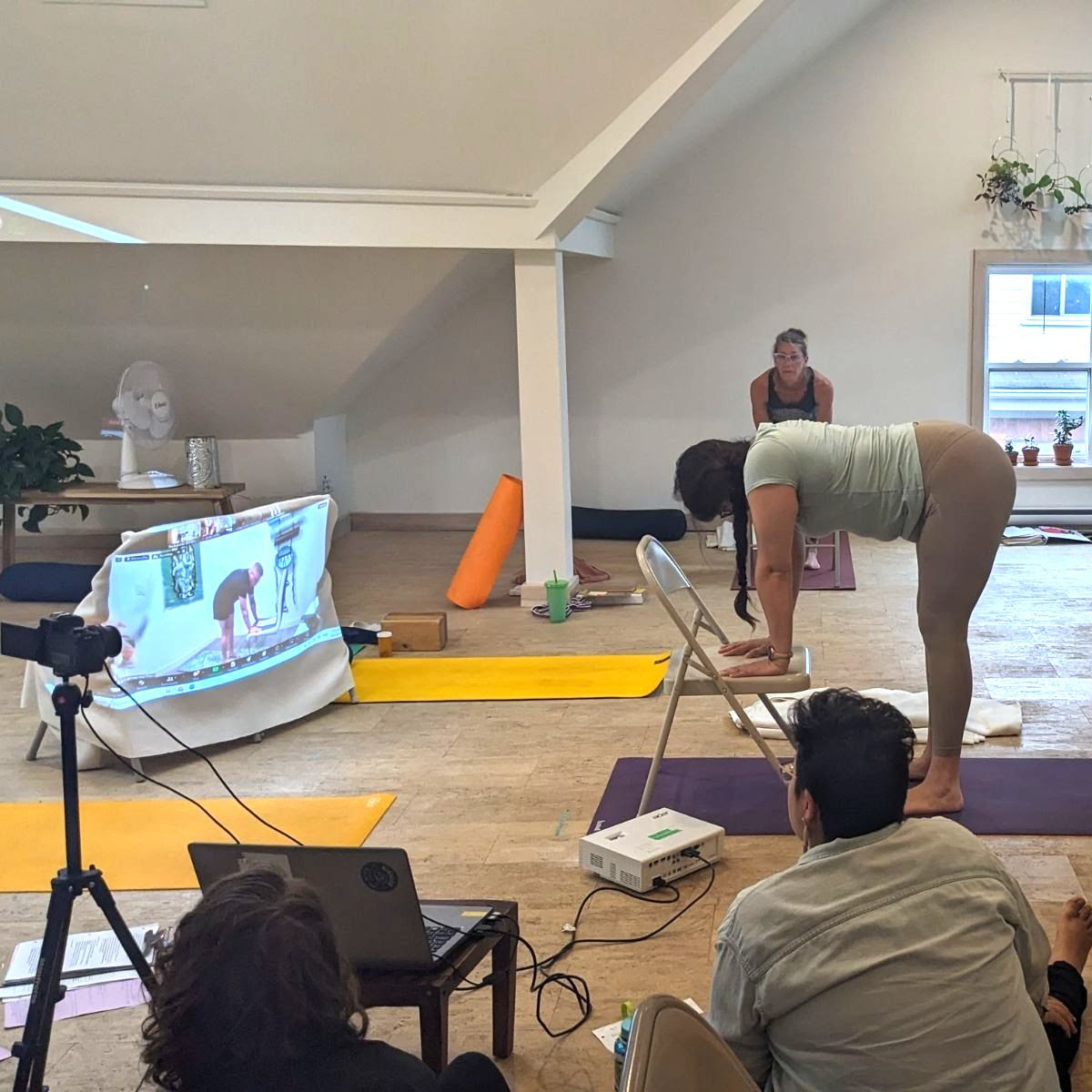
Below are some highlights from our grads’ teaching initiations. We were blessed with virtual lessons from our BC participants, and an in-person visit from our Hamilton participant!

The initiations are the capstone creative project of the program: 30 minutes of solo teaching, with a mission: an intention to serve a specific population, highlight a specific action, and communicate a specific learning goal. 

All teacher-trainees give and receive feedback on one another’s teaching, according to hard and soft skills they’ve been honing over the course of the program.

Everyone made huge improvements, and we are super-duper proud of them.

WANT TO DO OUR NEXT YTT?

Here are some pathways to participation.

Our next full 250-hour Yoga Teacher Training will take place through the 2025-2026 academic year. It’s a long time to wait, but we think it’s worth it.

That said, there are a couple of things you can do in the meantime to:
 a) test out our vibe and make sure it’s a good fit
b) get ready for a big experiential learning journey

Option 1: Prep Program
The perfect toe-dip that you can do anytime.
Get:
-a 20 Class-Pass 
-10 Introductory YTT lessons in our online portal
-If you do the full YTT, we will deduct Prep fees from tuition, making the Prep Program free.

Option 2: Restorative YTT

A 45-hour training that runs over the winter 2024-2025.
Includes
-three weekend intensives
-Yoga Alliance credits
-a deep dive into intentional rest
-Can be done before, after, or totally separate from the full 250-hour YTT.

I’m finally not intimidated anymore

Hello, Wendy here. So, I’ve dabbled in strength training at several points in my life. And each time my motivation would eventually decline, or I’d reach a point where I just felt too intimidated and confused to know how to progress. Sound familiar to any of you?

Strength Training for Longevity and Healthspan

As I enter my mid-life journey, I’m learning how valuable resistance training can be for maintaining mobility and strength as we age. For folks who will go through menopause, and especially folks like me with a long family history of osteoporosis, strength training can also help increase bone density and prevent osteoporosis, (this article does a really good job of summing that up if you’re interested). Based on these life stages, I have been feeling really motivated to find a way to add resistance training back into my life.

Recently, I decided to start on my own again, and it was great… for a while. I was learning a lot, getting stronger, and I felt good in my body – all things that kept me interested. But, inevitably, I would get busy or tired and skip a session, or two, then three, and my motivation would begin to wane. 

Finding the Right Coach & Community

One thing I’ve learned about myself (and still have a hard time accepting), is that no matter how much I want to do things on my own, I really need other people in order to stay motivated. But all of my past ‘gym’ experiences had been unpleasant. I either got a bunch of unwanted advice, or unwanted commentary that made me not want to be in those spaces. I needed MY people – people who would lift each other up.

Enter Strength Essentials…

From the first time I walked into Nicole’s Strength Essentials class I was struck by just how supportive it felt. It was such a radical departure from the intimidating experiences I had in the past. Nicole presented things in such an easy to understand, accessible way. We learned lots of options of how to progress, and Nicole was there to help folks to find ways to make things work for their body. It was so refreshing to not feel intimidated to ask questions or to ask for advice. With the number of questions I hear each time I’m there, it’s obvious other folks feel the same way.

The Camaraderie Effect

The instruction in Strength Essentials is wonderful (thanks Nicole!), but I’m also blown away by the community of support that has formed among the participants in the class. We celebrate each other’s triumphs, and share lots of laughter to help get through the challenges. I often hear folks encouraging each other (“You got this!”), or commiserating after a particularly hard set (“Wow, that was a hard one!”). We joke about how there’s no way we can do another round of pushups (why are they so hard?!), but then we all look at each other and do it anyway.

I’ve found a group of people who are there to learn and to take care of their bodies. No one is in class to show off or to ‘prove’ themselves to anyone, so it feels so much more welcoming than my previous experiences. I finally found MY people – and I keep going back because of them.

Sound like your people, too? Come join us for casual weight lifting with friends in Strength Essentials – I think you might love it! Just be prepared to laugh a lot 🙂

With enthusiasm,
Wendy

Competing with grandmas?

Leslie here.

You know that feeling when the reality of your limitations hits you smack across the face? When presented with a new challenge you can’t overcome (yet, or ever), I call that getting humbled. Getting humbled can offer us a lesson in acceptance and equanimity, and it can also motivate us to try harder.

When we stack up against others, sometimes we are humbled by our peers, or by those who retain the gifts of their youth, and sometimes… we get humbled by our elders.

And when I was the ripe young age of 22, an entire society of grandmas humbled me with nothing less than their commendable squat form.

I was living in South Korea, testing my teaching ambitions in an English-immersion kindergarten. Not only could my 5 year-old students drop down into and hang out in easeful and cozy squats like their little toddler siblings, but so could their parents, and even their grandparents.

Ajummas – Korean grandmas – could be found casually squatting to rest, socialize, gather herbs, connect with their grandkids, do house chores, and simply move in response to their own desires and demands of daily life.

As someone with aspirations towards physical health and freedom of movement, I was both mystified by my own incapacity to squat as well as they could, and motivated to get on their level. 

There is some evidence showing that the typical bone structure of folks of East Asian descent supports the deep joint positions required for a squat. This fact, combined with not having grown up in a squat-normative culture, makes me unsure that I’ll ever quite match their ease, but that hasn’t stopped me from trying! Now at 38, my squat is more comfortable and closer to a resting position than ever.

Part of what makes squatting doable is hip mobility. My days as a foreign English teacher in Korea were formative in many ways, but one is that I will never take hip mobility for granted again – it really is a use-it-or-lose-it game. 

To that end, if your hips are feeling stiff and sore, or you realize that your hips don’t move as well as you’d like them to, I highly recommend our series Hip Mobility May. It’s got all my best ideas on how to directly improve your experience of your hip joints – both the feeling and the function.

Try it! And I’ll see you in a squat sometime soon 🙂 

Hip Mobility May can be found inside Branches On Demand, our streaming service. You can join for FREE for your first 7 days, then it’s $25/month after that, with no minimum commitment. All the content from Hip Mobility May will be live from May 1 – June 15. Each month, BOD subscribers get access to a new series. Check it out!

My two postpartum saving graces

Hello, Emma sharing today.

When my first baby was 6 months old, I heard the word “matrescence” for the first time, and my brain lit up with recognition. Matrescence is the idea that becoming a mother is a process, much like the process of adolescence, which is becoming a teenager or young adult. Just like adolescence, matrescence doesn’t happen overnight, it can be awkward and confusing to go through, and there can be big impacts on one’s body.

I gobbled up everything I could find on matrescence, particularly the work of Jessie Herald, a women’s coach and doula who does a lot of writing and offers wonderful programming on this topic. Jessie believes that the process of becoming a mother, of making that complete identity shift, takes 2-3 years minimum. Hearing that was such a relief. At that 6 month postpartum point, I felt completely adrift. I felt like my body was falling apart, I had so many conflicting feelings about mothering, and I couldn’t remember what brought me joy (this was also during pandemic lockdowns so that was definitely a compounding factor).

Fast forward to now; that first baby is three and a half, my second baby is 16 months, and I am feeling stronger and happier than I have in quite a few years. I have reconnected with my body and I feel a new sense of groundedness in myself. I attribute this experience of groundedness to two things: community and strength training.

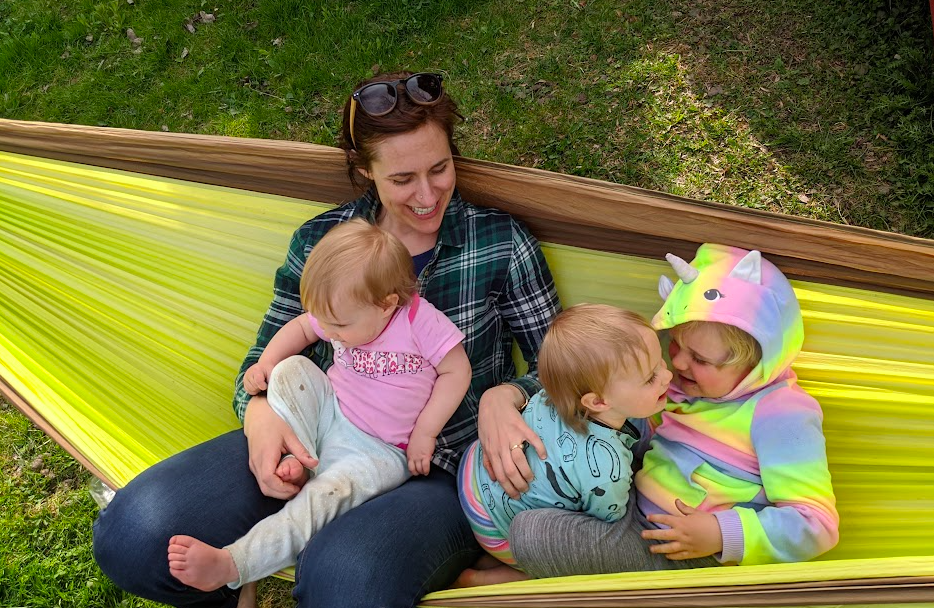
One thing that was really different about my second maternity leave, compared to my first, was the presence of in-person community. Because of COVID lockdowns, my first baby and I were alone most of the time. But during my second maternity leave, I met mamas in the Parent & Peanut class at The Branches, at the library, and in the park. Unlike during lockdown, this time I was able to host mamas and babies at my house, and the drop-in space in my living room became a weekly event. The group of moms that showed up became such a supportive and nurturing community. Week after week we’d connect about the huge range of issues affecting us: the politics of healthcare and childcare, the misogyny of our overculture and how evident it is when you become a mother, the challenges of self-image postpartum, and the many anxieties of raising children in a world descending into climate chaos. I feel like my identity as a mom was strengthened and challenged in those conversations. And I continue to see and experience others growing into their own unique identities as mothers alongside me.

Returning to strength training was also a community effort. My body felt like such a mess postpartum, I’d been struggling with really painful plantar fasciitis for years, and when I picked up my baby it often felt like my insides were going to fall out. Attending Nicole’s Strength Essentials class and getting her suggestions and advice about how to slowly rebuild my core strength was really reassuring. When I returned to work at The Branches I played around with the kettlebells on my lunch breaks, and got lots of tips and tricks from Leena and Leslie, who are always down to talk shop when it comes to strength training. I am lifting weights 2-3 times a week now, and it has made such a difference to my day to day. My foot pain is almost completely gone and my body feels capable and agile again. This makes my yoga practice more enjoyable, which makes my teaching more connected and lively. I am so relieved to be able to enjoy being in my body again.

Matrescence is a radical life change, and I am just now beginning to appreciate the many more processes of change in my future. Life changes don’t quit; they arrive whether you expect them or not. For now, I am feeling bolstered by community and a trust in my returning strength. When I think about it, community and embodiment practices seem like a great recipe for supporting ourselves through life changes. I guess that’s why I made this my life’s work. I am grateful to be rediscovering this and seeing it anew.

One thing I am so thrilled that The Branches is now offering is Postnatal Yoga with one of our favorite human beings, Lisa Beraldo. Lisa is an amazing convenor of community, and her prenatal and parent and baby classes are lifelines for many folks in our community. Postnatal Yoga is a place to gently reconnect with your body and meet others at a similar point in their journey of becoming a parent.

Whether you are, pre-, post- or never-gonna-partum, I hope to see you around class or in the neighbourhood. In-person community is my favourite thing in the world and I’m overjoyed that it’s possible to gather so regularly again.

Emma 


Programs I Mentioned:


Strength Essentials is a drop-in class for those who are new to strength building to learn exercises that use body weight, resistance bands, dumbbells and kettlebells. Everyone works at their own challenge level and beginners are highly encouraged to check it out.Mondays at 10:00am & 4:15pmThursdays at 9:00am
 Postnatal Yoga is a 6 week course appropriate for anyone who’s given birth (by any method) and who is at least 6 months post-partum. Focus is on healing, soothing and strengthening your body while connecting in community with others on the same journey.next session starts July 8

How dare you photoshop my thighs!

Hey there, Leslie here.

The other night, I had a dream that I was participating in a yoga photoshoot, held at the food court of Conestoga Mall (naturally, dream logic right). All around me were media professionals, and the other “models” who were a bunch of local yoga teachers, business owners, and people in the wellness and health education sector. We were glammed up, outfitted in our finest gym and leisure outfits, and happily socializing between takes.

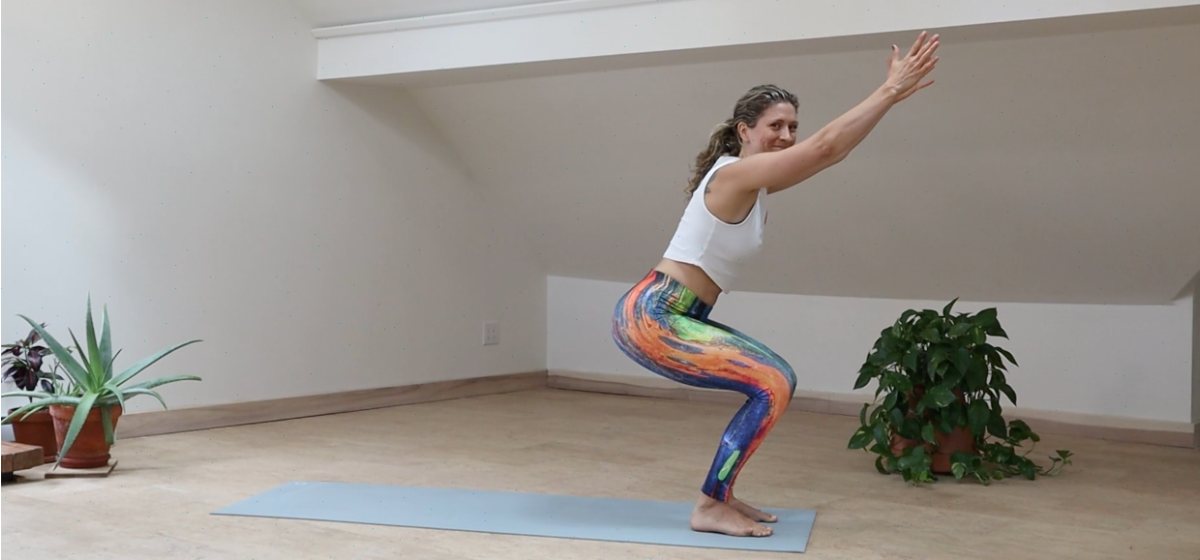
I was called over to take a peek at some of my photos, in which I was shown posing in utkatasana, chair pose.

When I looked at it, something struck me as funny, not ha-ha funny, but off. Then I realized what it was: post-production editors had already photoshopped my body. My thighs were changed to look much thinner than they are in reality. I felt a seething hot wave of rage boil up in my belly, and I unleashed it, shouting with clenched fists for anyone around me to hear, “I built these thighs in the squat rack! How dare you!” Standing nearby, antiracist educator, former yoga studio owner, and friend of the Branches, Selam Debs offered her solidarity – yeah, how dare they?! The dream ended, or at least that’s all I remember.

The righteous rage I felt in that dream is in direct correlation to how much I love the feelings of strength and confidence I get from lifting weights, and how fiercely I want to protect my sense of integrity from the influence of the negative aspects of fitness culture. The focus on appearance and size in the fitness/wellness industry is such bullsh*t. I realize that I benefit from being perceived as “fit” simply because of my size, whether I’m actually stronger or better conditioned than someone in a bigger body. But, appearances really don’t tell you much about a person’s abilities, knowledge, wisdom, experience, or teaching skills.

Appearance and size are, of course, real aspects of each of our lived experiences, but they don’t matter a bit when it comes to you being welcome to participate at The Branches. We aim for our space and classes to feel welcoming to diverse shapes, sizes and abilities – no fancy yoga pants necessary. My hope for students in my athletic classes is that they get to cultivate some of that same confidence that I feel when I’m racking up some heavy weights for a back squat, the knowing that it’s worth it to try, and the wisdom that success means showing up.

Something I don’t often talk about…

An invitation from Emma, one of The Branches’ co-directors.

In one of my favourite podcasts, the host starts every interview by asking, “What identities do you lead with?” I have been thinking about this question, and wondering how I would answer it in relation to The Branches.

Here at the studio, I most often lead with the identity of co-director and teacher. I sometimes bring in my identity as a mother (since I have many cute stories of my toddler to share). But I notice that my racial identity is not something that I center or share when I’m teaching or relating to students. I realized this only recently, as I’ve started to engage in more spaces with people that share a mixed-race identity. Suddenly, there is a part of myself and my experience that comes out, and it both surprises and enlivens me.

In the back strategy room of The Branches (which is just the Ground Studio with our folding tables), Leena, Leslie, Wendy and I often talk about and consider race and racism. To us, everything is political and has political consequences, and who shows up in our space to practice yoga has everything to do with how those politics are playing out. As we design our programs, write our newsletters and make silly reels for Instagram, we consider accessibility, ableism, racism, casteism, antisemitism, Islamaphobia, privilege and power. We wonder: who does our message exclude? Who does our message privilege? Who will feel comfortable or uncomfortable coming here as a result of our expressions, programs, ideas and jokes?

One place where I feel more able to lead with my identity as a mixed race person is in our Yoga Teacher Training Program. I feel like I can acknowledge and share from that experience more readily. This is because race, racism, power and privilege are important themes in our YTT, and I feel relief and joy in that being part of the culture we create together.

Being in the space of the YTT, among folks who readily acknowledge the influence of white supremacy, capitalism, colonialism, patriarchy and heteronormativity, I can breathe easier. I can become more embodied because more of who and what my body is and is affected by, is spoken about. And I think I am still at the beginning of realizing what embodiment that includes my mixed race identity feels like.
* * *
I want the larger community of The Branches to feel invited into this depth of conversation. And so, for the first time, we are opening up particular sessions in our YTT to the wider community. We have invited some amazing speakers to add nuance and perspective to our understanding and practice of embodiment, and we invite you to join in and learn from them as well.

Here’s the rundown of speakers:
The Branches’
Virtual Speaker Series

So You Want to Chant Om? Context for OM & Namaste
with Tejal Patel
Fri Feb 23, 7-9:30pm
Equity, Access & Representation in Movement Spaces
with Robin Lacambra
Fri April 12, 7-9pmYoga for Trauma: Embodiment & Recovery
with Nicole Brown Faulknor
Sat April 13, 3:30-5:30pm
Bio-psycho-social Impacts on Movement and Mental Health
with Chris Bourke
Fri May 3, 7-9pm
 Racial Justice & Racial Trauma: Accountability in Community Wellness Spaces
with Carla Beharry
Sat May 4, 3:30-5:30pm
If you live in a body, these themes are relevant to you. We believe that centering these conversations can help all of us understand how different bodies experience yoga and movement spaces, and how politics shape all of the spaces we inhabit. Through this series, we can even begin to explore the power we all have to shift the internal culture of the spaces we participate in towards the dream of overturning the larger systems of oppression we are all affected by.

One aspect of The Branches’ mission statement is “Building a better world, with Yoga as our common ground.” This is our one-step-at-a-time way of doing this. Please include yourself in this conversation. We want you there, and we want you to experience what community can feel like when more peoples’ experiences and identities are centred, honoured and integrated.

With so much care,
Emma

Flunking out of my first career

This post is by Branches Teacher & Director Leslie.

Failure is an old friend of mine. A few examples: I failed a good handful of university courses (one of them twice), my former marriage ended in divorce, and I completely flunked out of my first career as an intermediate-level elementary school teacher after about four years.

TL,DR: Wisdom earned through failure can be a good thing. Come to class – you are worthy of care.

— Teaching Was Tough, And I Was Not Tougher

Let me fill you in on my most recent failure, the story of my teaching career.

Teaching was the only job I ever saw myself doing. For more than a decade, all my life-plan schemes led me to the stair-step of teacher’s college, supply teaching, and then finally to the LTO that ended it all. (For non-teachers reading, LTO stands for long-term occasional, similar to a permanent teaching job, but without the secure employment status). 

In the thick of my struggles, as I spent my evenings planning, marking, and strategizing classroom management tactics, and my nights losing sleep at the hands of relentless anxiety attacks. Leaving teaching ultimately came down to a reckoning with my deteriorating mental and physical health. I simply backed out of the LTO, and within the year, had quit teaching altogether. 

Apart from an objectively toxic classroom situation, there were other factors. When I looked around me, some teachers in my community openly joked about their own coping strategies, saying, “Does your medicine come in red or white?” referring to wine. Functional alcoholism appeared rampant among the teachers I knew, including those who were supposed to be mentoring me.

Undiagnosed with ADHD, my marriage concurrently crumbling, and in over my head in a new level of professional challenge, I had also undermined my chances of survival by unintentionally drifting away from the things that brought me joy, wellbeing, and a sense of grounding like rock climbing and yoga. In retrospect, as my union rep had pointed out, I could have gone on stress leave, like the teacher I had replaced. But I couldn’t tolerate the shame of such a transparent admission of how poorly I was coping. Alienated from support, quitting simply felt easier and safer. 

— A Celebration

Fast-forward to today. A handful of the folks who attend my 5:00pm Slow Flow 45 on Wednesdays are teachers. Even though class is short, I feel determined to help those individuals feel more human, more whole, more like themselves, more grounded, and more at ease after those precious 45 minutes.

Just last night before the 5 o’clock class began, it was as though they knew I was drafting this email. We had a small chat about the fact that there comes a time when you realize you’ve got to do something to protect and preserve your health – physical, mental, emotional and beyond.

I admire the fact that these folks show up, and I worry about them when they don’t. I whole-heartedly celebrate this group of educators who, unlike me, have not only realized the importance of tempering their professional and familial obligations with a protective and sustaining approach to their own health, but also (at least a little bit) have figured out how to execute it, partly through some regular yoga.

— Stay Tough & Stay Tender

There is a lesson in my story, that, at the time, I was unable to take in, but have come to appreciate through observing others.

You may have heard it before: Learn to rest, not to quit. 

Education workers, I obviously see the extremely important value you offer our society. 

Healthcare workers, oh boy do I see you, too!

Daycare workers, you are so important.

Transit workers, you matter a lot!

Parents, you are irreplaceable.

Insert yourself here – no matter what job you have or what role you play in your community, you matter!

If you are struggling or even “failing,” professionally or personally, I get it. If you have drifted away from the things that bring you joy, wellbeing, or a sense of grounding, consider this a personal nudge and a reminder that work will always be there, and that there is nothing more important than your health.

Is it possible for you to rest? To do just a little bit of the things that keep you afloat? Sure, you could tough it out, but what if you offered yourself a little tenderness?

Making It to Your Mat

When we updated our drop-in schedule this season, we wondered how we could make our offerings easier for folks to sneak into their days, right after work, before the business of the evening began. We specifically thought about teachers.

If you see yourself in this description, or in my story, I highly encourage you to pop into our early evening sessions after work:

  • Monday 4:15pm Strength Essentials (60 min): this is a beginner-friendly way to take some of your hot feelings out on a kettlebell and build confidence and strength over time
  • Tuesday 4:15pm Slow Flow 45 with Emma and Wednesday 5:00pm Slow Flow 45 with me (Leslie): these are moderate, mindful movement and embodiment breaks to soothe fried nerves and give your mind and body some gentle time to themselves

Cheering for your health, and for the ways you give yourself to the community,

Leslie

A love letter to death for the Solstice

Quiet friend who has come so far,

feel how your breathing makes more space around you.
Let this darkness be a bell tower
and you the bell. As you ring,

what batters you becomes your strength.
Move back and forth into the change.
What is it like, such intensity of pain?
If the drink is bitter, turn yourself to wine.

In this uncontainable night,
be the mystery at the crossroads of your senses,
the meaning discovered there.

And if the world has ceased to hear you,
say to the silent earth: I flow.
To the rushing water, speak: I am.
– Rainer Maria Rilke
Content Warning: this letter from Leslie contains reflections on personal loss, death in general, and the overall state of the world. [ 8 minute read ]
An Initiation into Intimacy with Death
Today is the Winter Solstice. After the gradual decline of Autumn, the ground is now frozen, the leaves have fallen, we have arrived at peak darkness, the dormant pause of Winter, and the death of the year.

Coincidentally, in just a few more days, it will have been 17 years since the Christmas Eve that my mom suddenly fell so ill that she couldn’t attend any of the holiday family events. And in another month after that, it will have been 17 years since her abrupt passing. I was 21. Since then, the dying of the year is forever tied to the most painful death I have experienced in life so far. Christmas cheer is always complex, and the increasing darkness on the way to the Solstice can sometimes hit me doubly hard.

Nonetheless, over the years, I have come to feel that her death was not just a loss, but also an initiation. Learning to look directly at death and darkness, or even embrace them, has become an important part of cultivating the wholeness that we might be seeking through our yoga practice.

I believe it would be wise to get more intimate with darkness, endings and death. This letter is an invitation for you to consider joining me on that journey.

 Death in Yoga Practice: Savasana
Every time we do a formalized yoga practice on the mat, a cycle ends. Savasana, typically the final posture in an asana practice, is named in Sanskrit from the root word meaning “corpse.” In addition to simply resting, to me, savasana invites us into a symbolic and practical acknowledgment of the ending of a cycle.

During savasana, I observe downward trends like the heat dissipating from my body, my heart rate settling back down, and the subtle decrease in muscle tension. All of this illustrates the natural impermanence of each episode of experience, and by extension, of my life as a whole. By practicing the death-like state of stillness and withdrawal from my external senses, I get an opportunity to contemplate my own transience as an embodied being.

My felt-sense of both pleasant and unpleasant sensations arising and passing away during practice, and especially during savasana, calls me to more fully savour what I find to be sweet, and to take any bitterness in a long view, knowing that all things, good and bad, must pass.

 Death in Every Moment: the Breath
Every time we breathe, a cycle ends. Looking at it on the scale of a lifetime, upon birth, we all kick off the adventure with our first lung-expanding inhale. And at some point, if we are granted the privilege of dying gently, one of our exhales will be our last.

When I have the presence of mind and a moment to focus, I softly and gradually slow my cycles of breath and observe what it’s like as I extend and finish my exhales, lingering with my attention in the empty dormancy of the after-exhale, the tiny endings at regular intervals. You might try this for yourself as you fall asleep at night, as you settle at the beginning of your yoga practice, or as you wait a moment before you transition to school or work or home.

Practices like savasana or simple breath awareness nudge me to acknowledge the fact that my time in this human body is limited. When I can connect to this truth, it brightens and strengthens my appreciation for life, and cracks me open to a deeper connection to its beauty. When I am brave enough to embrace these mini-deaths, the encounters spark the questions, What if this moment were my last one? Could I make peace with the life I’ve lived so far? If not, how can I live better?

 Death and The Pain of the World
Integrating the grief from a loved one’s death is one thing. Attuning to the reality of your own death is another. Beyond that, there is a third call that I think would be wise to explore, which is facing the pain, death and loss of living entities, human or non-human, all around the world.

Reading that, maybe your mind jumps to the several humanitarian crises transpiring across the globe due to supremacy-driven political ideologies, or exploitative labour practices in service of more capital for shareholders. I know some of you will have immediately thought of our animal relatives, or the larger interconnected web of being that includes all living things, and the animate, ensouled world where rocks and rivers have personhood, too.

It is dark out there, but I believe that bravely witnessing the darkness has the potency to light up a fire in our hearts. An interview I watched recently was summed up by the host, Daniel Schmachtenberger, like this,

“When we are actually open to the beauty of reality, there’s a sense of awe, and a gratitude, and a humility that comes with that. But when we’re open to the beauty-of-reality being harmed, which is in the factory farm, and on the war field, we also feel the suffering of others, such that it’s overwhelming. And the overwhelm in the suffering, and the overwhelm in the beauty are related, because if the reality wasn’t beautiful, you wouldn’t care. And both of them make you transcend your small self, and both of them motivate a sacred obligation – the protective impulse.” 

Just because death is inevitable doesn’t mean that we should ignore injustices that steal life or cut it short. I call on the truth of what Dare Carasquillo calls The Non-Dual Sacred, which they describe as “an ethos that holds nothing to be permanent, yet chooses kindness and collective wellbeing in each moment.”

 Loving Kindness at the Death of the Year
This time of year, the annual death of the light with all its complications, has begun to feel like a familiar friend. It gives me solace to be reminded that endings – deaths – are just as much a part of existence as beginnings or births. Upon the Solstice, I’m reflecting by marking my wins, joys and achievements, but also mourning losses, grieving missed opportunities, and mindfully releasing failures. Looking back, can you see all that transpired, including the parts that were difficult, sad, or unresolved? What better way to enter the new year than integrating all aspects of reality – dark and light.

Looking ahead, soon we will all feel the cyclical return of the light – the rebirth of the year. This past the month, at The Branches we’ve been emphasizing loving kindness, and offered a gentle introduction to metta practice – a practice of cultivating positive regard and universal friendliness to all beings. We think of this as the emotional foundation upon which caring action is based.

If this letter has touched you, I invite you to connect to the awe and appreciation for all life, perhaps through death contemplation, or through metta. When you connect to the beauty of the world, what protective impulse do you feel called to act upon? Which aspect of collective wellbeing does your heart sing for you to support? If your yoga practice is the site of deepening interrelationship with the world, let this darkness be a bell tower.

See you in your next savasana,
Leslie


Sources
 In this letter, I’m drawing from reflections on the talks and writings of Dare CarasquilloThe Emerald PodcastDaniel SchmachtenbergerThe Numinous Podcast, the poem “Let This Darkness Be a Bell Tower” by Rainer Maria Rilke (translation by Joanna Macy and Anita Barrows. Source: On Being “A Wild Love for the World“), and probably many more.

Loving Kindness Despite Unkind Times

This post is by Studio Owner/Director Leena.

One form of meditation that resonates the most with me is called metta practice. Metta is a Pali word that is often translated as “loving kindness.” In loving kindness meditation, you repeat simple thoughts or phrases of goodwill to various people. You might bring to mind someone you love easily, an acquaintance you feel neutral about, and even people who you find difficult to hear from or interact with. You might also direct these good thoughts toward yourself, or broaden your wishes to include a large group of people, or even to all beings. 

There are lots of variations, but here’s the one that I often use, and that I’m gradually teaching my kiddos: 

May you be happy
May you be healthy
May you be safe and free from danger 
May you work for justice 
May you have peace 

It is so easy to repeat such a blessing to a child you love, and to feel your heart open and soften as you speak or think the words. To me, the transformative power of metta practice comes from taking that soft open heartedness and expanding the meditation to include those neutral people, the parts of yourself that are hard to accept, and even people you have conflict with. The energy of loving kindness slowly grows, and you can feel it soften your prickly perceptions or harsh judgements of others, and of yourself. 

When it’s hard to feel loving kindness toward someone I strongly dislike (for example a certain past American president and business mogul 😉), I imagine sending metta to the inner child of the person I’m bringing to mind. This helps me soften and feel love and care when their adult self is hard to tolerate. 

Metta practice has also enabled me to tend to my fear and anxiety. I mentioned that I’m beginning to teach my kids metta meditation, but I actually began practicing it with them when I was pregnant. At that time, I was having substantial levels of anxiety and fear around the unknowns that can come with welcoming new children into the world. I would sit and repeat metta again and again, for myself and for the little life I was carrying. Metta allowed me to feel more grounded and connected, surrender to the unknowns, and focus on my wishes of health, goodness, and support no matter what came next. In metta practice, you practice holding the wish, intent and feelings, while practicing letting go of attachment to the outcome. 

Another time I really feel the potency of metta meditation is when I feel powerless in the face of war or suffering somewhere in the world. More than a hope or a prayer, Metta practice helps me remember to send loving kindness to all, even those I might perceive as aggressors, and even to the non-human beings like the forests and the animals that also are caught up in and harmed by human conflict. 

At this time, many of us are grieving the terrible suffering on all sides of conflicts in Sudan, in Gaza and Israel, and in Ukraine. It can be hard not to shut down. So many people in our own community are struggling with homelessness, addiction, food insecurity, and isolation. I’m not suggesting metta is going to solve these complex problems. But, loving kindness can be a way to keep our tender hearts open and bolster ourselves with compassion so that we can hold it for others. In a world with so many needs and so many divisions, metta helps us open up to our shared humanity, and from there, we can heed the call to take loving actions that move us towards justice and peace.