Something I don’t often talk about…

An invitation from Emma, one of The Branches’ co-directors.

In one of my favourite podcasts, the host starts every interview by asking, “What identities do you lead with?” I have been thinking about this question, and wondering how I would answer it in relation to The Branches.

Here at the studio, I most often lead with the identity of co-director and teacher. I sometimes bring in my identity as a mother (since I have many cute stories of my toddler to share). But I notice that my racial identity is not something that I center or share when I’m teaching or relating to students. I realized this only recently, as I’ve started to engage in more spaces with people that share a mixed-race identity. Suddenly, there is a part of myself and my experience that comes out, and it both surprises and enlivens me.

In the back strategy room of The Branches (which is just the Ground Studio with our folding tables), Leena, Leslie, Wendy and I often talk about and consider race and racism. To us, everything is political and has political consequences, and who shows up in our space to practice yoga has everything to do with how those politics are playing out. As we design our programs, write our newsletters and make silly reels for Instagram, we consider accessibility, ableism, racism, casteism, antisemitism, Islamaphobia, privilege and power. We wonder: who does our message exclude? Who does our message privilege? Who will feel comfortable or uncomfortable coming here as a result of our expressions, programs, ideas and jokes?

One place where I feel more able to lead with my identity as a mixed race person is in our Yoga Teacher Training Program. I feel like I can acknowledge and share from that experience more readily. This is because race, racism, power and privilege are important themes in our YTT, and I feel relief and joy in that being part of the culture we create together.

Being in the space of the YTT, among folks who readily acknowledge the influence of white supremacy, capitalism, colonialism, patriarchy and heteronormativity, I can breathe easier. I can become more embodied because more of who and what my body is and is affected by, is spoken about. And I think I am still at the beginning of realizing what embodiment that includes my mixed race identity feels like.
* * *
I want the larger community of The Branches to feel invited into this depth of conversation. And so, for the first time, we are opening up particular sessions in our YTT to the wider community. We have invited some amazing speakers to add nuance and perspective to our understanding and practice of embodiment, and we invite you to join in and learn from them as well.

Here’s the rundown of speakers:
The Branches’
Virtual Speaker Series

So You Want to Chant Om? Context for OM & Namaste
with Tejal Patel
Fri Feb 23, 7-9:30pm
Equity, Access & Representation in Movement Spaces
with Robin Lacambra
Fri April 12, 7-9pmYoga for Trauma: Embodiment & Recovery
with Nicole Brown Faulknor
Sat April 13, 3:30-5:30pm
Bio-psycho-social Impacts on Movement and Mental Health
with Chris Bourke
Fri May 3, 7-9pm
 Racial Justice & Racial Trauma: Accountability in Community Wellness Spaces
with Carla Beharry
Sat May 4, 3:30-5:30pm
If you live in a body, these themes are relevant to you. We believe that centering these conversations can help all of us understand how different bodies experience yoga and movement spaces, and how politics shape all of the spaces we inhabit. Through this series, we can even begin to explore the power we all have to shift the internal culture of the spaces we participate in towards the dream of overturning the larger systems of oppression we are all affected by.

One aspect of The Branches’ mission statement is “Building a better world, with Yoga as our common ground.” This is our one-step-at-a-time way of doing this. Please include yourself in this conversation. We want you there, and we want you to experience what community can feel like when more peoples’ experiences and identities are centred, honoured and integrated.

With so much care,
Emma

Let’s Talk About Yoga Spaces

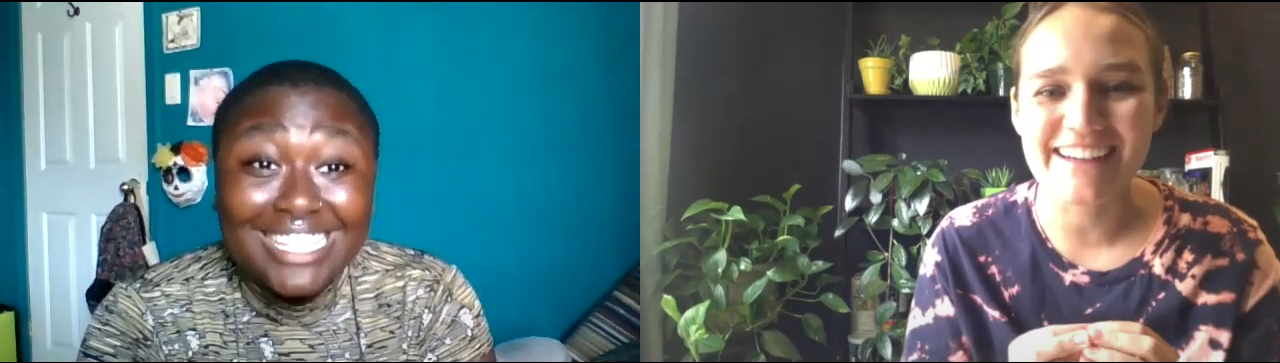
This post is written by Cassidy McCabe (pictured right), graduate of our 2020 Yoga Teacher Training cohort, and features a conversation with her friend and fellow Yoga practitioner, Adwoa Toku (pictured left).

I knew that enrolling in the yoga teacher-training program through Queen St. Yoga would transform the way I thought about yoga forever. Initially, I learned how to sequence a great class, how to give anatomical cues, and how to adapt poses for different skill levels.  It was very important to me to be prepared to teach students from their mats; and as I continued to study, my understanding of yoga was drastically altered. The changes in my concept of yoga began when the program introduced some preliminary anti-oppression education. I started to contemplate some of the personal challenges that can inhibit individuals from even taking their first step onto a yoga mat. I began to wonder if yoga is accessible to all people.

Spoiler alert: it’s generally not.

Can race, ethnicity, sexuality, gender, age, body size or ability be a barrier which stops people from even beginning a personal yoga journey? These questions started to percolate with me, serendipitously, at the same time I was being exposed to the Black Lives Matter social movement in my community and around the world. To further explore my questions, I reached out to one of my close friends, Adwoa Toku. 

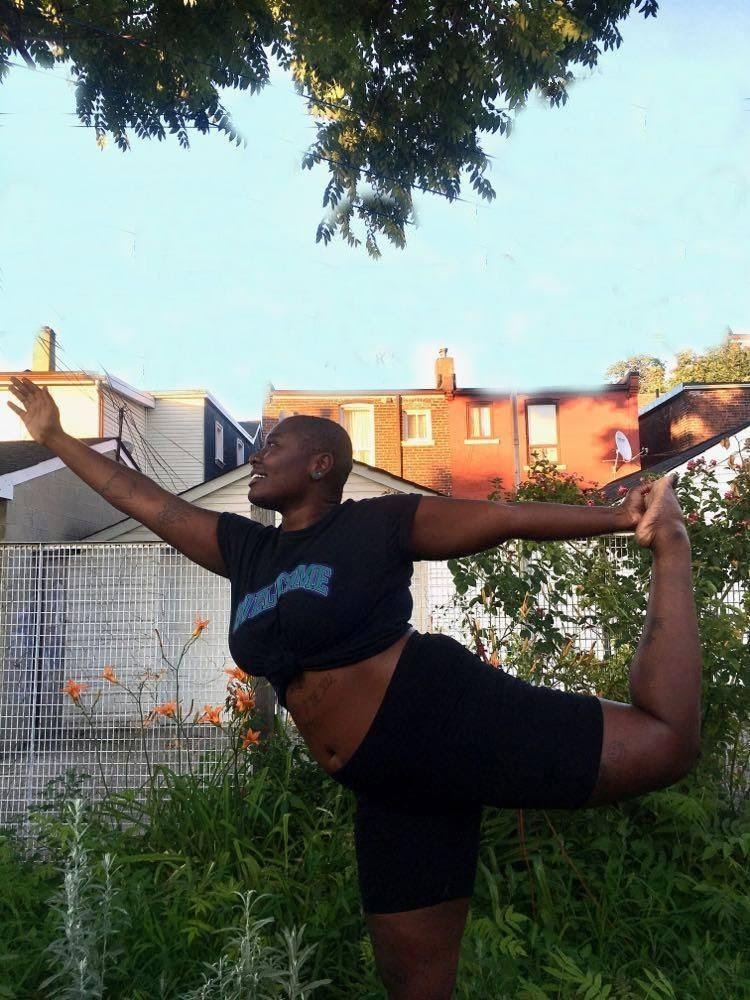
Adwoa, wearing black shorts and a t-shirt, practices Dancer's pose outside among flowers and shrubs.

 “Creating these transformative practices to address things that we know we’re all dealing with… the anxiety we feel in our bodies; the fear, the guilt, the shame, these are things that a lot of the time, even if we talk about, it still exist within our bodies. So how do we move these things that our body holds outside of it; and how do we then give ourselves space to move forwards and to move together?” –Adwoa Toku

Learning In Relationship

Adwoa and I have been friends since we met in residence at Wilfrid Laurier University, in 2012. We discovered yoga separately, but would communicate elements of our journey with each other, and share our love for the practice. Given our friendship, I felt comfortable asking Adwoa for her perspective. As a Black yogi, I hoped Adwoa would be able to provide me with some insight to the questions I had a desire to explore.  When I approached her about the concept of how yoga spaces can be inhibitive for individuals, Adwoa was enthusiastic about being part of the conversation.

Adwoa’s Lived Experiences

We recorded ourselves on a Zoom call and the results were informative and transformative for me personally. Adwoa’s charisma and honesty shines through, as she speaks from the heart about her yoga journey. Here is the link to our conversation:

Adwoa had a few final words to summarize the key points of our discussion:

“At the end of the day, my experience as a Black yogi is equal to my experience moving through the world; navigating spaces that don’t necessarily see me in their landscape, but knowing I deserve to shape my life in a way that fills me up. It’s up to those who hold privilege to show up and have the hard conversations with their peers, who hold privilege as well. It’s the ways of complacency and comfort that have led us here; those of us who experience it’s shadow know that marginalization is nothing new. Moving from a heart-centred place sometimes feels like jumping into the fire, of all the hard realities we don’t want to see, but is necessary for change.” -Adwoa Toku

Yoga and Race: Why Representation Matters

Queen Street Yoga teacher and creative director Emma Dines shares an important personal experience about race and representation as it relates to yoga teaching and representation in the yoga studio community.

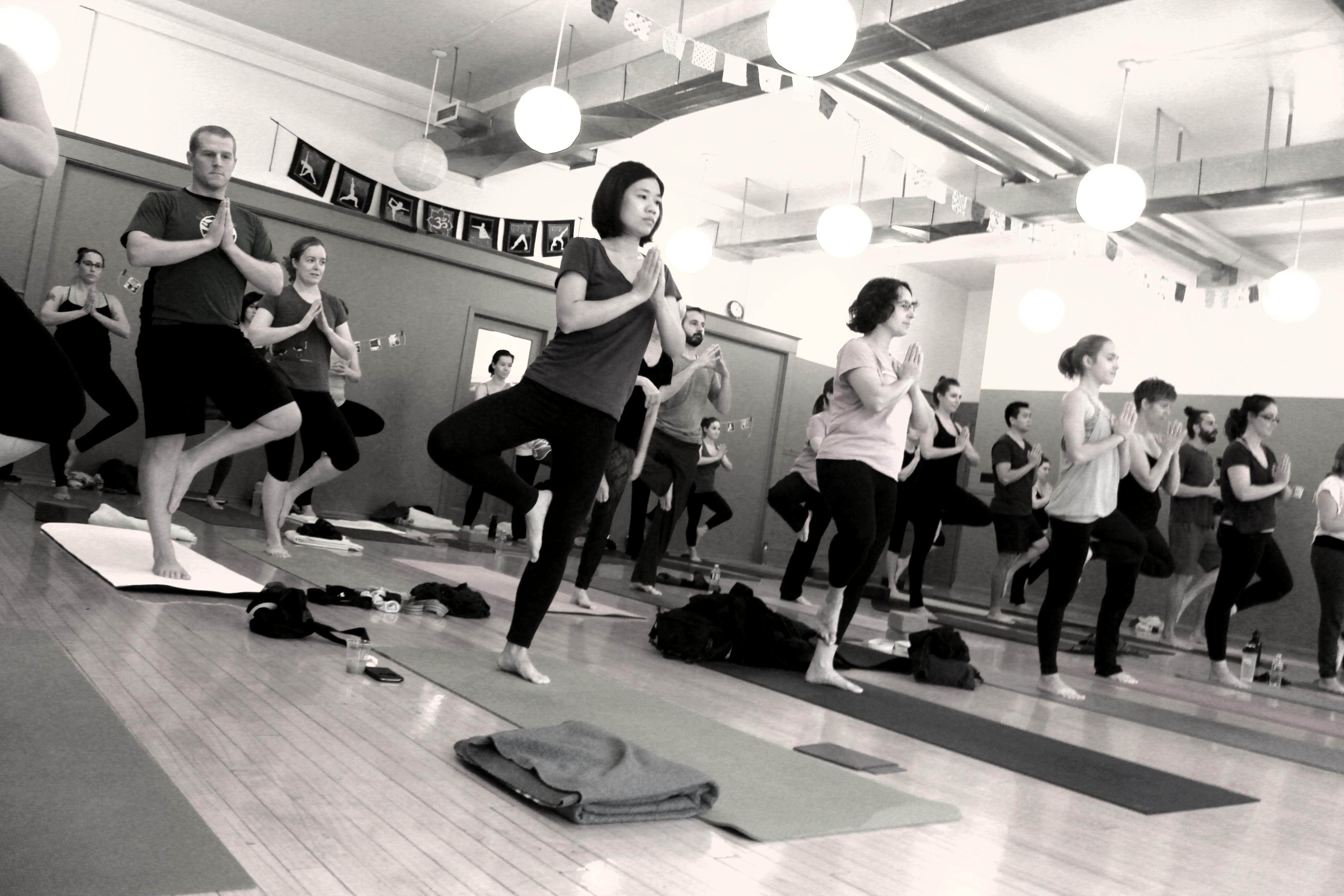
B&W yoga photo

During our March Yoga Teacher Training weekend, QSY hosted two presenters from Toronto who shared their experiences and best practices of merging anti-oppression work with the teaching of yoga/hosting of yoga studio communities. Jamilah Malika and Christi-an Slomka led the group in considering the experiences of those who are underrepresented in yoga studios and yoga media/imagery, and understanding how and why yoga studios remain mostly white and mostly cis-gendered spaces, and how and why we might work to shift this.

During our closing circle, where we shared our insights, reflections and challenges with one another, I shared the following personal story, which touches on themes of race and representation. It was a story that I had forgotten about, but it bubbled up to the surface during the circle.

A bit of background before the story. I grew up in Toronto in a mostly white neighbourhood, going to a mostly white school. I am mixed race – my mom is third-generation Japanese Canadian, and my dad is second-generation Scottish Canadian. I remember being pretty aware of my race as a child – I was one of two or three Asian or half-Asian kids in my class. When I blew the candles out on the cake at my eighth birthday, my wish was to wake up the next day with white skin and blond hair. My mother experienced what I now understand to be micro-aggressions from many of the other parents in the area. The racism that my mother, my siblings and I experienced was subtle, sometimes internalized, but definitely present.Continue reading “Yoga and Race: Why Representation Matters”