
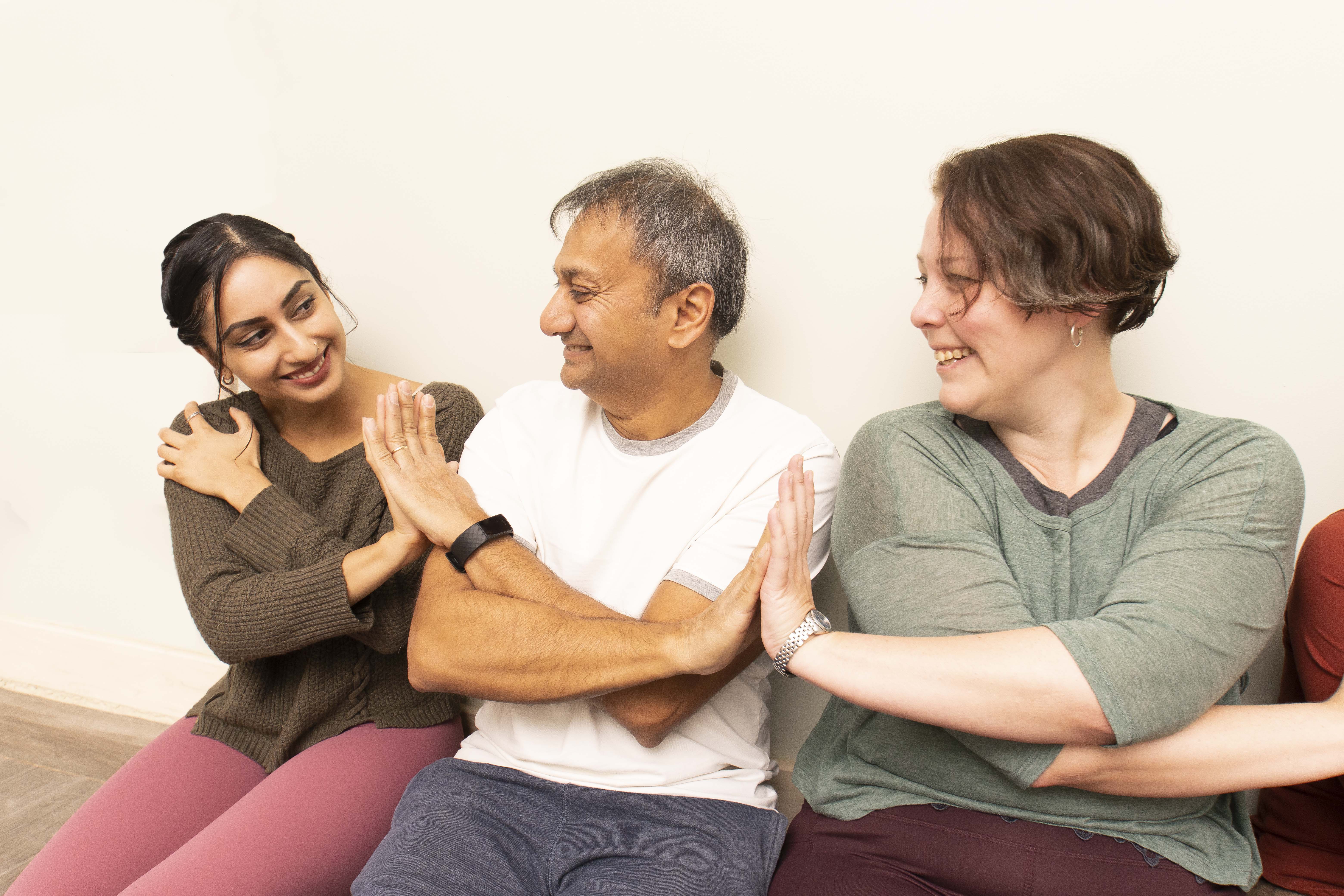
(This post comes to you from Wendy – pictured below on the right – Operations Manager, strength & yoga teacher, and resident-barefoot-shoe-enthusiast, at the Branches)
I have always loved to walk barefoot outside. I enjoy the tactile stimulation I feel when walking on different surfaces. I walk barefoot so I can feel the burn of hot pavement in the summer and the gentle sharpness of blades of grass; the cool squishiness of walking through the mud and the grittiness between my toes when walking in the sand.
Barefoot shoes (also called minimal shoes) allow me a little bit of that sensory stimulation when I can’t (or shouldn’t) walk barefoot. It means I can still feel the bumpiness underneath the grass, the sharp pebbles at the edge of a dirt road. Does it hurt sometimes? Sure! I’ve landed on a few rocks while running that sent a few choice words streaming out of my mouth. But those experiences never made me want to switch back to the relative void of sensation I felt when walking in thick-soled shoes.
I initially started wearing barefoot/minimal shoes because I was experiencing knee pain and trying to find a way to improve it. I had heard minimal shoes might help, so I decided to give them a try. However, as soon as I started walking in that first pair of barefoot sneakers, I no longer really cared if they cured my knee pain – it just felt so good to walk in them!
Those shoes were the first pair of shoes that I didn’t have to ‘break in.’ My feet didn’t feel like they were being squished. I didn’t have to deal with the pain and irritation of blisters and calluses, in fact, I could actually wiggle my toes! Over time my knee pain did improve, but the reason I keep wearing barefoot shoes has more to do with the connectedness I felt with my body and the world around me.
I used to have a nice pair of ‘technical’ hiking boots that I invested in because I thought they were what I needed to be able to hike ‘safely.’ Ironically, I’ve had fewer injuries since I switched to minimal hiking boots. My balance is better, and my feet and ankles are stronger now that they can move more freely. I can both feel and respond better to the changes in the ground beneath me. I can feel the curves and edges of rocks as I walk across them, and I can respond with more agility to those small changes in balance, bending my feet and ankles to ‘grip’ the rocks as I go. Thick soled shoes take a lot of that sensory information away, leaving me feeling like I’m teetering while trying to balance on rocks, and stumbling as my foot leans too far off an edge it can’t feel. There’s a disconnect between what’s happening underneath me and what my body is doing in traditional hiking boots. That connectedness means I’m actually more confident hiking in minimal shoes because I slip and fall less often.
The connectedness to my body and the world around me is what has ultimately made me a barefoot shoe convert, and now, something of a proselytizer! I want everyone to experience the gentle invigoration of walking with more sensation and agility. Switching to barefoot shoes is something of a process – for most people a good amount of preparation is needed to build up the foot and ankle strength needed to enjoy wearing minimal shoes. If you’re interested in the (eventual) hedonism of barefoot shoes, start your journey with me at my Free Your Feet workshop, a staple offering that we host every year or two at the Branches.
Looking forward to walking in the mud sometime soon,
Wendy

 The Branches